Travel
The Strait of Hormuz: Named After Ahura Mazda – The Ancient Zoroastrian Roots of One of the World’s Most Critical Waterways
The Strait of Hormuz is one of the most strategically important bodies of water on the planet. Through this narrow passage — just 21 miles (33 km) wide at its narrowest point — flows approximately 20% of the world’s oil supply. Yet few people realize that its very name carries a profound spiritual legacy stretching back thousands of years to one of humanity’s oldest monotheistic religions: Zoroastrianism.The name “Hormuz” is widely believed to be a shortened or localized form of Ahura Mazda (also spelled Ormazd or Hormazd), the supreme god and creator in Zoroastrianism — the ancient faith of Persia.Linguistic and Historical OriginsThe word “Hormuz” (or “Ormuz”) has deep roots in Old Persian and Avestan, the sacred language of Zoroastrian texts. In Avestan, Ahura Mazda means “Lord of Wisdom” or “Wise Lord.” Over centuries, as languages evolved and the region came under various empires (Achaemenid, Parthian, Sassanid, Islamic), the pronunciation shifted.“Ahura” evolved into forms like “Horm” or “Orm”
The full name was gradually shortened in local usage to “Hormuz”
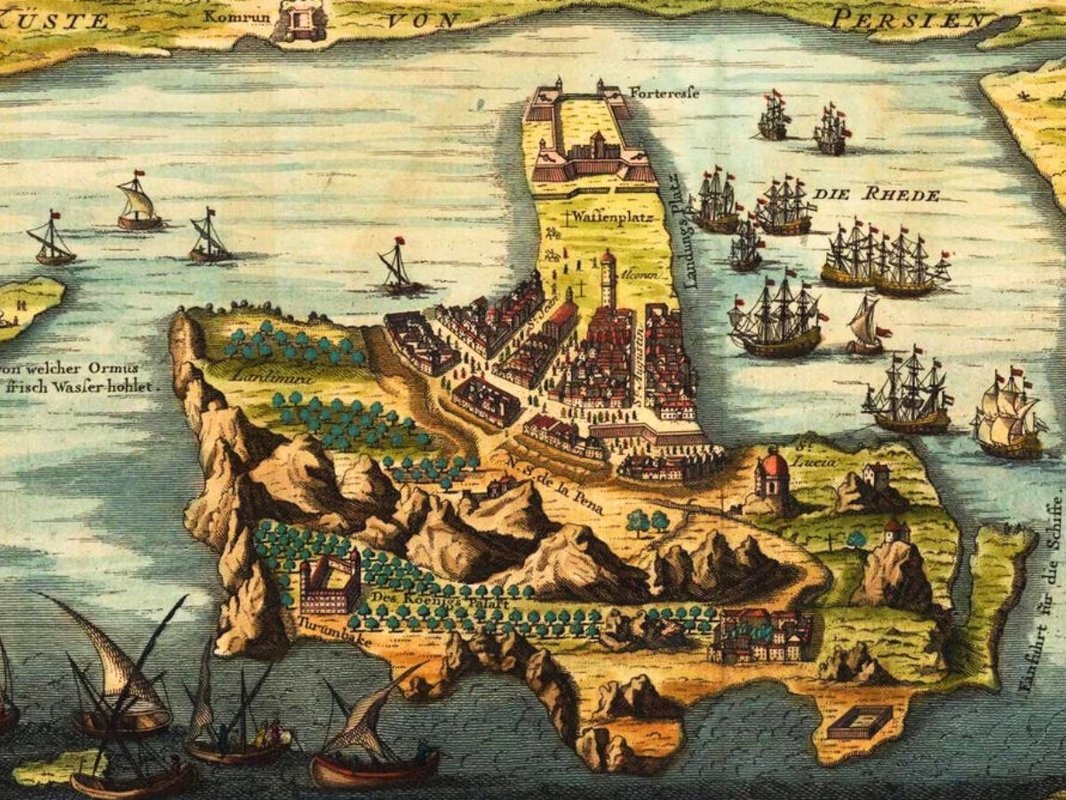
The strait and the nearby island of Hormuz were known by variations of this name long before the rise of Islam in the 7th century. Ancient Greek, Roman, and Arab geographers referred to the area using names derived from the Zoroastrian deity, showing how deeply embedded the religious and cultural influence was in the region.Zoroastrianism and the Persian GulfZoroastrianism, founded by the prophet Zoroaster (Zarathustra) around 1500–1000 BCE, was the dominant religion of the Persian Empire for over a millennium. Ahura Mazda represented truth, order, light, and wisdom — the force of good in an eternal cosmic struggle against Angra Mainyu (the destructive spirit).The Strait of Hormuz, as a vital maritime gateway connecting the Persian Gulf to the Arabian Sea and Indian Ocean, held both practical and symbolic importance. For ancient Persians, controlling this waterway was not only an economic and military necessity but also carried spiritual weight — guarding a strategic point in the known world under the divine watch of Ahura Mazda.Many Zoroastrian temples and fire altars once stood along the coasts of what is now Iran, Oman, and the UAE. The name “Hormuz” served as a constant spiritual reminder of the region’s sacred heritage.The Island of HormuzThe small but historically significant island of Hormuz (also called Jarun) in the strait was a major trading hub during the medieval period. Portuguese, Safavid, and later powers fought for control of the island precisely because of its strategic location. Even today, the name preserves the ancient link to Ahura Mazda.Modern Strategic Importance vs Ancient Spiritual RootsToday, the Strait of Hormuz is best known for its critical role in global energy security. Roughly 21 million barrels of oil pass through it every day. Disruptions here — whether from conflict, accidents, or blockades — can send shockwaves through the global economy.Yet beneath the geopolitics and economics lies this ancient spiritual connection. The name itself is a living link to one of humanity’s earliest attempts to understand the universe through a moral and cosmic framework.Zoroastrian Influence TodayWhile Zoroastrianism is now a minority religion (primarily practiced by Parsis in India and smaller communities in Iran), its influence remains profound:Concepts of good vs evil, heaven and hell, and final judgment influenced Judaism, Christianity, and Islam.
The name “Hormuz” continues to echo through geography, history, and culture.
Many Iranians, even those who are Muslim, still hold deep cultural respect for their Zoroastrian heritage.
Why the Name MattersIn an age of constant tension in the Gulf, remembering the ancient spiritual origins of the Strait of Hormuz offers perspective. What is now a flashpoint for global energy politics was once seen as a sacred passage under the protection of the “Wise Lord.”The name “Hormuz” is more than just a label — it is a reminder of the deep historical and cultural layers that underlie one of the world’s most contested waterways.ConclusionThe Strait of Hormuz stands as a powerful symbol of how ancient spirituality, geography, trade, and modern geopolitics intersect. Its name, rooted in reverence for Ahura Mazda, connects us to a time when the Persian Empire stretched across vast territories and Zoroastrian fire temples lit the way for travelers and traders.As global attention remains fixed on this narrow stretch of water, understanding its deeper cultural and religious heritage provides valuable context for the headlines we see today.The next time you hear “Strait of Hormuz” in the news, remember — you are hearing an ancient name that once invoked the divine wisdom of Ahura Mazda, the Lord of Light and Truth.
Comments (0)
Please log in to comment
No comments yet. Be the first!