Travel
The Doomsday Plane Is in the Middle East: What the E-6B Mercury's Deployment Actually Means
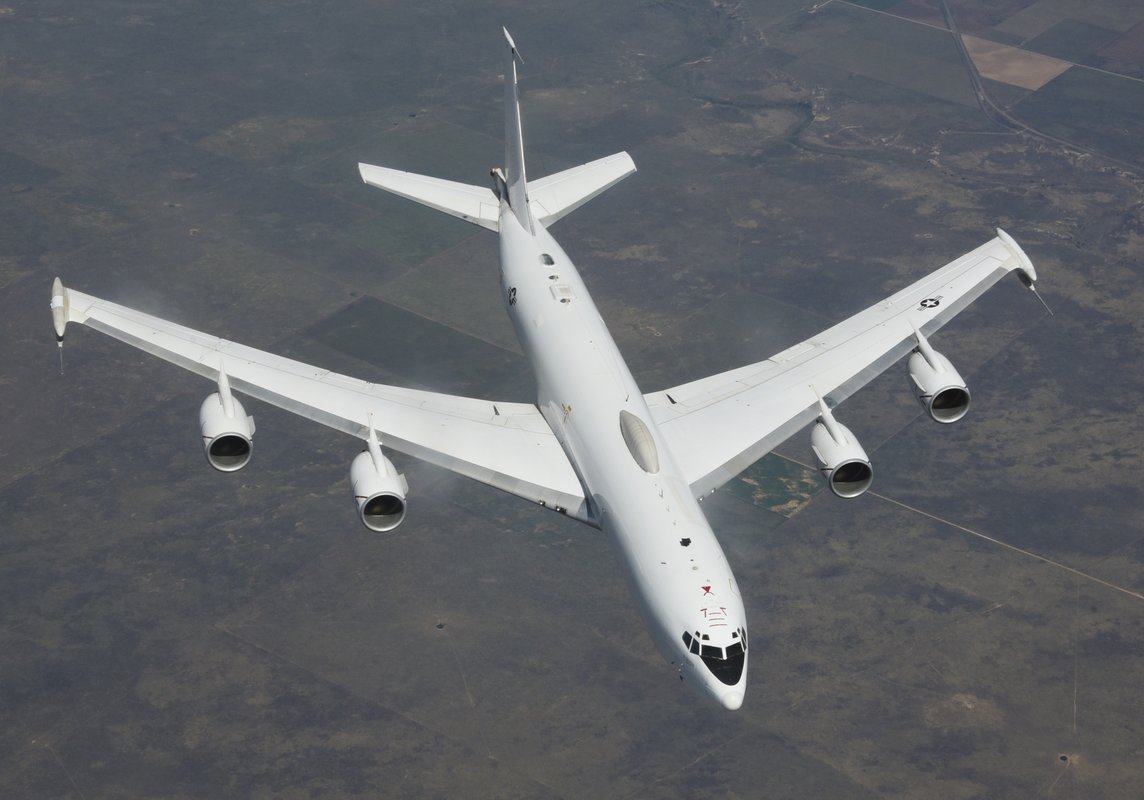
On March 4 — Day 5 of Operation Epic Fury — OSINT analysts tracking military aircraft movements confirmed something that sent a chill through defence communities worldwide. Two US Navy E-6B Mercury aircraft took off simultaneously: one departing Tinker Air Force Base in Oklahoma toward the Gulf, the other departing Patuxent River Naval Air Station toward the eastern coast of the Gulf region. During the same week, OSINT trackers recorded 12 REACH logistics flights crossing the Atlantic eastward, six KC-135 Stratotankers preparing for an Atlantic crossing, and one E-6B flying a racetrack pattern over the American Midwest — the distinctive looping flight path the aircraft uses when maintaining constant communications loops. The Pentagon has not officially confirmed the E-6B deployment or its purpose. It has not needed to. The aircraft's presence in the region sends a message that no press release could match. The Doomsday Plane is in the Middle East. Here is what that actually means — and what it does not.
What the E-6B Mercury Actually Is
The Boeing E-6B Mercury is not a warplane. It carries no weapons, no missiles, no bombs. What it carries is far more consequential: it is the United States military's airborne nuclear command, control, and communications backbone — the aircraft that ensures America's nuclear weapons can be launched even if every ground-based command centre in the country has been destroyed. The E-6B's primary mission is called TACAMO — Take Charge and Move Out — a Cold War-era protocol developed to solve the most terrifying problem in nuclear strategy: how do you communicate a launch order to ballistic missile submarines submerged hundreds of metres below the surface of the ocean, when those submarines are deliberately designed to be undetectable and unreachable by conventional communications? The answer is very low frequency radio — VLF — transmitted through a 9-kilometre trailing wire antenna deployed from the aircraft while it flies. VLF waves penetrate seawater to a depth that allows submerged submarines to receive authenticated launch orders from the President or National Command Authority, even in the middle of a nuclear exchange. The E-6B is, in the most literal sense, the aircraft that keeps America's nuclear deterrent alive after the unthinkable has happened.
The Secondary Role: Airborne Command Post
Beyond its submarine communications mission, the E-6B also serves as an airborne command post — a survivable backup to the ground-based command infrastructure at locations like Offutt Air Force Base in Nebraska. If those ground installations are destroyed or their satellite links severed, the E-6B can take over the function of transmitting launch authorisation to land-based intercontinental ballistic missiles and strategic bombers. This role was previously performed by a dedicated aircraft called Looking Glass — which flew 24 hours a day, 7 days a week, 365 days a year from 1961 to 1990 without a single day's gap. The E-6B has absorbed that mission. Its deployment to the Middle East — a theatre where Iranian ballistic missiles have already struck US military installations in Kuwait, Bahrain, Qatar, and Iraq — signals that US military planners have calculated a tangible risk to regional command infrastructure and activated command continuity protocols as a preventative measure. As digital8hub.com has reported, Iran struck the AN/FPS-132 radar at Al Udeid Air Base in Qatar — a $1.1 billion facility — on Day 5 of the conflict. The possibility of a strike on a regional command centre is not theoretical.
What the Deployment Does NOT Mean
The presence of the E-6B in the Middle East does not mean the United States is preparing to use nuclear weapons. That point cannot be overstated clearly enough. Military analysts with direct knowledge of the aircraft's operations have emphasised that the E-6B fleet must fly regularly to ensure readiness — routine training missions are deliberately designed to look identical to emergency operations. The ambiguity is the deterrent. Iran — and Russia, and China, and every other actor watching the skies — cannot distinguish a training flight from an emergency activation. That uncertainty is precisely what the aircraft is designed to project. The E-6B's deployment to the Middle East is best understood as a contingency preparation and a deterrence signal simultaneously. It tells Iran: the US nuclear command structure is mobile, survivable, and active. It tells Russia — which as digital8hub.com reported is providing Iran with targeting intelligence — that escalation to a level that threatens US command infrastructure will not go unanswered. And it tells every OSINT analyst with a flight tracker that the US military is taking this conflict seriously enough to activate assets it does not typically deploy outside of the most severe crises.
The Broader Military Picture: 100 Days, Third Carrier, Doomsday Plane
The E-6B deployment is one piece of a military escalation picture that has been accelerating since the conflict began. As digital8hub.com has reported, the US is preparing to conduct military operations against Iran for at least 100 days — potentially until September — according to an internal Pentagon document. A third US aircraft carrier is moving toward the Middle East. Trump confirmed the US military has destroyed 42 Iranian naval ships and much of the Iranian Air Force. The E-6B joins a theatre that already includes two carrier strike groups, B-2 Spirit strategic bombers, F-35s, F-15Es, Aegis destroyers, and the full weight of the most powerful military in human history. South Korea's Cheongung-II missile defence system — deployed in the UAE — has intercepted Iranian ballistic missiles. Bahrain has destroyed 75 missiles and 123 drones. The war is now in its tenth day. The Doomsday Plane is overhead. And the Pentagon is planning for six more months of this. For the latest military and geopolitical coverage of Operation Epic Fury, follow digital8hub.com.
Comments (0)
Please log in to comment
No comments yet. Be the first!