Travel
SpaceX Dragon Splashes Down After 185 Days: The Science Returning to Earth Could Change Medicine Forever
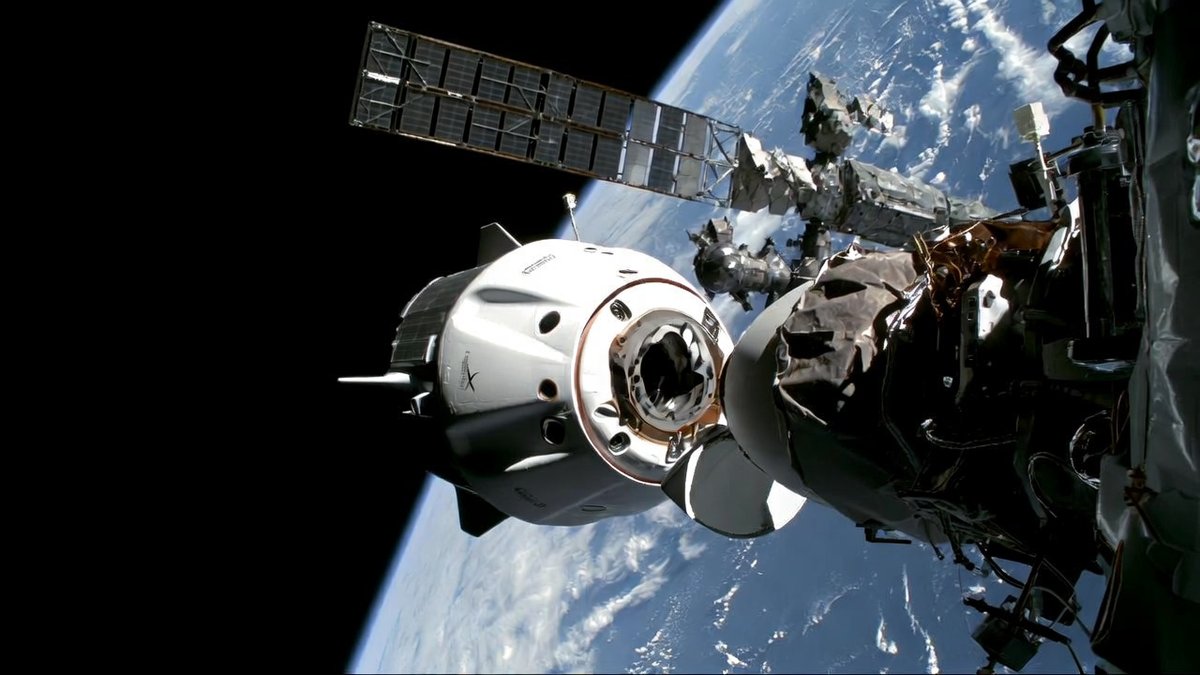
After 185 days docked to the International Space Station, SpaceX's Cargo Dragon has made its return to Earth — and what it brought back could quietly reshape medicine, materials science, and the future of deep space exploration. The SpaceX Cargo Dragon spacecraft undocked from the International Space Station on Thursday, February 26, 2026, wrapping up a 185-day stay that marks the completion of NASA's 33rd Commercial Resupply Services mission. Tom's Guide At 11:44 pm PST, it splashed down off the coast of California, bringing an end to CRS-33. Android Central
What Made CRS-33 Different
This was not a routine resupply run. CRS-33 delivered 2,300 kg of scientific cargo to the ISS — including biomedical research payloads and a first-of-its-kind propulsion boost kit — and returned critical research samples to Earth. It underscores SpaceX's increasingly essential role as NASA's backbone logistics provider in low-Earth orbit. Tom's Guide
Perhaps the most technically remarkable aspect of this mission was Dragon's expanded role in keeping the ISS in orbit. SpaceX confirmed the spacecraft debuted a brand-new reboost capability during the CRS-33 mission. Using an independent propellant system and two Draco engines housed in a modified trunk section, Dragon performed six reboosts Tom's Guide — five in 2025 and a final maneuver on January 23, 2026. Android Central This kit carried enough propellant to cover approximately one-third to one-fourth of the ISS's annual reboost needs — a task that has historically required Progress cargo ships from Roscosmos or the station's own thrusters. Tom's Guide SpaceX is no longer just delivering cargo to the ISS. It's helping keep it flying.
Stellar Stem Cells Mission 2: A Potential Breakthrough for ALS and Parkinson's
Of all the science returning on Dragon, none carries more immediate human significance than the Stellar Stem Cells Mission 2. The Stellar Stem Cells Mission 2 returned frozen samples for research on how microgravity affects brain and heart stem cell growth. NASA stated that this research could support future regenerative medicine applications on Earth. Samsung
By aiding the study of how the brain and stem cell growth are affected by microgravity, the experiment could prove to be a blessing for those suffering from ALS and Parkinson's disease. Android Central The data will enable researchers to study how microgravity impacts the development and behavior of iPSC-derived cells, which may advance regenerative medicine and drug research on Earth. The present study extends previous Stellar Stem Cells missions by assessing how microgravity affects stem cell reprogramming and differentiation and organoid development processes. Samsung In simpler terms — the unique conditions of space may unlock biological processes that are impossible to observe on Earth, and those observations could lead to treatments for some of the most devastating neurological diseases of our time.
Semiconductor Research and the Future of Space Electronics
Flight Engineer Andrey Fedyaev set up a space physics experiment and used molecular beams to explore semiconductor growth in microgravity. Results may lead to advanced electronics systems and scientific instruments for spacecraft and satellites. CGMagazine As the global semiconductor industry continues to wrestle with miniaturization limits, research conducted in the near-zero-gravity environment of the ISS offers a genuinely novel manufacturing frontier. The samples returning on Dragon will now be analyzed by engineers and scientists on the ground.
Thailand's Liquid Crystals Experiment
Thailand's Liquid Crystals experiment observed the stability of films used in electronics under microgravity. These experiments provide data for the development of spacecraft materials, displays, and optical devices. Samsung With display technology and optical systems at the heart of everything from consumer electronics to military satellites, the findings from this experiment have applications that extend well beyond the space program.
SpaceDuino & Moon Microscope: Open Science From Space
Two smaller but fascinating experiments also made the journey home. The SpaceDuino project investigated vibrations through open-source software, while the Moon Microscope project evaluated a portable diagnostic blood analysis kit for space research. Samsung The Moon Microscope in particular has direct implications for future lunar and Mars missions — a compact, reliable blood analysis tool that works in microgravity could be critical for monitoring astronaut health on journeys where getting to a hospital is simply not an option.
The Crew Behind the Mission
None of this science happens without the people who run the experiments day after day in orbit. NASA Flight Engineer Jack Hathaway serviced the small satellite orbital deployer in the Kibo laboratory module, which regularly ejects CubeSats into Earth orbit for public, private, and educational research. CGMagazine Roscosmos cosmonauts Sergey Kud-Sverchkov and Sergei Mikaev worked on human research experiments, wearing chest electrodes and arm, wrist, and thumb cuffs measuring cardiac activity and blood pressure — assessing microgravity's effect on blood flow regulation, clot prevention, and inflammation responses. CGMagazine
SpaceX's Quiet Revolution
Booster B1090 flew its seventh mission to deliver CRS-33, and Cargo Dragon C211 is now three-for-three on ISS missions. In an era where every rocket launch once made front-page news, SpaceX has turned orbital cargo delivery into something closer to scheduled airline service — a remarkable operational achievement by any measure. Tom's Guide
The data and samples it returns will generate research output for years. That's the real payload of any science resupply flight — and on that metric, SpaceX and NASA appear to have delivered again. Tom's Guide The Dragon may be back on Earth. But the science it carried is just getting started.
Comments (0)
Please log in to comment
No comments yet. Be the first!