Travel
Six Planets Are Lining Up in the Sky Tonight — Here's Exactly How to Watch the 2026 Planetary Parade
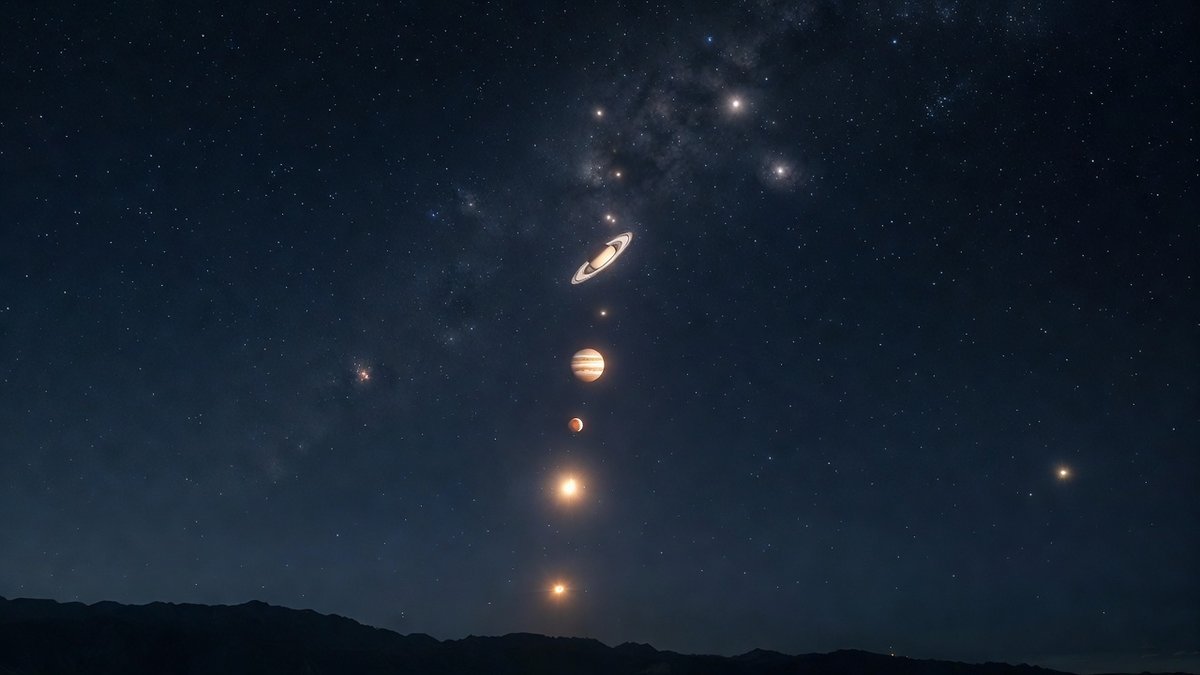
Step outside tonight. Look west. And prepare to be reminded just how extraordinary our solar system really is. Tonight, March 1, 2026, six planets are visible in the evening sky in a rare celestial spectacle that astronomers are calling the most accessible planetary parade in years. Mercury, Venus, Jupiter, Saturn, Uranus, and Neptune will stretch across the sky in a gentle arc — and four of them are visible to the naked eye. The next opportunity like this won't come until 2028. Here's everything you need to know to make the most of it.
What Is a Planetary Parade?
A planetary parade — technically called a planetary alignment — occurs when multiple planets gather in the same region of the sky from Earth's perspective, following the ecliptic plane of their orbits around the Sun. The planets don't actually move closer together in space; they remain millions of miles apart. What you're seeing is a line-of-sight effect that makes them appear to arc across the sky simultaneously. It's an optical arrangement rather than a physical one — but that makes it no less breathtaking.
Tonight's parade features six planets: Mercury, Venus, Saturn, Jupiter, Uranus, and Neptune. NASA highlighted February 28 into March 1 as the peak viewing window for this alignment, and tonight is your last clean shot at catching all six before Mercury begins to drop out of view as it swings closer to the sun.
When and Where to Look
Timing is everything. The best viewing window opens approximately 30 to 60 minutes after your local sunset — that brief twilight period when the sky is dark enough to reveal the planets but Mercury and Venus haven't yet sunk below the western horizon.
Start by looking low in the western sky immediately after sunset. Venus will be the easiest to spot — it's the brightest object in the sky after the Sun and Moon, and it will appear as a brilliant white point of light close to the horizon. Saturn will sit slightly higher and to the upper left of Venus. Mercury will be nearby, extremely close to the horizon — catch it early or you'll miss it entirely as it follows the Sun below the horizon within about an hour of sunset.
Then turn your gaze high into the sky toward the east, where Jupiter blazes brightly — far easier to spot than the horizon group and visible for much longer into the night. Tonight, a waxing gibbous moon hangs near Jupiter and Regulus in Leo, adding extra spectacle to the eastern half of the sky.
What You'll See — With and Without Binoculars
Four planets — Mercury, Venus, Saturn, and Jupiter — are clearly visible to the naked eye under good conditions. These are the stars of tonight's show. But if you have binoculars or a telescope, the experience gets significantly richer.
Uranus sits between Jupiter and Saturn in the sky tonight but is too faint to spot without optical aid. With binoculars under dark skies, look for a tiny blue-green dot. Neptune is even more challenging — positioned near Saturn and Mercury in the western sky, it requires a telescope with a decent aperture to reveal its tiny bluish disk. Its position low on the horizon makes it an extra challenge, even with equipment.
For amateur astronomers, tonight is also a perfect opportunity to train your telescope on Jupiter's four Galilean moons — Io, Europa, Ganymede, and Callisto — visible as tiny points of light on either side of the planet. Saturn's rings are equally stunning through even a basic telescope.
What Makes This One Special
Planetary alignments involving this many bright planets happen only every few years. The last comparable event was in early 2025. Tonight's parade is particularly special because of its evening visibility — morning alignments require early risers, but tonight's show plays out right after sunset, making it accessible to virtually everyone who has a clear western horizon.
The alignment also comes at a remarkable moment in the sky calendar. Just two days from now — March 3 — Earth will witness a total lunar eclipse, when the full Snow Moon turns a deep blood red in Earth's shadow. That eclipse is visible in its entirety from the western portions of North America, Oceania, and Asia. Tonight's planetary parade and Monday's blood moon make for one of the most spectacular one-two punches in recent astronomical history.
Tips for the Best Viewing Experience
Find a location with an unobstructed western and southern horizon — open fields, hilltops, rooftops, or beaches work best. City light pollution will wash out the fainter planets, so if you can get to a darker spot, the experience improves dramatically. Allow your eyes at least 10–15 minutes to adjust to the darkness before you start searching — and avoid looking at your phone screen during that adjustment period.
A stargazing app on your phone — pointed at the sky — will help you identify exactly which planet is which. Star Walk 2 is particularly useful for tonight's parade. And if the weather doesn't cooperate where you are tonight, the alignment remains visible into the first few nights of March, though Mercury will fade from view quickly.
The next alignment of this quality won't come until 2028. Tonight, the solar system is putting on a free show. All you have to do is look up.
For more space and science coverage, follow digital8hub.com.
Comments (0)
Please log in to comment
No comments yet. Be the first!