Travel
Orion Will Re-Enter Earth's Atmosphere at 40,000 km/h Generating 5,000°F of Heat
Orion Will Re-Enter Earth's Atmosphere at 40,000 km/h Generating 5,000°F of Heat — Here's How the Crew Survives
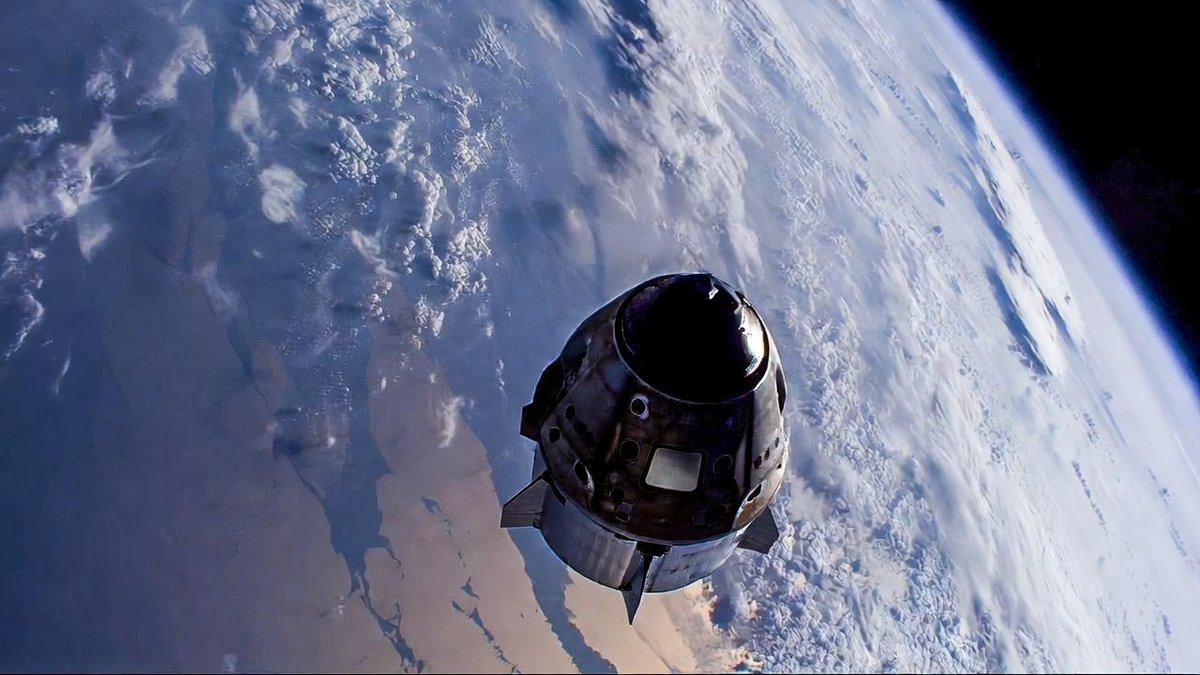
After ten historic days in space — a record-breaking lunar flyby, an Earthrise witnessed in person, a solar eclipse seen from orbit — the Artemis II crew is facing the final and most dangerous phase of their mission: coming home.
The Orion capsule will re-enter the atmosphere at a blazing 40,000 kilometres per hour, then slow to just 27 km/h for a soft ocean landing. Gizmodo
What happens in those 13 minutes between those two numbers is one of the most extraordinary feats of engineering in human history.
The Numbers Are Almost Incomprehensible
The Orion capsule carrying the Artemis II astronauts will be travelling at more than 11 kilometres per second when it reaches Earth's atmosphere — 40 times faster than a passenger jet travels. In terms of kinetic energy, upon re-entry the Orion capsule will have almost 2,000 times as much kinetic energy per kilogram of vehicle as a passenger jet. The Conversation
The Orion capsule will re-enter the atmosphere moving at more than 30 times the speed of sound. A shock wave will envelop the spacecraft, creating air temperatures of 10,000°C or more — about twice the temperature of the surface of the Sun. The Conversation
Without a protective layer, anything inside the crew cabin could be exposed to temperatures as high as 5,000 degrees Fahrenheit. Scientific American
The entire descent — from the edge of space to splashdown in the Pacific Ocean — will take Orion about 13 minutes to travel 400,000 feet from space to splashdown off the coast of San Diego. ABC News
The Heat Shield: AVCOAT and 50 Years of Engineering
The only thing standing between the astronauts and those temperatures is a 16.5-foot-wide heat shield made from a material called AVCOAT.
AVCOAT is a mixture of silica, epoxy, and resins that was also used for the original Apollo lunar missions. It protects a spacecraft by charring, melting, and ablating away — carrying excess heat along with it. Deseret News
Orion's heat shield is designed to withstand up to 5,000 degrees Fahrenheit, though according to NASA the spacecraft will only experience maximum temperatures around 3,000°F during its descent. Gizmodo
But this heat shield comes with a complicated history. During the Artemis I reentry in 2022, the heat shield cracked and shed more material than NASA engineers had expected. The agency performed an urgent investigation and ultimately decided not to change the heat shield design for Artemis II. Instead, mission planners adjusted the capsule's reentry trajectory so that its heat shield would be exposed to higher temperatures for a shorter time. CBS News
Engineers discovered the damage was related to the heat shield's lack of permeability — a modified skip-entry trajectory would allow the Avcoat to "breathe" throughout, preventing the formation of cracks and trapped gas. An independent review team agreed with those conclusions. CBS News
NASA Administrator Jared Isaacman has been direct about the stakes: "The heat shield has to work. I'm going to be thinking about that constantly until they're back in the water. I have no doubt the team did the right analysis on this." Deseret News
The 'Lofted' Reentry: Skipping Like a Stone
Orion will perform what's called a "lofted" reentry — dipping down into the atmosphere briefly, before delving back down for its final descent, similar to a stone skipping once across a pond before sinking beneath the water. The flight path is designed to reduce heat stress on Orion's heat shield, decelerating the spacecraft in separate increments to better distribute its energy. Space.com
Artemis II lead flight director Jeff Radigan has been candid about the precision required: "Let's not beat around the bush — we have to hit that angle correctly, otherwise we're not going to have a successful entry." Space.com
Six Minutes of Silence: The Plasma Blackout
One of the most dramatic moments of re-entry is the communications blackout — a period when neither the crew nor ground control can reach each other.
Together, the friction and compression of the atmosphere as Orion falls creates a plasma bubble that will engulf the spacecraft. It's that engulfing plasma that doesn't allow radio signals in or out. The planned six-minute blackout period begins just 24 seconds after entering the atmosphere. ABC News
For those six minutes, the crew is entirely on their own. Retired NASA astronaut Barry "Butch" Wilmore told ABC News: "You know the blackout's coming. Because of that, you just press through just like your normal processes, you're monitoring. There's not a lot you can do." ABC News
The Parachute Sequence: From Fireball to Floating
Once Orion emerges from the blackout, the focus shifts to slowing the spacecraft from hypersonic speed to a gentle splashdown.
Two small drogue parachutes, seven metres in diameter, will unfurl at an altitude of 25,000 feet to slow Orion down to 494 km/h. Three larger parachutes will then slow the capsule to 38 km/h — the speed it will maintain to splash down into the Pacific Ocean. Euronews
Once the craft is in the water, a system of five orange airbags will inflate around the top of the spacecraft and flip it into an upright position so the crew can exit. The astronauts will wait on an inflatable raft called the "Front Porch" for two helicopters to bring them to medical facilities. Euronews
Coming Home
If all goes according to plan, the crew will hit Earth's atmosphere over the open Pacific Ocean at 7:53 p.m. EDT and splash down off the coast of San Diego 14 minutes later. Space.com
For Reid Wiseman, Victor Glover, Christina Koch, and Jeremy Hansen — who set a new record for human distance from Earth, witnessed the far side of the Moon with unaided eyes, and experienced a solar eclipse from space — the final 13 minutes may be the most intense of the entire journey.
But if the engineering holds and the heat shield performs, they will go from 40,000 km/h to a gentle splash in the Pacific — and humanity's most ambitious crewed spaceflight in 50 years will have its perfect ending.
For all the latest on the Artemis II mission, space exploration, and the technology shaping humanity's future, visit digital8hub.com — your go-to source for the stories that matter.
Comments (0)
Please log in to comment
No comments yet. Be the first!