Travel
Iran Sets the Persian Gulf Ablaze: US Tanker Hit, Strait of Hormuz Effectively Closed
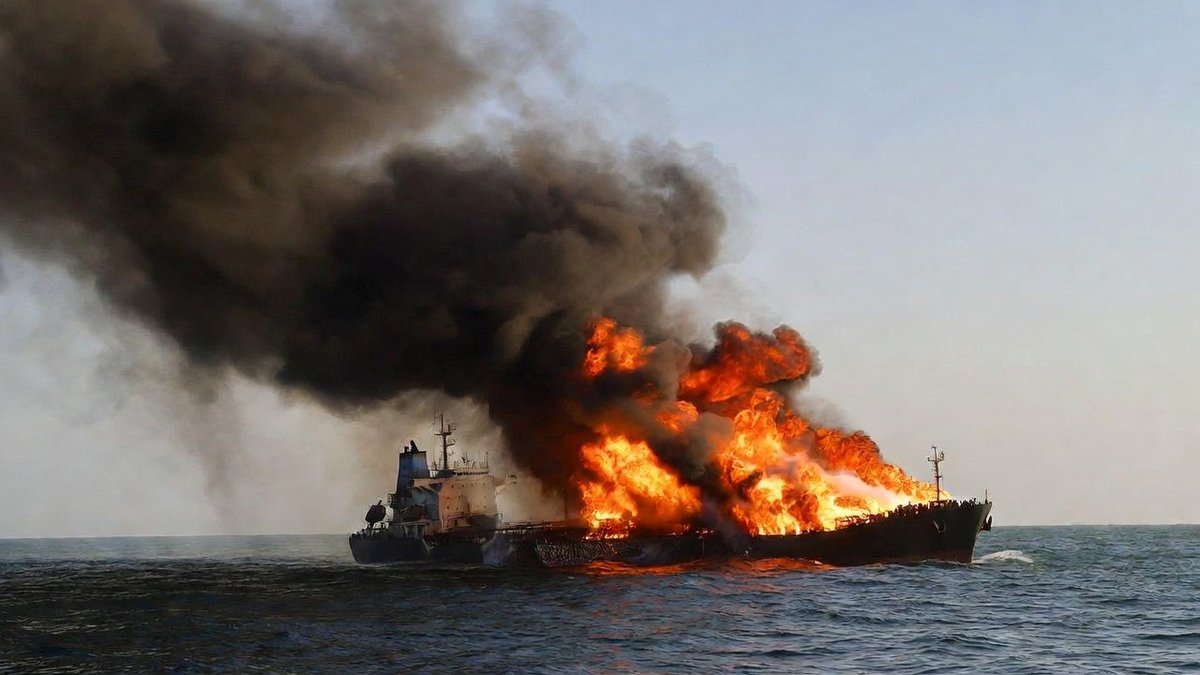
The Persian Gulf is on fire — literally. As Operation Epic Fury enters its seventh day, Iran's Islamic Revolutionary Guard Corps has escalated its maritime warfare campaign to a level not seen since the tanker wars of the 1980s. The US-linked tanker Athe Nova is burning in the northern Persian Gulf after being struck by two IRGC drones. The Strait of Hormuz — through which 20% of the world's daily oil supply flows — is effectively closed. And the global shipping industry is in full retreat.
The Athe Nova Strike
The IRGC confirmed that the Athe Nova — a US-linked oil tanker operating in the northern Persian Gulf — was struck by two drones and set ablaze. The strike is the latest in a rapidly escalating campaign of Iranian maritime attacks that began on the opening day of Operation Epic Fury. The IRGC did not explicitly claim responsibility in its initial statement but confirmed the vessel was on fire — describing it in the context of its broader military operations against US interests in the Gulf region. The US-flagged tanker Stena Imperative was also struck earlier in the week while moored at Khalifa Bin Salman Port in Bahrain, hit by two projectiles while stationary at berth. In total, multiple tankers have now been struck across the Persian Gulf, the Strait of Hormuz, and the Gulf of Oman since February 28 — with confirmed hits on the Skylight off Oman's Musandam peninsula, the Hercules Star off the UAE coast, the MKD Vyom in the Gulf of Oman, and now the Athe Nova in the northern Gulf.
The Strait of Hormuz: Effectively Closed
The IRGC has declared the Strait of Hormuz closed to all commercial traffic. A senior IRGC adviser delivered the bluntest possible message to the shipping world: "The strait is closed. If anyone tries to pass, the heroes of the Revolutionary Guards and the regular navy will set those ships ablaze." No formal international notice of closure has been issued by recognised maritime authorities — and US Central Command has maintained that the strait remains technically open. But in practice, commercial shipping has stopped. The combination of IRGC threats, active drone and missile strikes on vessels, and the withdrawal of war-risk insurance has produced a functional closure without a formal one.
Approximately 150 crude oil and LNG tankers have dropped anchor in open Gulf waters beyond the strait — clustered off the UAE, Saudi Arabia, Qatar, and other regional ports — waiting for conditions to improve. That wait may be a long one.
The Insurance Collapse: 90% of Global Tonnage Affected
The most consequential single development in the maritime crisis may not be the strikes themselves — it may be what happened in the insurance market. The international group of insurance associations has cancelled war-risk coverage for vessels in the Persian Gulf. This group provides protection for approximately 90% of the world's ocean-going tonnage. Without war-risk insurance, virtually no commercially operated vessel can legally or practically enter the Gulf. The de facto closure of the Strait of Hormuz through insurance withdrawal alone would have been devastating. Combined with active IRGC strikes on vessels, it has produced a near-total halt in Gulf maritime operations.
War-risk insurance premiums for Gulf transits surged from 0.125% to between 0.2% and 0.4% of vessel insurance value per transit in the days before the strikes began — adding a quarter of a million dollars per voyage for very large crude carriers. Since the IRGC began targeting vessels, those premiums are no longer available at any price for most operators.
Shipping Giants Suspend All Gulf Operations
The world's largest container shipping companies have responded with uniform clarity. Maersk, Hapag-Lloyd, and CMA CGM each announced the suspension of all vessel transits through the Strait of Hormuz until further notice — directing ships in or heading to the Persian Gulf to safe anchorages and rerouting services around the Cape of Good Hope while pausing Suez passages. MSC has instructed all Gulf-region vessels to proceed to designated safe shelters and has temporarily suspended worldwide cargo bookings to the Middle East. The combined effect is a near-total halt in commercial maritime operations across the world's most critical energy corridor.
The Global Impact: Oil, Gas & Food Supply Chains
The disruption is already being felt globally. Brent crude surged to $78.40 per barrel — up 13% — on the first day of the maritime crisis. European benchmark gas prices rose as much as 45% in a single session as the scale of LNG supply disruption became clear. Iraq has begun shutting down operations at the Rumaila oil field — one of the world's largest — due to lack of storage space with tankers unable to leave the strait. QatarEnergy has halted production at its Ras Laffan plant after it was struck by a drone.
The disruption now affects roughly 20–30% of global seaborne oil trade and a substantial share of LNG flows — with Europe and Asia most immediately exposed to the LNG shortage. President Trump announced that the US Development Finance Corporation would provide political risk insurance for maritime trade through the Gulf, and confirmed the US Navy stands ready to begin escorting tankers through the Strait of Hormuz. That escort operation, if it proceeds, would represent one of the most significant US naval commitments in the region since the original tanker wars of 1987 and 1988.
The Persian Gulf has not seen anything like this in nearly four decades. The Athe Nova is burning. The Strait is closed. And the world's oil supply chain is holding its breath.
For the latest updates on the Iran conflict and global energy markets, follow digital8hub.com.
Comments (0)
Please log in to comment
No comments yet. Be the first!