Travel
Iran Loses a Warship in the Indian Ocean: IRIS Dena Sunk Off Sri Lanka, 148 Sailors Missing
This is a breaking, developing story. All information is based on the latest available reports as of March 4, 2026.
The Iran conflict has reached the Indian Ocean. On the morning of Wednesday, March 4, 2026 — Day 5 of Operation Epic Fury — the Iranian Navy's Moudge-class frigate IRIS Dena transmitted a distress call from waters approximately 40 kilometres south of Galle, on the southern coast of Sri Lanka. Within hours, the ship had sunk. Sri Lanka launched an emergency rescue operation, recovering 32 critically wounded sailors from the sea. Of the IRIS Dena's 180-strong crew, 148 remain missing — and search and rescue prospects are dimming by the hour.
What Is the IRIS Dena?
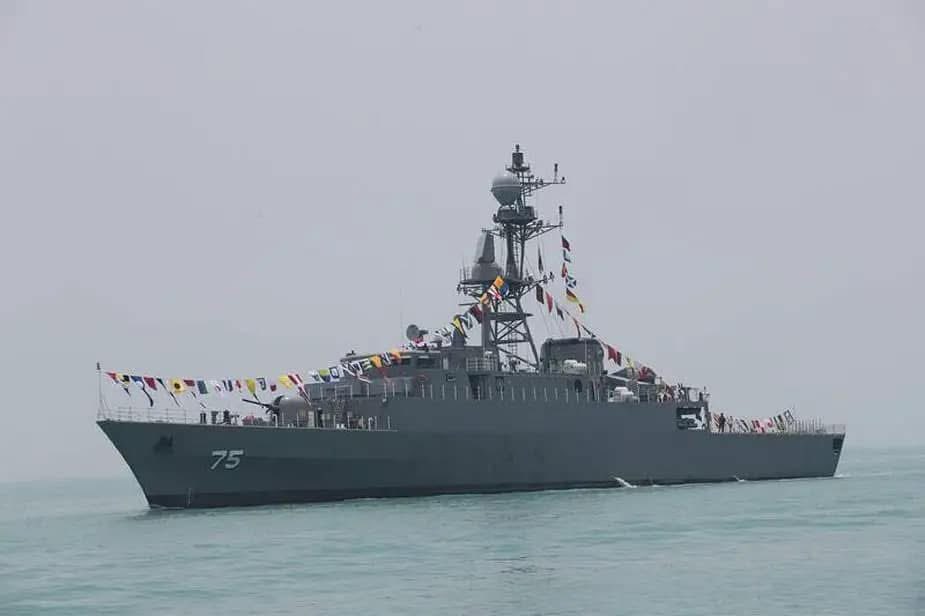
The IRIS Dena is one of Iran's most capable domestically built warships — a Moudge-class frigate in the Southern Fleet of the Islamic Republic of Iran Navy, named after Mount Dena in Iran's Zagros mountain range. The vessel displaces approximately 1,300 to 1,500 tonnes, stretches 94 metres in length, and is powered by four domestically manufactured Bonyan 4 engines delivering a combined 20,000 horsepower — making it the first Iranian destroyer equipped entirely with Iranian-made engines. The Dena carries advanced radar systems, surface-to-air and anti-ship missiles, torpedoes, anti-submarine warfare equipment, and a helicopter landing pad. It is, by any measure, a frontline military asset.
The IRIS Dena had been participating in the International Fleet Review 2026 in Visakhapatnam, India — a large-scale naval gathering hosted by the Indian Navy that brought together dozens of international fleets in a display of maritime cooperation. After taking part in the Fleet Review and Exercise MILAN 2026, the Iranian warship docked briefly in India before departing on its return voyage toward Iranian waters. It never arrived.
The Sinking: What Happened
At dawn on March 4, the IRIS Dena transmitted a distress call from a position approximately 40 nautical miles south of Galle — just outside Sri Lanka's territorial waters. Sri Lanka's Foreign Minister confirmed the incident in a statement to parliament, announcing that two Sri Lankan navy vessels and an aircraft had been deployed to assist. The first rescue teams reached the scene to find 32 sailors alive in the water — all critically wounded. They were transported to a hospital in Sri Lanka's south. The remaining 148 crew members have not been accounted for.
The cause of the explosion that sank the vessel has not been officially confirmed by either Sri Lanka or the United States. Sri Lanka's Foreign Ministry has been careful in its public statements — confirming the sinking and the rescue operation without attributing responsibility. The US has not yet issued a public statement on the incident. Sources familiar with the situation have suggested the vessel may have been struck below the waterline — raising the possibility of a torpedo strike from a submarine — though an airstrike attributed to US forces has also been widely reported as the cause of the explosion.
The Strategic Significance: Iran's Naval Reach Contested
The sinking of the IRIS Dena is strategically significant for several reasons. The Indian Ocean location of the incident — thousands of kilometres from the Gulf — demonstrates that Operation Epic Fury has extended well beyond the immediate theatre of operations in the Middle East. It also suggests that the United States has been tracking and targeting Iranian naval assets across the broader maritime domain, not just in the Gulf of Oman or the Arabian Sea.
The IRIS Dena's presence in Indian waters following the International Fleet Review raises serious questions about India's diplomatic position — New Delhi has thus far maintained studied neutrality in the Iran conflict, and the sinking of an Iranian warship in waters adjacent to Indian territorial influence creates an uncomfortable diplomatic moment for the Modi government. India has not yet issued a public statement.
This is not the first Iranian naval asset lost since Operation Epic Fury began. On March 1, US Central Command confirmed that American forces had struck and sunk an Iranian Navy Jamaran-class corvette at a pier in Chah Bahar on the Gulf of Oman. The destruction of the IRIS Dena now marks the second confirmed Iranian naval loss of the conflict — and the first to occur in the Indian Ocean, signalling a dramatic geographic expansion of the maritime dimension of the war.
148 Sailors Missing: The Human Toll
Behind the strategic significance is a human catastrophe. A 180-crew warship has sunk in open ocean, far from home, with rescue prospects fading. Sri Lanka's defence ministry confirmed it was continuing to search but acknowledged uncertainty about whether any further survivors would be found. The ocean south of Sri Lanka is deep, the water temperature unforgiving, and the time elapsed since the distress call is now measured in hours. For the families of the 148 missing Iranian sailors — sailors who were returning from a naval exercise, not a combat deployment — this is a story of devastating human loss.
The Iran conflict, which began in the skies over Tehran, has reached the Indian Ocean. The IRIS Dena has gone down. The search for its crew continues.
For the latest updates on the Iran conflict and Operation Epic Fury, follow digital8hub.com.
Comments (0)
Please log in to comment
No comments yet. Be the first!