Travel
Iran Hits Bahrain's Bapco Refinery: 405,000 Barrel-a-Day Facility Struck as Gulf Energy War Escalates
This is a breaking, developing story. All information is based on the latest available reports as of March 5, 2026.
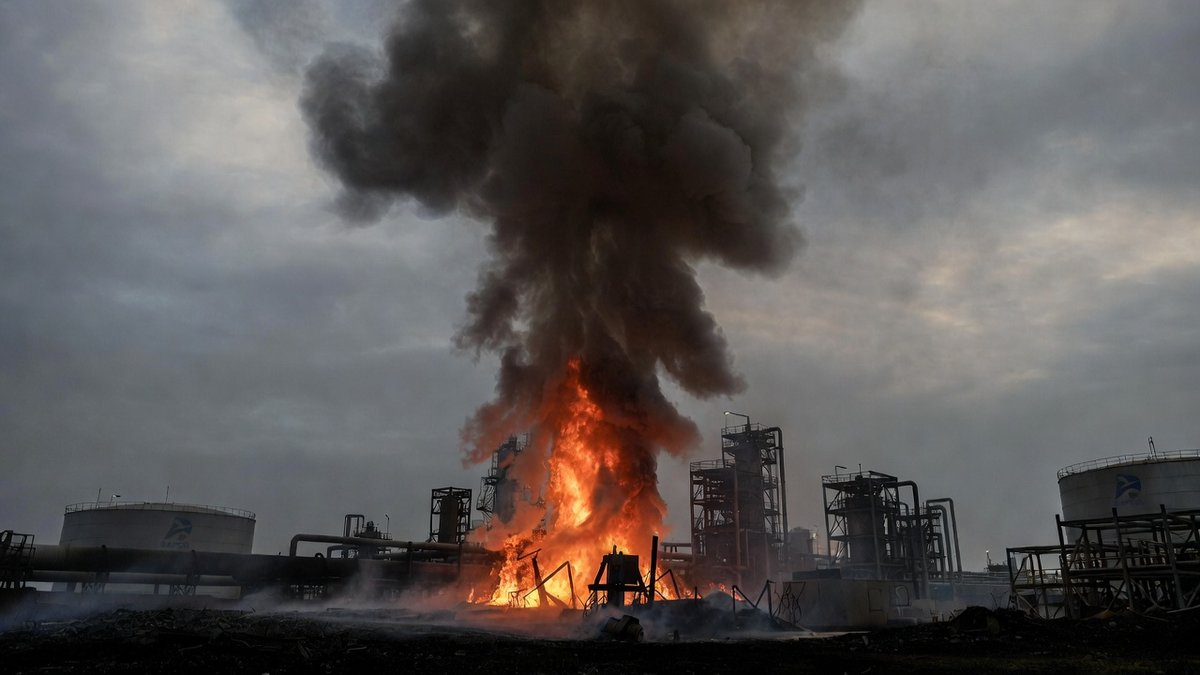
Iran has struck the heart of Bahrain's energy infrastructure. On the morning of Thursday, March 5, 2026 — Day 6 of Operation Epic Fury — an Iranian ballistic missile hit a unit at the Bapco Energies refinery in Maameer, Bahrain's main industrial zone, triggering a large fire at one of the Gulf's most critical oil processing facilities. Bahrain's Interior Ministry confirmed the strike and announced the fire had been brought under control. No casualties have been reported. Refinery operations are continuing. But the strike marks a dramatic escalation in Iran's campaign to weaponise Gulf energy infrastructure — and the global energy market is reacting accordingly.
What Happened at Bapco's Maameer Refinery
An Iranian ballistic missile struck a unit at the Bapco Energies refinery complex in the Maameer industrial area of Bahrain early Thursday morning. Large flames and thick black smoke were visible rising from the refinery immediately following the strike — footage consistent with a fire at a petroleum processing unit where volatile hydrocarbons are present. Emergency crews responded rapidly, and the Bahrain Interior Ministry confirmed in a statement that the fire had been brought under control. The ministry reported limited material damage and confirmed there were no fatalities or injuries. Refinery operations were confirmed as continuing following the incident — a critical detail for global energy markets closely monitoring every development in the Gulf.
What Is Bapco's Sitra Refinery — And Why It Matters
The Bapco Energies refinery struck Thursday is not a peripheral facility. It is Bahrain's primary oil processing installation — a cornerstone of the kingdom's energy economy and a significant piece of Gulf refining infrastructure. The Sitra refinery, operated by the Bahrain Petroleum Company and part of the Maameer industrial complex, processes approximately 380,000 to 405,000 barrels of crude oil per day — making it one of the larger refining operations in the Arabian Gulf. The facility is one of the oldest continuously operating refineries in the Middle East, with roots stretching back to Bahrain's emergence as an oil-producing nation in the 1930s. A sustained disruption to its operations would have direct implications for Bahrain's domestic fuel supply, its export revenue, and the regional energy balance at a moment when Gulf energy infrastructure is under unprecedented pressure.
The Broader Pattern: Gulf Energy Infrastructure Under Systematic Attack
The Bapco strike is the latest in an accelerating pattern of Iranian attacks on Gulf energy infrastructure that has unfolded since Operation Epic Fury began on February 28. Saudi Aramco's Ras Tanura refinery was struck on March 2 — triggering a fire that was contained but sent shockwaves through oil markets. QatarEnergy's Ras Laffan plant was hit by a drone, forcing a temporary production halt. An American-owned oil tanker was struck in the northern Persian Gulf on March 5. The Strait of Hormuz has been effectively closed to commercial traffic — with war-risk insurance withdrawn for approximately 90% of global ocean-going tonnage and over 150 tankers anchored in open Gulf waters waiting for conditions to improve.
Iran's targeting strategy is now unmistakably clear. By hitting refineries and terminals across Bahrain, Saudi Arabia, Qatar, and the UAE — while simultaneously threatening commercial shipping through the Strait of Hormuz — Tehran is attempting to demonstrate that America's military campaign against Iran carries an energy price that the entire world will pay. Every barrel of Gulf crude that cannot be refined or exported is a message to Washington, Riyadh, Doha, and global oil markets that Iran's reach extends far beyond its own borders.
Bahrain's Vulnerability — and Its Strategic Significance
Bahrain is uniquely exposed in the current conflict. The kingdom is home to the headquarters of the US Navy's Fifth Fleet — the most important American naval command in the Middle East — and has absorbed multiple Iranian strikes since February 28. The Fifth Fleet headquarters was struck in the opening wave of Iranian retaliation. Mina Salman Port was hit on March 2. Multiple buildings across Manama and Muharraq have been damaged. By the beginning of March, Bahraini authorities confirmed they had intercepted 54 Iranian drone and missile strikes across the country. The Bapco refinery strike on March 5 adds to a toll that is already extraordinary for a nation of Bahrain's size.
Bahrain's government has condemned what it calls Iranian aggression in strong terms — but has been careful to manage public messaging around each incident to prevent panic and maintain economic stability. The Interior Ministry's rapid confirmation of the Bapco fire — and its equally rapid announcement that the blaze was contained — reflects a communications strategy calibrated to project control in a situation that is anything but controlled.
Market Impact: Crack Spreads Surge, Jet Fuel at Nine-Month Low
Energy traders responded immediately to the Bapco strike. Crude crack spreads — the margin between crude oil and refined products — surged as the strike raised fresh concerns about Gulf refining capacity at a moment when the Strait of Hormuz is already effectively closed. Jet fuel stocks at ARA — Amsterdam-Rotterdam-Antwerp, Europe's primary refined products hub — hit a nine-month low as fears over Gulf supply disruption intensified. Gasoline cracks hit four-year highs in Asian markets. The Persian Gulf conflict is no longer a risk premium on crude oil alone — it is beginning to bite into refined product availability across every major global market.
The fire at Bapco is out. The refinery is running. But the war against Gulf energy infrastructure is not over — and every new strike reminds the world of how thin the margin between managed disruption and genuine energy crisis really is.
For the latest updates on Operation Epic Fury and the global energy market, follow digital8hub.com.
Comments (0)
Please log in to comment
No comments yet. Be the first!