Travel
Blue Origin Rocket Explodes During Cape Canaveral Test Flight
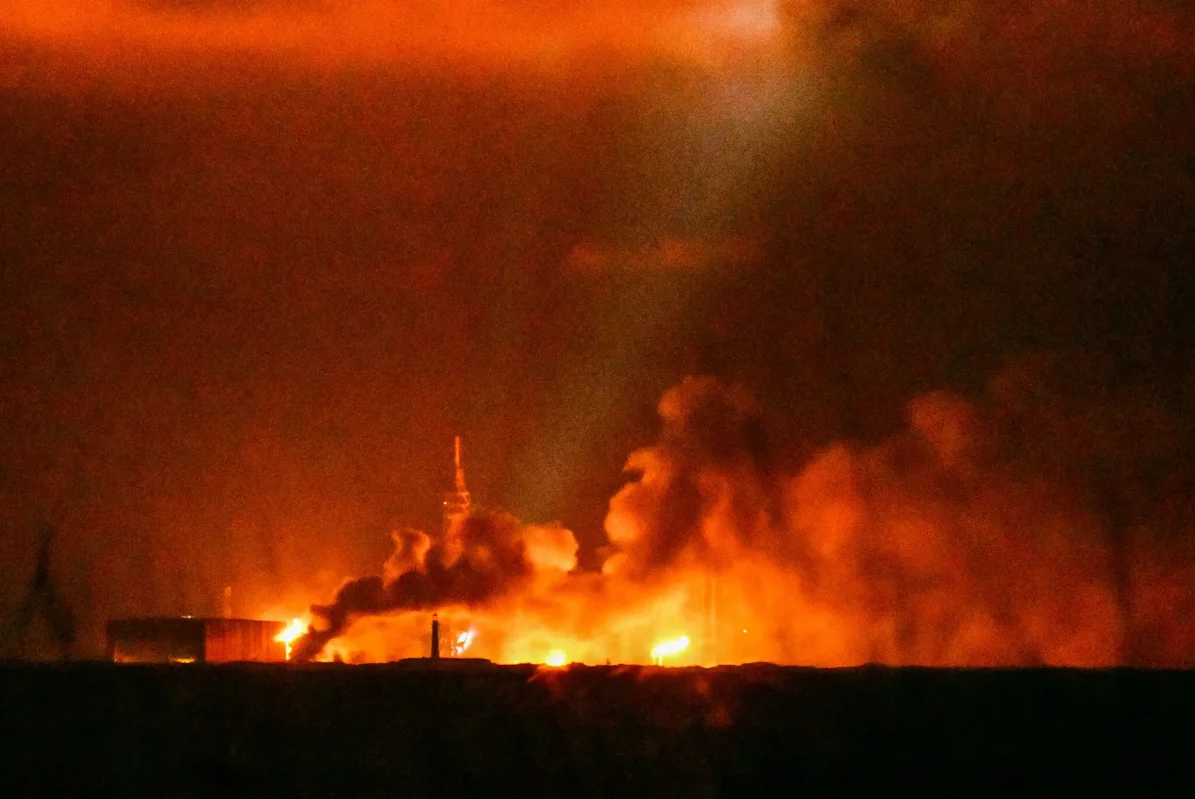
Blue Origin, the aerospace company founded by Jeff Bezos, experienced a major setback on May 28, 2026, when its powerful New Glenn rocket exploded during a critical test flight from Cape Canaveral Space Force Station in Florida.The uncrewed rocket, carrying test payloads and experimental hardware, disintegrated approximately 4 minutes and 20 seconds into the flight. Dramatic video footage showed a bright flash followed by a massive fireball as the vehicle broke apart at high altitude. Debris fell into the Atlantic Ocean, and no injuries were reported on the ground.This incident represents one of the most significant failures in Blue Origin’s 20-year history and comes as the company attempts to catch up with SpaceX in the heavy-lift commercial launch market.What We Know So FarAccording to preliminary statements from Blue Origin and the Federal Aviation Administration (FAA), the anomaly occurred shortly after the booster separation phase. The rocket was performing its third integrated flight test (IFT-3), aimed at validating the vehicle’s performance across multiple stages, including first-stage recovery.The explosion happened at an altitude of roughly 120 kilometers (75 miles), well into the upper atmosphere. The rocket was carrying a dummy payload and several scientific experiments intended to test re-entry conditions and thermal protection systems.Blue Origin’s flight control team activated the vehicle’s automatic termination system, which is designed to safely destroy the rocket in the event of a major anomaly to protect people and property on the ground.Technical Background on New GlennNew Glenn is Blue Origin’s flagship heavy-lift rocket, designed to compete directly with SpaceX’s Falcon 9 and Falcon Heavy. Key specifications include:Height: 98 meters (322 feet)
Reusable first stage with 7 BE-4 engines
Payload capacity to Low Earth Orbit: up to 45 metric tons
Designed for both commercial satellite deployment and future human spaceflight missions
The rocket uses liquid methane and liquid oxygen (methalox) propellants, a choice intended to enable easier reusability and lower costs compared to traditional kerosene-based systems.This was the third test flight of the full New Glenn stack. The first two flights achieved partial success, with the first stage successfully landing in the ocean during IFT-2.Company ResponseBlue Origin issued a brief statement acknowledging the anomaly:“Today’s test flight did not achieve all objectives. Our team is analyzing telemetry data and will provide updates as we learn more. Safety remains our top priority as we continue developing New Glenn.”
Jeff Bezos, the company’s founder, posted on X: “Tough day, but we learn, we improve, and we keep moving forward. Proud of the team.”The FAA has grounded all Blue Origin launches pending a full mishap investigation, a standard procedure for any anomaly during licensed operations.Potential CausesWhile the official investigation is ongoing, aerospace experts have pointed to several possible factors:Failure in one or more BE-4 engines during maximum dynamic pressure (Max-Q)
Issue with stage separation mechanisms
Propellant feed or pressurization problem
Structural failure under aerodynamic stress
New Glenn uses the powerful BE-4 engine, which has faced development challenges in the past. This is the first full-stack flight where all seven first-stage engines were firing simultaneously under real flight conditions.Impact on Blue OriginThis explosion is a significant blow for Blue Origin on multiple fronts:Schedule Delays: The company had ambitious plans for multiple New Glenn flights in 2026 and 2027, including commercial satellite missions.
Customer Confidence: Several major customers, including Amazon’s Project Kuiper, were counting on New Glenn for reliable heavy-lift capability.
Financial Pressure: Development of New Glenn has reportedly cost Blue Origin billions of dollars, with this failure adding to the financial burden.
Reputation: While SpaceX has normalized rocket failures as part of the development process, Blue Origin has historically maintained a more conservative, safety-first image.
Comparison with SpaceXThe incident invites inevitable comparisons with SpaceX, which has experienced multiple spectacular failures during Starship development but has also achieved rapid iteration and eventual success. Blue Origin’s slower, more methodical approach has drawn both praise for safety consciousness and criticism for being overly cautious.Broader Industry ImplicationsThis event highlights the inherent risks and challenges in developing new heavy-lift rockets. Even well-funded companies with experienced teams encounter significant technical hurdles when pushing the boundaries of reusable launch technology.The failure may also affect the broader commercial space industry, as customers evaluate launch provider reliability and schedule certainty. It could temporarily strengthen SpaceX’s dominant position in the heavy-lift market.What Happens Next?The FAA mishap investigation could take several months. Blue Origin will likely conduct a thorough root-cause analysis and implement fixes before attempting another flight. The company has a strong safety culture and substantial financial backing from Jeff Bezos, so it is expected to recover and continue development.For space enthusiasts and the industry, this incident serves as a reminder that spaceflight remains difficult and dangerous, even in 2026. Every failure, while disappointing, provides valuable data that ultimately makes future flights safer.As investigations continue and more details emerge, the aerospace community will be watching closely to see how Blue Origin responds to this challenge.
Comments (0)
Please log in to comment
No comments yet. Be the first!