Travel
Americans, Leave Now: US Suspends Kuwait Embassy Operations as Iran War Reaches America's Doorstep
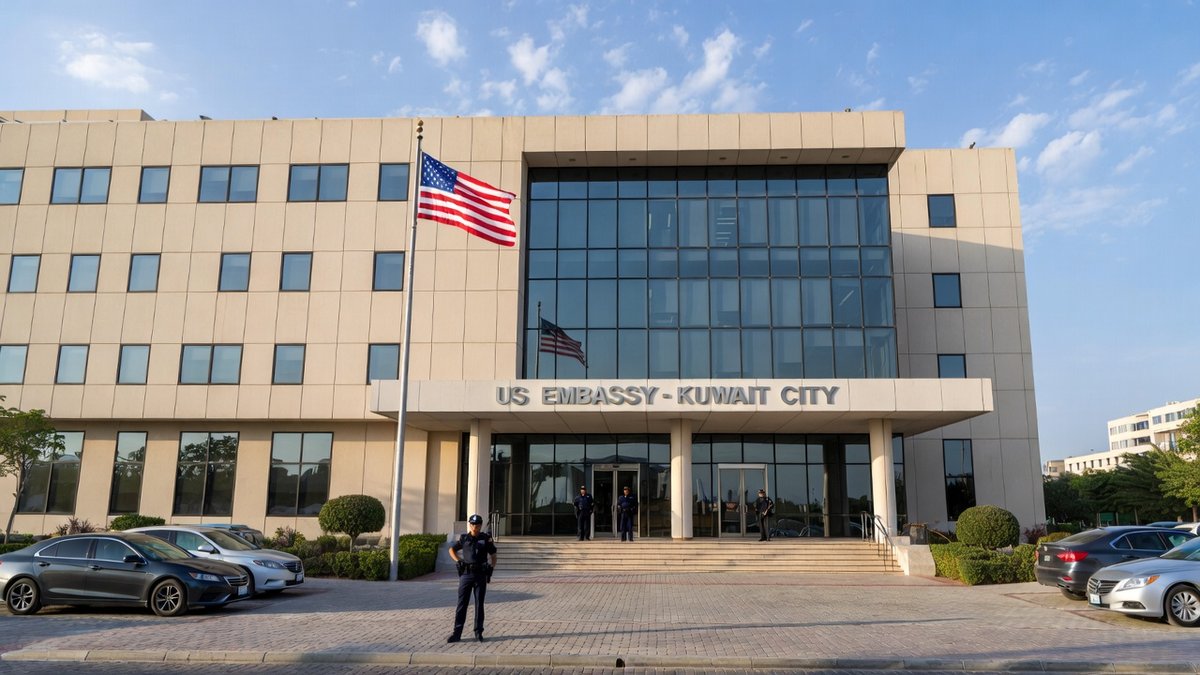
The US State Department has suspended all consular and embassy operations in Kuwait City — ordering non-emergency American diplomatic staff to depart the country and issuing its most severe travel warning for Kuwait: Do Not Travel, Level 4. The announcement, made Thursday March 5, 2026, marks a dramatic escalation in the diplomatic footprint of Operation Epic Fury — and signals that Washington now considers Kuwait an active conflict zone requiring the same precautionary posture normally reserved for war theatres like Yemen, Somalia, and active combat zones.
What the Suspension Means
The US Embassy in Kuwait City has suspended all routine consular services — including visa processing, passport renewals, American citizen services, and notarial functions. Non-emergency diplomatic personnel and their dependents have been ordered to depart Kuwait. A skeleton crew of essential staff remains in place to manage emergency communications and maintain basic diplomatic presence. American citizens currently in Kuwait have been urged in the strongest possible terms to leave immediately using available commercial flights — and to register with the Smart Traveller Enrollment Program if they have not already done so.
The Level 4 Do Not Travel advisory — the highest warning the State Department issues — places Kuwait alongside active war zones in terms of official US government guidance. It advises all American citizens against travelling to Kuwait for any reason and urges those already present to depart without delay. The advisory cites the ongoing conflict between the United States and Iran, the risk of Iranian missile and drone strikes on Kuwait's territory, and the specific threat to US military and civilian facilities in the country.
Why Kuwait — And Why Now
Kuwait's exposure in the current conflict is direct and severe. The country hosts two major US military installations — Camp Arifjan, one of the largest US Army bases in the Middle East and the primary logistics hub for US ground forces in the Gulf, and Ali Al Salem Air Base, a critical staging point for US Air Force operations across the region. Both facilities were struck by Iranian missiles in the opening days of Operation Epic Fury. Camp Arifjan absorbed direct hits on February 28 and March 1. Ali Al Salem was targeted in Iran's third retaliatory wave. Three US service members were killed when an F-15E Strike Eagle crashed at Ali Al Salem after being struck by Kuwaiti air defence missiles in a friendly fire incident — the single deadliest US personnel loss of the conflict to date.
Iran has explicitly identified US military installations in Kuwait as legitimate targets — and the IRGC has confirmed multiple strikes on Kuwaiti territory as part of its retaliatory campaign against American forces participating in Operation Epic Fury. Kuwait City itself has seen air raid sirens, interceptions of incoming drones by Patriot missile batteries, and structural damage to buildings in areas near the port and the industrial zone south of the capital.
Kuwait's Diplomatic Tightrope
Kuwait's government has been navigating one of the most delicate diplomatic positions of any Gulf state since the conflict began. The country is formally a US security partner — hosting American forces under a bilateral defence agreement — but has historically pursued a foreign policy of mediation and neutrality in regional conflicts, maintaining functional relations with Iran even as it hosts US military assets. The government has not publicly condemned Iran's strikes on its territory in the same terms used by Bahrain or Saudi Arabia — a deliberate ambiguity designed to preserve whatever back-channel communications with Tehran remain possible.
That position is becoming increasingly difficult to sustain. With Iranian missiles landing near US military installations on Kuwaiti soil, American diplomatic staff being evacuated, and a Level 4 travel warning in place, the fiction of Kuwait as a neutral party is fraying at the edges. Kuwaiti officials have quietly requested that the US keep its military footprint as discreet as possible — aware that every visible American military asset on their soil makes them a more attractive target for Iranian retaliation.
The Broader Embassy Picture: A Region Closing Down
Kuwait is not alone. The US Embassy in Bahrain has reduced its staffing significantly following Iranian strikes on Manama. The Embassy in Baghdad — already operating under heightened security — has moved to emergency protocols following rocket attacks from Iran-aligned militias in Iraq. The Embassy in Doha has issued security alerts following the strike on Al Udeid Air Base. American diplomatic presence across the Gulf is contracting in real time as the conflict enters its seventh day with no ceasefire in sight.
The State Department's travel advisory map of the Middle East now shows a region almost entirely coloured red — Do Not Travel warnings covering Iran, Iraq, Yemen, Lebanon, Syria, and now Kuwait, with Elevated warnings in place for Bahrain, Qatar, Saudi Arabia, and the UAE. For American citizens across the Gulf, the message from Washington is unambiguous: the time to leave was yesterday.
For the latest updates on Operation Epic Fury and US diplomatic developments, follow digital8hub.com.
Comments (0)
Please log in to comment
No comments yet. Be the first!