Travel
A 600kg NASA Satellite Is Falling to Earth Tonight at 7:45pm
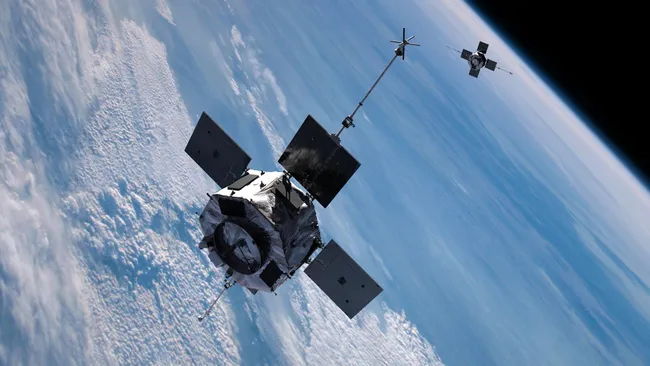
Tonight at approximately 7:45pm EDT — give or take 24 hours — a 1,323-pound (600-kilogram) NASA satellite will fall out of the sky and reenter Earth's atmosphere after nearly 14 years in orbit. NASA's Van Allen Probe A, one of two spacecraft launched together from Cape Canaveral on August 30, 2012, is making its final uncontrolled descent back to the planet it spent its entire operational life studying from above. The US Space Force's 18th Space Control Squadron — which tracks objects in Earth's orbit — has confirmed the reentry prediction and will continue monitoring the spacecraft as it approaches. Most of the satellite will burn up in the intense heat of atmospheric reentry. Some components are expected to survive. The risk to any individual human being on the surface of the planet is approximately 1 in 4,200 — which sounds alarming until you realise it is roughly the same odds as being struck by lightning in any given year. You will almost certainly be fine. But the story of Van Allen Probe A — where it came from, what it discovered, and how it is coming home — is one of the most remarkable in the history of space science.
What Was Van Allen Probe A? The Satellite That Mapped Earth's Most Dangerous Neighbourhood
The Van Allen Probes — originally named the Radiation Belt Storm Probes before being renamed in honour of James Van Allen, the physicist who discovered Earth's radiation belts in 1958 — were designed for one of the most scientifically ambitious missions NASA had ever attempted in near-Earth space. Their target was the Van Allen radiation belts: two doughnut-shaped rings of intensely energetic charged particles trapped by Earth's magnetic field, extending from approximately 1,000 kilometres above the surface to 60,000 kilometres at their outer edge. The inner belt is predominantly composed of high-energy protons. The outer belt is dominated by electrons. Both belts are extraordinarily dangerous to both electronics and human biology — a spacecraft passing through them without shielding would have its systems degraded within days, and an unprotected human would receive a lethal radiation dose in minutes. The Van Allen Probes were designed to fly directly through these belts — repeatedly, systematically, for years — and report back on exactly what was happening inside them. Their findings were transformational for space science, satellite engineering, and crewed mission planning.
Seven Years of Science: What the Probes Discovered
Van Allen Probe A and its twin, Probe B, were designed to operate for two years. They operated for nearly seven — gathering data until both spacecraft exhausted their fuel supplies and could no longer orient themselves toward the Sun to charge their solar panels. NASA decommissioned both probes in 2019. In those seven years, the two spacecraft produced a scientific legacy that will influence space mission design for decades. The probes discovered a previously unknown third radiation belt — a transient ring that appeared briefly between the inner and outer belts following a powerful solar storm in 2012, then disappeared within weeks. They documented in unprecedented detail how the outer belt's electron population swells and shrinks in response to solar activity — findings that directly improved the accuracy of space weather forecasting models used to protect both satellites and power grids on Earth. They measured the precise energies and compositions of the charged particles that make the belts so dangerous — data that has been directly applied to shielding design for subsequent NASA spacecraft, including components of the Artemis programme. And they contributed to a fundamental revision in scientific understanding of how particles are accelerated to near-relativistic speeds within the belts — resolving a decades-old debate about the mechanisms driving that acceleration.
What Happens Tonight: Reentry, Breakup & Survival
As Van Allen Probe A hits the upper atmosphere tonight, it will experience the most violent end any spacecraft can face. The combination of atmospheric drag and frictional heating will subject the satellite's aluminium and composite structures to temperatures exceeding 1,600 degrees Celsius — hot enough to vaporise most of the spacecraft almost instantly. NASA expects the vast majority of the 1,323-pound satellite to burn up completely during reentry — leaving nothing but superheated gas and a brief streak of light across the sky for anyone fortunate enough to be in the right place at the right time to see it. However, some components are expected to survive reentry and reach the surface. Specifically, components made from titanium, stainless steel, or other high-melting-point metals — typically instrument housings, structural brackets, and fuel tanks — are most likely to survive the descent and impact the ground or ocean at high velocity. NASA has not specified precisely which components are expected to survive or estimated the total mass of surviving debris. The uncertainty window of plus or minus 24 hours means the reentry location cannot be predicted with precision — with 71% of Earth's surface covered by ocean, the most likely landing zone for any surviving debris is open water.
Should You Worry? The 1-in-4,200 Number Explained
The probability of any single human being on Earth being struck by debris from Van Allen Probe A's reentry is approximately 1 in 4,200. That figure sounds alarming in isolation. In context, it is genuinely reassuring. It represents the total risk distributed across all 8 billion people on Earth simultaneously — meaning the odds that any particular individual is struck are approximately 1 in 33 trillion. For comparison, the odds of being struck by lightning in a given year are approximately 1 in 1.2 million. The odds of being hit by a meteorite are estimated at 1 in 1.6 trillion. The Van Allen Probe A reentry presents a risk that is orders of magnitude smaller than either of those. NASA has not issued any public safety advisory beyond its standard notification. There is no recommended action for the general public. The US Space Force will continue monitoring the spacecraft's trajectory as reentry approaches and will update its predictions as more data becomes available. Tonight at 7:45pm EDT, a satellite that spent fourteen years mapping Earth's most dangerous neighbourhood will make its final, fiery return home. Watch the skies. For the latest science and space coverage, follow digital8hub.com.
Comments (0)
Please log in to comment
No comments yet. Be the first!