Sports
Two Months Later, Morocco Are AFCON Champions: CAF Strips Senegal of the Title After Their Walk-Off in the Final
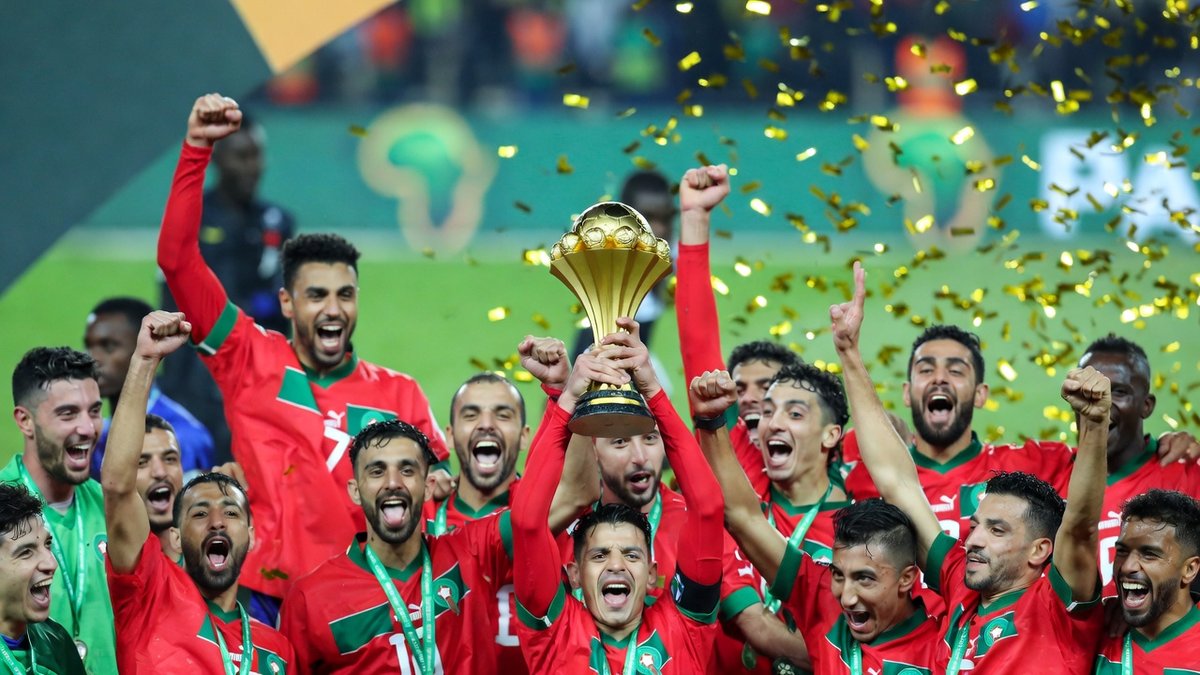
Two months after one of the most chaotic finals in the history of the Africa Cup of Nations, the trophy has changed hands. The Confederation of African Football's Appeal Board issued a landmark ruling on Tuesday March 17, 2026 — stripping Senegal of the AFCON 2025 title they won on the pitch on January 18 and awarding Morocco a 3-0 administrative victory, making the Atlas Lions champions of Africa for the first time since 1976. "The Senegal National Team is declared to have forfeited the Final Match of the TotalEnergies CAF Africa Cup of Nations Morocco 2025," the CAF Appeal Board's official statement read. "The result of the Match is recorded as 3-0 in favour of the Fédération Royale Marocaine de Football." The ruling sets aside the original CAF Disciplinary Board decision — which had left the 1-0 Senegal result intact while imposing fines and bans on both federations — and upholds Morocco's appeal in full. It is one of the most dramatic reversals in the history of African football.
What Happened on January 18: The Walk-Off That Changed Everything
The AFCON final at the Prince Moulay Abdellah Stadium in Rabat was already one of the most fraught occasions in recent continental football history before the moment that ultimately decided its legacy. With the scores level at 0-0 deep into stoppage time, referee Jean-Jacques Ndala awarded Morocco a penalty following a VAR review — a decision that immediately triggered furious protests from Senegal's players and coaching staff. What followed was unprecedented: Senegal's players, led by head coach Pape Thiaw, walked off the pitch in protest and refused to continue playing. The delay lasted approximately 15 minutes — during which scenes of chaos unfolded in and around the stadium, with fans attempting to storm the field, players from both teams involved in confrontations, and security forces deployed around the pitch perimeter. When the players eventually returned, Morocco forward Brahim Díaz stepped up to take the penalty — and missed, striking a Panenka attempt straight into the hands of goalkeeper Edouard Mendy. The game went to extra time. In the 20th minute of extra time, Pape Gueye struck a thunderous winner for Senegal. The Lions of Teranga celebrated what appeared to be their second AFCON crown. Morocco's players, shattered, collapsed to the turf. What nobody knew was that the celebrations would last only two months.
The Regulations: Articles 82 & 84 — Refusing to Play Means Forfeiting
The CAF Appeal Board's ruling turns on two specific articles of the AFCON regulations. Article 82 states that if a team refuses to play or leaves the field before the end of the match without the referee's authorisation, it must be considered the loser and definitively eliminated from the competition. Article 84 sets out the consequences of such a forfeit — including the administrative recording of the result as 3-0 in favour of the opposing team. The initial CAF Disciplinary Board had declined to apply these articles — concluding that Senegal's walk-off, while a serious breach of conduct warranting heavy fines and suspensions, did not constitute a forfeit under the strict meaning of the regulations. Morocco's Royal Football Federation appealed that decision immediately. The CAF Appeal Board has now found that the Disciplinary Board was wrong — that Senegal's conduct does fall within the scope of Articles 82 and 84, and that the consequences set out in those articles must be applied. The ruling also addressed Morocco's own conduct during the match. The Appeal Board dismissed Morocco's appeal regarding the interference around the VAR review area — confirming a $100,000 fine for the Moroccan federation. The fine for laser devices used by Moroccan supporters was reduced to $10,000. The fine related to ball boys — whose attempt to grab Edouard Mendy's towel became one of the more surreal images of the entire final — was halved to $50,000.
The Reaction: Senegal Consider Withdrawing from Future AFCONs
The ruling has detonated across African football with the force of a bomb. Senegal's Football Federation announced almost immediately after the ruling that they are considering withdrawing from future AFCON tournaments — a statement of extraordinary gravity that, if followed through, would represent one of the most significant protests against a governing body decision in African sporting history. The ruling has also been described as potentially setting a dangerous precedent: if a walk-off protest in a continental final can be used to overturn a result two months after the fact, the question of what other protests or incidents might trigger similar retrospective forfeit rulings becomes impossible to avoid. As digital8hub.com has reported, Morocco are simultaneously preparing for the 2026 FIFA World Cup — where, in a separate and unrelated controversy, Iran has requested that its matches be moved from the United States to Mexico. The Atlas Lions' World Cup campaign now begins with a dramatically different psychological backdrop than the one they had two months ago: not a team still grieving a home final that slipped away, but the champions of Africa. As for Senegal — who as digital8hub.com has covered, also declined friendly offers from Argentina and Spain for the March 2026 international window — the question of how they respond to the stripping of a title their players won on the pitch will define the federation's next chapter. The trophy belongs to Morocco now. Whether the football world considers them the true champions is a different question entirely. For the latest AFCON coverage, World Cup 2026 news, and all football developments, follow digital8hub.com.
Comments (0)
Please log in to comment
No comments yet. Be the first!