Sports
Iran Asks FIFA to Move World Cup Matches From America to Mexico
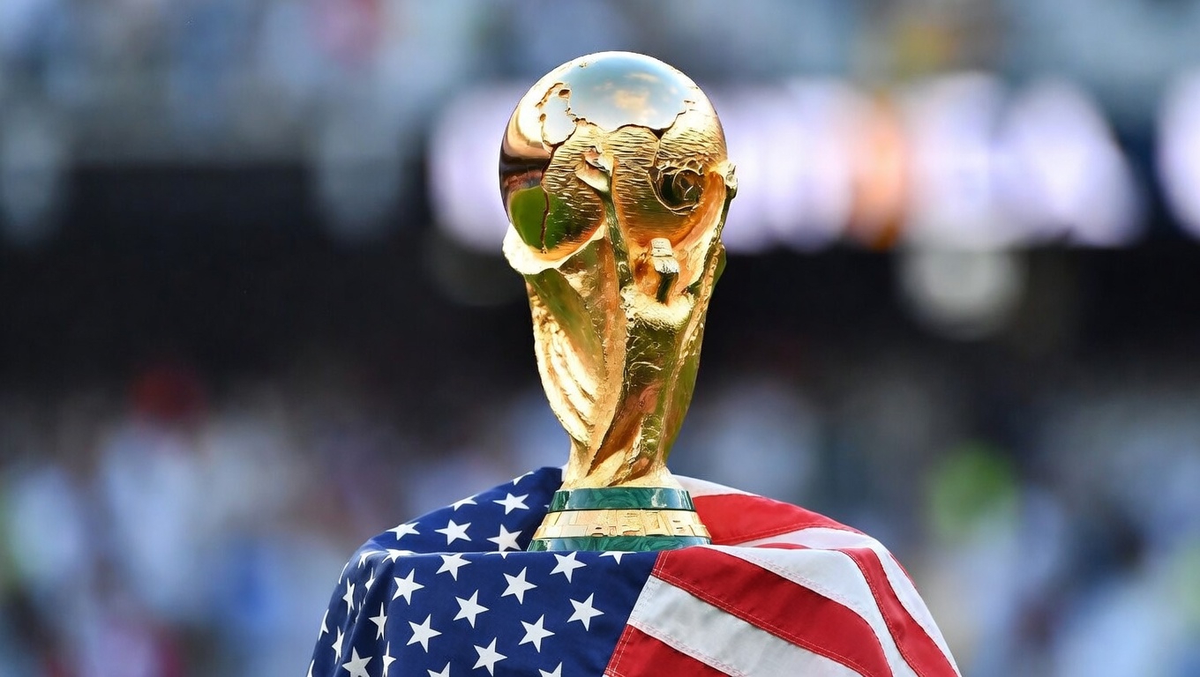
They were the first Asian nation to qualify for the 2026 FIFA World Cup. They secured their spot on March 25, 2025 — a full year before the tournament begins — with a victory over Uzbekistan in Tehran that set off wild celebrations across a country of more than 90 million passionate football fans. Iran's World Cup qualification was supposed to be a moment of uncomplicated joy in a nation that has qualified for each of the past four editions of football's greatest tournament. Instead, on Tuesday March 17 — Day 18 of Operation Epic Fury, with American and Israeli bombs still falling on Iranian cities and IRGC drones still striking Gulf state infrastructure — Iran's Football Federation president Mehdi Taj confirmed that the country is in active negotiations with FIFA to move its three group-stage matches from the United States to Mexico, the tournament's co-host neighbour. "When Trump has explicitly stated that he cannot ensure the security of the Iranian national team, we will certainly not travel to America," Taj said in a statement posted on the Iranian embassy in Mexico's official X account. "We are currently negotiating with FIFA to hold Iran's matches in the World Cup in Mexico." FIFA responded with four sentences that said almost nothing and committed to nothing. The most complicated World Cup in history just got significantly more complicated.
Iran's Schedule: Los Angeles, Los Angeles, Seattle — All in the US
The specific difficulty of Iran's situation is that all three of their group-stage matches are currently scheduled to take place on American soil. Iran was drawn into Group G alongside Belgium, Egypt, and New Zealand — and their complete group schedule is: New Zealand on June 16 at SoFi Stadium in Inglewood, California; Belgium on June 21 at SoFi Stadium in Inglewood, California; and Egypt on June 27 at Lumen Field in Seattle, Washington. There is no group-stage match scheduled for Mexico or Canada. If FIFA were to accommodate Iran's request, it would need to find replacement venues in Mexico for all three matches — displacing whatever fixtures were already scheduled at those Mexican venues — and negotiate replacement broadcast rights, ticket arrangements, and logistical infrastructure within less than three months before the tournament begins. The 2026 World Cup is already the most logistically complex tournament ever staged: 48 teams, three host countries, 16 venues spread across thousands of miles, and a scheduling matrix that was assembled over years by FIFA's organising committee. Pulling three fixtures out of the US and inserting them into Mexico is not, in FIFA's own assessment, a straightforward amendment. It is a structural disruption.
Trump's Role: "I Cannot Ensure Their Safety" — Then "They're Welcome"
The chain of events that produced Tuesday's request began with President Trump — as so many of the stories that digital8hub.com has covered in 2026 have done. On March 11, FIFA president Gianni Infantino met with Trump and posted on Instagram that the US President had "reiterated that the Iranian team is, of course, welcome to compete in the tournament in the United States" — framing the meeting as a resolution of the uncertainty. Less than a week later, Trump posted on Truth Social that while the Iranian national team was welcome to the World Cup, he genuinely did not believe it was appropriate for them to attend "for their own life and safety" — a statement that Iran's football federation president immediately cited as evidence that the US could not provide the security guarantee a host nation is obligated to provide. "When Trump has explicitly stated that he cannot ensure the security of the Iranian national team, we will certainly not travel to America," Taj said. The logical and legal weight of that argument is not trivial. FIFA's World Cup hosting agreement with the United States requires the host nation to guarantee visa access and physical security for all participating teams and their delegations. Trump's Truth Social post — whether intended as a genuine security warning, a political statement, or something in between — has been used by Iran as documentary evidence that the US has failed to provide that guarantee.
FIFA's Options: Move the Matches, Replace Iran, or Reduce Group G
FIFA's response to Iran's request has been carefully non-committal: "FIFA is in regular contact with all participating member associations, including IR Iran, to discuss planning for the FIFA World Cup 2026. FIFA is looking forward to all participating teams competing as per the match schedule announced on December 6, 2025." That statement is the diplomatic equivalent of saying nothing while appearing to say something. Behind the diplomatic language, FIFA faces three concrete options. The first is to accommodate Iran's request and move the group-stage matches to Mexico — resolving the group-stage problem but not the knockout-stage problem, since Iran advancing from Group G would slot them into a knockout bracket that currently has US venues attached to it. The second option is to replace Iran with another team if they withdraw — with Iraq the most frequently cited replacement candidate, though that process would require triggering FIFA's force majeure regulations and a separate set of logistical complications involving Iraq's own ongoing World Cup playoff situation. The third option is to reduce Group G to three teams and adjust the schedule accordingly — the cleanest solution in terms of FIFA's existing infrastructure but the most controversial in terms of sporting integrity, since Belgium, Egypt, and New Zealand qualified for the tournament knowing they would play three group-stage matches. As digital8hub.com has reported, the Asian Football Confederation's Secretary General Windsor John said as of Monday that Iran has not formally notified the AFC of any withdrawal intention — maintaining the official position that Iran intends to participate while the federation simultaneously pursues the relocation request. "At the end of the day, it's the federation who should decide if they're playing, and as of today, the federation has told us that they are going to the World Cup," John said.
The Bigger Picture: Football, War & the World Cup's Impossible Position
The 2026 FIFA World Cup was supposed to be the tournament that healed divisions, brought nations together, and demonstrated that sport could transcend politics. Gianni Infantino said exactly that in his March 11 Instagram post — "We all need an event like the FIFA World Cup to bring people together now more than ever." The Iranian national team's predicament exposes how hollow that aspiration becomes when the host nation is simultaneously at war with one of the participating nations. As digital8hub.com has reported across 18 days of Operation Epic Fury coverage, Iran has suffered catastrophic losses — its Supreme Leader killed, its infrastructure systematically destroyed, its military capabilities degraded, its economy under unprecedented pressure. Its football players — who train in Tehran, whose families live in Iranian cities that have been struck by American and Israeli bombs — are being asked to travel to America, board American flights, stay in American hotels, and play football in American stadiums while that war continues. The request to move to Mexico is, in that context, not a geopolitical manoeuvre. It is a human one. For the latest coverage of the Iran World Cup crisis, Operation Epic Fury, and all football news, follow digital8hub.com.
Comments (0)
Please log in to comment
No comments yet. Be the first!