Sports
Bruins Crushed at Historic Rose Bowl: Washington's 48-14 Rout Highlights UCLA's Dismal Season
The Rose Bowl has witnessed countless memorable moments in college football history—thrilling victories, championship celebrations, and iconic performances that live forever in sports lore. Saturday night's contest between UCLA and Washington will not be remembered among them. Instead, the Bruins' 48-14 shellacking at the hands of the Huskies may be recalled as a melancholy ending to what could be UCLA's final chapter in one of America's most storied stadiums.
Before a sparse crowd of just 38,201 fans—a number that spoke volumes about the state of the program—the Bruins were systematically dismantled by a Washington team that needed little motivation to dominate their former Pac-12 rivals. For UCLA, the defeat represented not just another loss in a disappointing season, but potentially the last time the Bruins will play at home in the venerable venue they've called home since 1982.
A Night to Forget in Pasadena
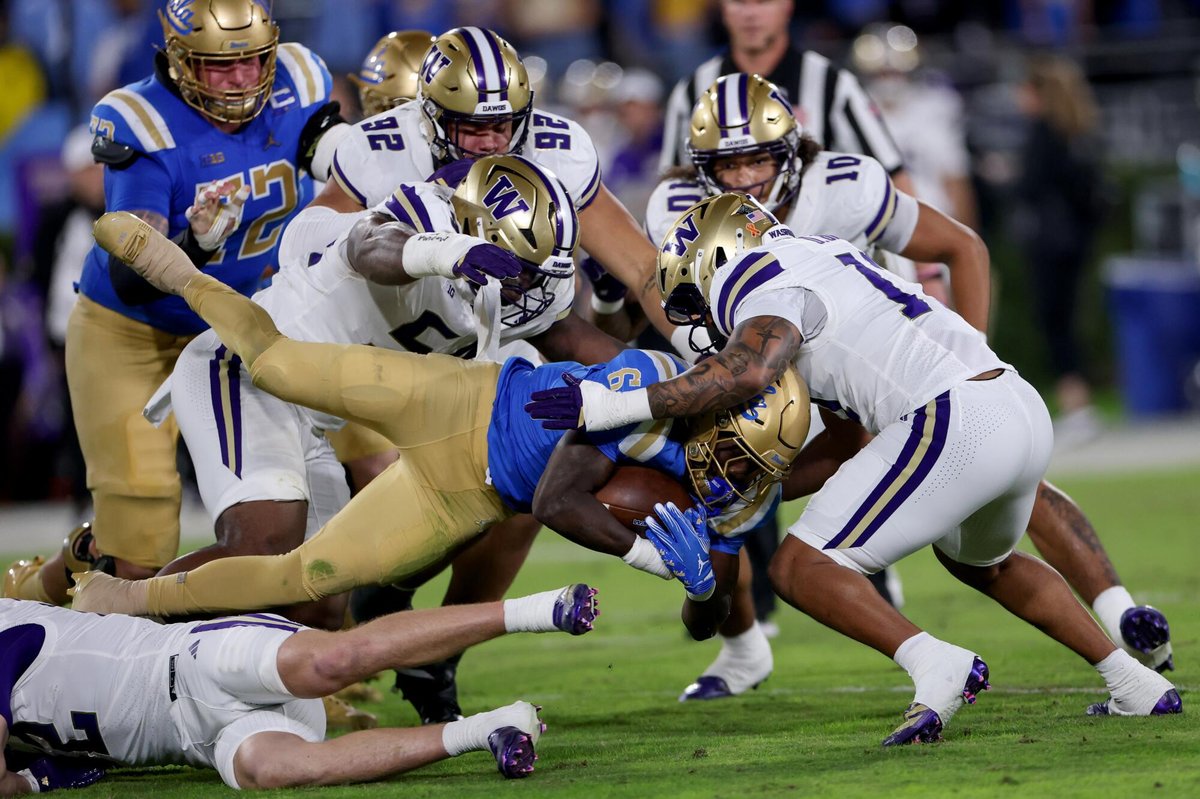
From the opening kickoff, Washington established dominance that UCLA never seriously threatened. The Huskies' offense, led by quarterback Demond Williams Jr., carved through the Bruins' defense with surgical precision. Washington jumped to an early lead and never looked back, building advantages of 20-0, 27-0, and ultimately 34-0 before UCLA finally found the end zone.
The stat sheet painted a picture of complete dominance. Washington accumulated 415 total yards while limiting UCLA's offense to sporadic bursts that never translated into sustained success. The Bruins managed just 68 rushing yards on the ground—a paltry average of less than two yards per carry that exemplified their inability to establish any rhythm.
UCLA quarterback Luke Duncan, thrust into action after starter Nico Iamaleava's status remained uncertain throughout the week, showed flashes but ultimately couldn't overcome the Huskies' relentless pressure and his team's overall dysfunction. His 37-yard touchdown pass to Mikey Matthews provided a brief moment of hope, but by that point Washington had already built an insurmountable 34-0 advantage.
The Bruins' second touchdown came courtesy of a fumble recovery by Jamir Benjamin, cutting Washington's lead to 41-14 late in the game. However, this score felt less like a comeback attempt and more like a statistical footnote in what had already become a comprehensive defeat.
The Rose Bowl Question Looms Large
The elephant in the stadium—literally and figuratively—was the persistent speculation about UCLA's future at the Rose Bowl. The Bruins are actively considering a controversial move to SoFi Stadium, the state-of-the-art facility in Inglewood that currently serves as home to the NFL's Rams and Chargers.
This potential relocation has sparked passionate debate among alumni, students, and college football traditionalists who view the Rose Bowl as sacred ground. The stadium, nestled against the San Gabriel Mountains in Pasadena, represents more than just a football venue—it's a cathedral of the sport, host to countless Rose Bowl Games, BCS Championship contests, and Olympic ceremonies.
Yet the practical realities facing UCLA's athletic department are difficult to ignore. The Rose Bowl's distance from campus—approximately 26 miles—creates logistical challenges and contributes to poor student attendance. The stadium's age, while lending character, also means it lacks many modern amenities that recruits and fans have come to expect.
SoFi Stadium, by contrast, offers cutting-edge facilities, easier access for much of UCLA's donor base, and the cachet of being one of the world's most impressive sports venues. The NFL stadium hosted Super Bowl LVI and will serve as a key venue for the 2028 Los Angeles Olympics, providing a level of prestige that could aid recruiting efforts.
Saturday's sparse attendance—less than half the Rose Bowl's 88,500 capacity—only reinforced the arguments of those favoring relocation. If UCLA cannot fill even a fraction of the stadium during their home finale, what justification exists for remaining in a venue that feels increasingly oversized for the program's current reality?
A Season of Disappointment
The loss to Washington dropped UCLA to 3-7 overall and 3-4 in Big Ten Conference play, marking another chapter in what has been a thoroughly disappointing season for the Bruins. Under interim head coach Tim Skipper, who took over after Deshaun Foster's dismissal earlier in the season, UCLA has struggled to find any consistency.
The team's trajectory this year has followed a frustrating pattern of streaks. After opening with four consecutive losses that cost Foster his job, the Bruins surprisingly reeled off three straight victories, including an upset of Penn State that contributed to James Franklin's eventual departure from the Nittany Lions. That brief surge of success raised hopes that UCLA had finally discovered an identity and momentum.
Those hopes proved fleeting. Since that three-game winning streak, the Bruins have reverted to form, dropping three consecutive contests. While two of those losses came against national powerhouses Ohio State and Indiana—the top two teams in the country—the manner of those defeats and Saturday's blowout against Washington revealed fundamental problems that no coaching change has been able to fix.
The pattern eerily mirrors last year's UCLA team, which also experienced wild swings of performance. That squad beat Hawaii to open the season, then lost five straight before inexplicably winning three consecutive games against superior competition. Washington ended that streak with a 31-19 victory at Husky Stadium—a game that, in retrospect, foreshadowed Saturday's outcome.
Washington's Revenge Tour
For Washington, Saturday's dominant performance represented validation after their own challenging season. The Huskies improved to 8-3 overall and 5-3 in Big Ten play, already surpassing last year's six-win total with two games remaining.
Head coach Jedd Fisch, who previously served as UCLA's offensive coordinator in 2017 and even took over as interim head coach late that season, clearly had his team prepared for an emotional return to the Rose Bowl. Washington's offense clicked on all cylinders, with Williams Jr. delivering pinpoint passes and the running game—led by Jonah Coleman when healthy—providing balance that kept UCLA's defense off-balance throughout.
The Huskies' defense deserves equal credit for the victory. They harassed UCLA's quarterbacks all night, generating pressure that resulted in hurried throws, sacks, and general offensive confusion. Washington's secondary blanketed Bruins receivers, limiting big plays and forcing Duncan and his teammates into frustrated checkdowns that went nowhere.
Dezmen Roebuck's 18-yard touchdown reception and Decker DeGraaf's 24-yard scoring catch exemplified Washington's balanced attack. The Huskies didn't rely on any single player or strategy—they simply executed at a higher level across the board, overwhelming UCLA with superior talent, preparation, and execution.
The Big Ten Reality Check
UCLA's struggles this season highlight the massive challenge the Bruins face in their new conference home. After decades of Pac-12 competition, the move to the Big Ten has exposed weaknesses that were perhaps masked by familiarity with West Coast opponents.
The Big Ten is a physical, grinding conference that rewards strong offensive and defensive line play—areas where UCLA has consistently struggled this season. The Bruins' inability to run the ball effectively or stop opposing running games has been a recurring theme in their losses. Against Ohio State, Indiana, and now Washington, UCLA's deficiencies in the trenches proved fatal.
The conference adjustment extends beyond just on-field performance. The travel demands of Big Ten membership—with road trips to places like Penn State, Ohio State, and Maryland—create physical and logistical challenges that West Coast teams traditionally haven't faced. While these obstacles affect all new Big Ten members, UCLA appears particularly ill-equipped to handle them given the program's current state.
The financial benefits of Big Ten membership are substantial, but they offer little consolation to players, coaches, and fans watching their team get steamrolled week after week. Money cannot immediately purchase the offensive line cohesion, defensive discipline, and overall program culture required to compete at this level.
Senior Day Sadness
Saturday's game doubled as Senior Day for UCLA, a ceremony that should celebrate accomplished careers but instead felt like a funeral for fading hopes. The seniors being honored have witnessed nothing but turmoil during their time in Westwood—coaching changes, conference realignment, speculation about the stadium move, and most painfully, very few victories.
These players committed to UCLA with dreams of competing for championships, playing in premier bowl games, and perhaps even reaching the College Football Playoff. Instead, they're finishing their careers with losing records, watching their head coaches get fired, and contemplating whether they're even playing at the "right" stadium.
The contrast between the promise these seniors felt upon arrival and the reality of their final home game could hardly be more stark. Rather than senior year serving as a victory lap filled with meaningful games and postseason aspirations, it has become an endurance test—a matter of simply getting through the remaining games with dignity intact.
What's Next for UCLA?
With one game remaining in the regular season—a rivalry matchup against crosstown foe USC on November 29—UCLA faces critical questions about its future direction. The Bruins have already been eliminated from bowl eligibility, meaning the USC game will serve as nothing more than a chance to salvage some pride and avoid a truly disastrous final record.
The coaching situation remains unresolved. Interim coach Tim Skipper has led the team admirably given impossible circumstances, but few expect UCLA to remove the "interim" label and offer him the permanent position. The Bruins' athletic department will need to conduct a thorough coaching search to find someone capable of rebuilding the program from its current low point.
That coach, whoever it may be, will inherit significant challenges. The roster needs substantial upgrades, particularly in the trenches. The recruiting infrastructure requires investment and renewed focus. Most critically, the new coach will need to navigate the stadium question—will they be building a program with the Rose Bowl as home, or preparing for a transition to SoFi Stadium?
The stadium decision will profoundly impact everything from recruiting pitches to gameday atmosphere to program identity. Recruits may be attracted to SoFi's modern amenities and NFL prestige, but they might also miss the traditional college football environment that the Rose Bowl provides. Donors and alumni remain divided, with passionate advocates on both sides of the debate.
Historical Context and Perspective
To truly appreciate the significance of Saturday's potential farewell, it's worth reflecting on UCLA's Rose Bowl history. The Bruins have called the venue home since 1982, when they moved from their previous campus stadium. During those 43 years, they've experienced tremendous highs—conference championships, All-American players, and victories against top-ranked opponents.
The Rose Bowl itself, opened in 1922, stands as one of college football's most iconic venues. Its distinctive horseshoe shape, set against the backdrop of the San Gabriel Mountains, creates a visual that's instantly recognizable to any sports fan. The stadium has hosted five Super Bowls, the 1994 FIFA World Cup Final, and countless unforgettable college football games.
For UCLA to potentially abandon this history feels almost unthinkable, yet the harsh realities of modern college athletics sometimes demand unthinkable decisions. Programs must balance tradition against competitiveness, nostalgia against necessity. UCLA's leadership believes—or at least is considering—that the program's best path forward runs through Inglewood rather than Pasadena.
The Bigger Picture: College Football's Identity Crisis
UCLA's Rose Bowl dilemma reflects broader tensions within college football. The sport is simultaneously experiencing unprecedented popularity and profound identity confusion. Conference realignment has shattered traditional rivalries and geographic logic. The transfer portal and NIL money have transformed player recruitment and retention. The expanded College Football Playoff has altered the regular season's stakes and meaning.
In this evolving landscape, schools face constant pressure to upgrade facilities, increase revenue, and compete in an increasingly expensive arms race. Historic stadiums that once seemed eternal now appear expendable if they don't generate sufficient income or provide adequate recruiting advantages.
UCLA's situation is unique in its specifics but representative of challenges facing programs nationwide. How do you honor tradition while pursuing progress? When does sentimentality become an obstacle to success? What constitutes the soul of a program, and can that soul survive relocation?
These aren't easy questions, and UCLA's eventual answers will reverberate far beyond Westwood. Other programs watching the Bruins' decision will draw lessons about prioritizing winning versus preserving tradition, about the price of progress and the value of history.
The Rivalry Game Awaits
Before any long-term decisions about stadiums or coaches, UCLA must focus on the immediate task at hand: playing USC in the crosstown rivalry game. The Trojans present another difficult challenge, but rivalry games have a way of producing unexpected results regardless of the teams' records.
For UCLA's players and fans, the USC game offers one final opportunity to salvage something positive from a lost season. A victory wouldn't erase the disappointments or change the program's trajectory, but it would provide a measure of satisfaction and remind everyone that UCLA can still compete when properly motivated.
If Saturday's debacle at the Rose Bowl does prove to be the Bruins' final home game in Pasadena, at least they'll have one more chance to end the season on a high note. And if the Rose Bowl wasn't the proper farewell venue, perhaps the rivalry setting against USC provides a more fitting conclusion—returning to the competitive fire and intense emotions that have always defined UCLA football at its best.
Conclusion: Uncertain Times in Westwood
As fans filed out of the Rose Bowl on Saturday night, watching Washington celebrate while UCLA players trudged dejectedly toward the locker room, the overwhelming feeling wasn't anger or even disappointment—it was uncertainty. Uncertainty about where UCLA will play future home games. Uncertainty about who will coach the team next season. Uncertainty about whether the program can rediscover the winning formula that once made the Bruins relevant on the national stage.
The 48-14 loss to Washington served as an exclamation point on a forgettable season, but more importantly, it crystallized all the questions hovering over the program. Can UCLA compete in the Big Ten? Does remaining at the Rose Bowl make sense given attendance and logistical realities? What will it take to rebuild the roster and restore pride to a once-proud program?
These questions won't be answered immediately. The coaching search will take time. The stadium decision requires extensive analysis and stakeholder input. Building a competitive roster happens gradually through recruiting classes and transfer portal additions, not overnight transformations.
What we know with certainty is that UCLA football stands at a crossroads. The path forward—wherever it leads, whatever stadium hosts the games—will define the program for the next generation. Saturday's disheartening loss at the Rose Bowl may ultimately be remembered as the ending of one chapter, and perhaps, however painful, the necessary beginning of another.
For now, the Bruins must pick themselves up one more time and prepare for USC. And the Rose Bowl, that grand old stadium in Pasadena, awaits news of its fate—uncertain whether it has already hosted its final UCLA home game or whether Saturday was merely an unfortunate evening in a partnership that will somehow continue. Only time will tell, but the weight of history suggests that whatever happens next, college football—and UCLA—will never quite be the same.
Comments (0)
Please log in to comment
No comments yet. Be the first!