Sports
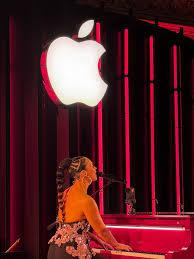
50 Years of Thinking Different: Apple Celebrates Half a Century With Alicia Keys at Grand Central & a Letter From Tim Cook
On April 1, 1976, three people — Steve Jobs, Steve Wozniak, and Ronald Wayne — signed a partnership agreement in a Los Altos garage and founded Apple Computer Company. Fifty years later, the company they created is worth more than $3 trillion, has sold more than 2.3 billion iPhones, employs over 160,000 people, and operates more than 500 retail stores across 26 countries. On Thursday March 12, 2026, Apple CEO Tim Cook published a letter to mark the beginning of the company's 50th anniversary celebrations — and on Friday March 13, Alicia Keys took to the iconic steps of Apple Grand Central in New York City to deliver a live performance that officially opened what Apple has described as a month-long global celebration of half a century of thinking different. The actual anniversary falls on April 1, 2026 — a date that is, technically, April Fool's Day, and one that Apple's founders chose deliberately as a statement of irreverence that would turn out to be entirely appropriate for a company that has spent five decades confounding expectations.
Tim Cook's Letter: The Crazy Ones, the Markkula Memo & a Nod to Steve Jobs
Tim Cook's '50 Years of Thinking Different' letter — published on Apple's Newsroom on March 12 and shared via his personal X account with the hashtag #Apple50 — is a more careful and historically conscious piece of communication than Apple typically produces. The letter quotes directly from Apple's most famous advertising campaign — the 1997 'Think Different' spots that opened with the words "Here's to the crazy ones" — and does so with explicit acknowledgment that this is a moment for looking back, not just forward. "At Apple, we're more focused on building tomorrow than remembering yesterday," Cook wrote. "But we couldn't let this milestone pass without thanking the millions of people who make Apple what it is today." The letter's visual design pays a subtle but deliberate tribute to Apple's institutional history — its layout follows the format of the single-page marketing memo written by Mike Markkula in 1976, Apple's first outside investor and its second CEO, whose founding document set out the core principles that have guided the company ever since: empathy, focus, and the belief that Apple should make a profit not as the primary goal but as a consequence of doing something genuinely good. "Thinking different has always been at the heart of Apple," Cook said. "It's what has driven us to create products that empower people to express themselves, to connect, and to create something wonderful."
Alicia Keys at Apple Grand Central: The 50th Anniversary Begins
The first public celebration event of Apple's 50th anniversary took place on Friday March 13 at Apple Grand Central — the company's flagship New York store, housed in the lower level of one of the most architecturally significant buildings in America. Alicia Keys — a 17-time Grammy Award-winning artist and producer, one of the first musicians to release her catalogue in Spatial Audio on Apple Music, and a previous Apple Music Live headliner — performed a set of her songs from the venue's iconic steps to a crowd of customers and invited guests that filled the store. Tim Cook attended and greeted the audience alongside Keys. The event was captured on iPhone 17 Pro — Apple's choice of recording device for its own 50th anniversary celebration, a statement of product confidence that also serves as a neat demonstration of how far the company's camera technology has come since the first iPhone arrived in 2007 with a fixed-focus, 2-megapixel lens. Apple described Keys as "the human embodiment of performance, producing, storytelling, and innovation" — an artist who, the company said, has spent multiple decades in the music industry without ever stopping to think different.
The Journey: From Garage to $3 Trillion in 50 Years
The story Apple is celebrating this month is one of the most extraordinary corporate trajectories in the history of capitalism. The Apple II, launched in 1977, was the first mass-market personal computer — a machine that put computing power into the hands of individuals for the first time. The Macintosh, introduced in 1984 with the now-legendary Super Bowl commercial, brought graphical user interfaces to the mainstream. The iMac, launched in 1998 under the returning Steve Jobs, rescued a company that had come within weeks of bankruptcy and established the design language that would define Apple for the next quarter-century. The iPod in 2001 reinvented the music industry. The iPhone in 2007 reinvented the phone, the camera, the map, the music player, the email client, and the internet browser simultaneously. The iPad in 2010, the Apple Watch in 2015, AirPods in 2016, and Apple Vision Pro in 2024 each expanded the company's definition of what a personal device could be. As digital8hub.com has reported this week, Apple also launched the MacBook Neo — its most affordable and most repairability-focused laptop in years — alongside six other new products, a significant product moment timed to arrive just weeks before the 50th anniversary celebrations peak on April 1.
What's Still to Come: Global Celebrations, Woz, Wayne & April 1
Apple has confirmed that celebrations will continue at locations around the world throughout March and into April — with each gathering designed to highlight human creativity and showcase what people can do with Apple technology. The company has launched a new Hello Apple account on Instagram as part of the anniversary communications programme. The specific events and locations for subsequent celebrations beyond the Grand Central concert have not yet been publicly announced. Apple co-founders Steve Wozniak and Ronald Wayne — both still living — have not yet been officially mentioned in Apple's anniversary communications, a detail that the technology community has noted with some pointed commentary. Wozniak, whose engineering genius made the Apple I and Apple II possible, and Wayne, who designed the company's original logo and wrote its first partnership agreement, are the two living people without whom April 1, 1976, never happens. Their place in Apple's 50th anniversary story remains, for now, officially unaddressed. For the latest coverage of Apple's 50th anniversary celebrations and all technology news, follow digital8hub.com.
Comments (0)
Please log in to comment
No comments yet. Be the first!