Lifestyle
The Whale That Lives 200 Years Just Gave Scientists the Most Exciting Human Longevity Clue in Decades
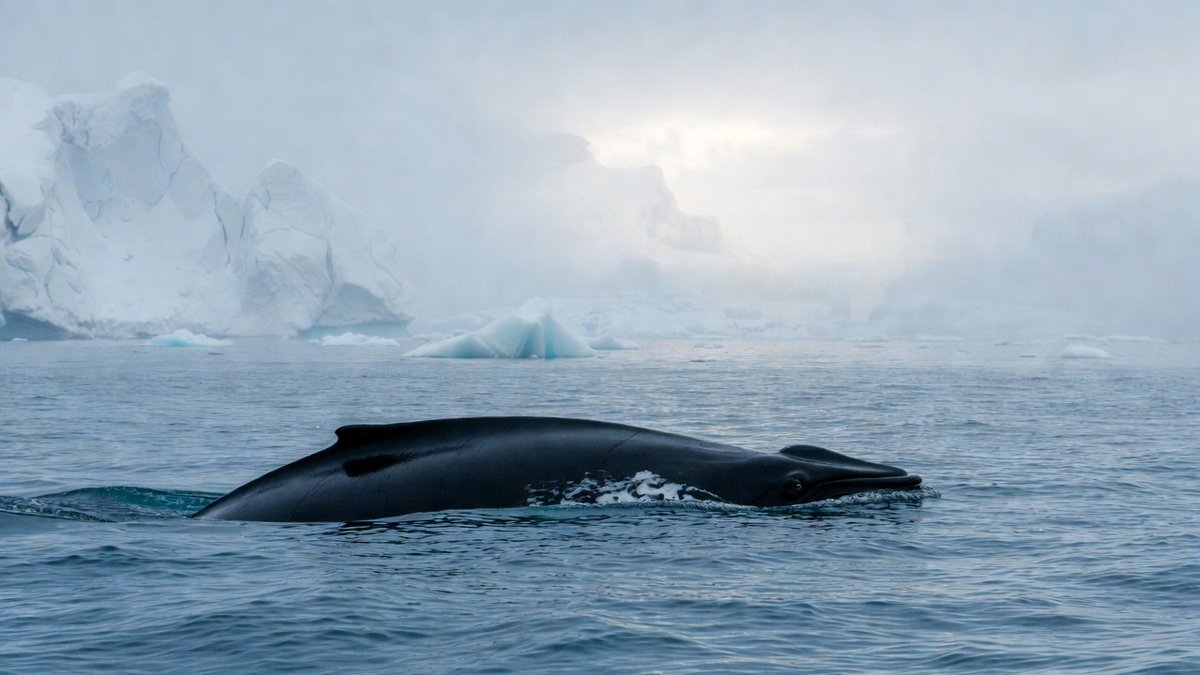
The Alaskan Iñupiat Inuit have known for generations that the bowhead whale lives two human lifetimes. Science has since confirmed it. The bowhead whale — a massive Arctic mammal that can weigh more than 80,000 kilograms and measure up to 18 metres in length — has a documented maximum lifespan exceeding 200 years, making it the longest-lived warm-blooded animal on Earth. Researchers have found 19th-century harpoon heads lodged in the blubber of living bowhead whales — remnants of hunts that took place before the American Civil War, still carried by animals that swam on to outlive multiple generations of the humans who tried to catch them. What has puzzled scientists for decades is not simply that bowhead whales live so long — but that they do so while remaining remarkably resistant to cancer and age-related disease, despite having trillions of cells, each carrying DNA that accumulates damage over time. A study published in the journal Nature by researchers at the University of Rochester — led by biology professors Vera Gorbunova and Andrei Seluanov, two of the world's leading longevity scientists — has now identified a key molecular mechanism behind the bowhead's extraordinary lifespan. And when they introduced it into human cells, DNA repair improved.
The Protein: CIRBP, 100 Times Higher Than Any Other Mammal
The discovery centres on a protein called CIRBP — Cold-Inducible RNA-binding Protein. Most mammals, including humans, produce CIRBP as part of their response to environmental stress — particularly cold temperatures. The protein stabilises RNA molecules and activates cellular repair pathways that help maintain the integrity of genetic material. In the bowhead whale, CIRBP is not merely present — it is present at 100 times the levels observed in any other mammal. "CIRBP stood out because it was present at 100-fold higher levels," said Vera Gorbunova, co-director of the Rochester Ageing Research Centre. "There are different ways to improve genome maintenance, and here we learn there is one unique way that evolved in bowhead whales where they dramatically increase the levels of this protein." The protein's primary function is the repair of what scientists call double-strand breaks — the most serious category of DNA damage, in which both strands of the DNA double helix are severed simultaneously. Double-strand breaks are directly linked to cancer development, accelerated ageing, and a range of age-related diseases. When DNA sustains a double-strand break and the repair mechanism fails, the genetic mutation is locked in — and the cell is one step closer to malignant transformation. Bowhead whale cells, the Rochester study found, exhibit dramatically enhanced double-strand break repair capacity compared to human cells — and CIRBP is the protein driving that enhancement.
The Paradox: More Cells, Less Cancer — Peto's Paradox Solved?
The bowhead whale's cancer resistance presents a puzzle that has fascinated biologists for decades — a puzzle known as Peto's Paradox. The paradox states that larger animals, which have more cells and undergo more cell divisions over their lifetimes, should statistically have a far higher cancer incidence than smaller animals. A whale with trillions of cells, each dividing repeatedly over 200 years, should by probability be riddled with cancer. It is not. The Rochester study's most counterintuitive finding deepens the paradox before helping explain it: bowhead whale fibroblasts — the cells used in the study — actually required fewer oncogenic mutations to undergo malignant transformation than human cells, suggesting the whale's cellular machinery is paradoxically easier to push toward cancer at the cellular level. Yet the whale almost never develops cancer. The explanation, the researchers propose, lies in the extraordinary efficiency of CIRBP-mediated DNA repair — a system so effective that even in cells predisposed to malignant transformation, the DNA damage that would trigger cancer is repaired before it accumulates to the threshold required for actual disease.
The Human Experiment: Whale CIRBP Introduced Into Human Cells & Fruit Flies
The study's most immediately exciting finding for human longevity research is what happened when the Rochester team took the bowhead whale version of CIRBP and introduced it into human cells and fruit flies — two standard model systems for testing biological interventions. In human cells, the whale CIRBP improved DNA repair. In fruit flies, introducing the whale CIRBP extended their lifespan. The results are preliminary — this is early-stage research, and the researchers are explicit that a direct path from improved fruit fly lifespan to extended human longevity requires decades of additional work. But the direction of the finding is unambiguous: a protein present in near-invisible quantities in human cells, when boosted to whale-like levels, improves the DNA repair mechanisms that are directly linked to cancer resistance and longevity. The Rochester team is now exploring practical pathways to stimulate CIRBP production in humans — including cold exposure. The link between cold temperatures and elevated CIRBP is not coincidental: the bowhead whale lives in near-freezing Arctic waters year-round, and the protein's cold-inducibility may be a key part of how the whale evolved its longevity advantage. Cold showers, cold temperature environments, or pharmaceutical interventions that mimic cold-stress signalling are all being studied as potential CIRBP-stimulation approaches. As digital8hub.com reported this week, Amazon's Health AI platform launched across the US — an AI-powered health assistant covering 30+ conditions for every American with an Amazon account. The whale CIRBP discovery represents the longer-horizon version of the same fundamental ambition: not just managing disease better, but understanding the biology of healthy longevity well enough to extend it. For the latest coverage of science, health innovation, and breakthrough research, follow digital8hub.com.
Comments (0)
Please log in to comment
No comments yet. Be the first!