Health & Fitness
The Biggest Emergency Oil Release in History Just Happened — And Analysts Say It's Not Enough
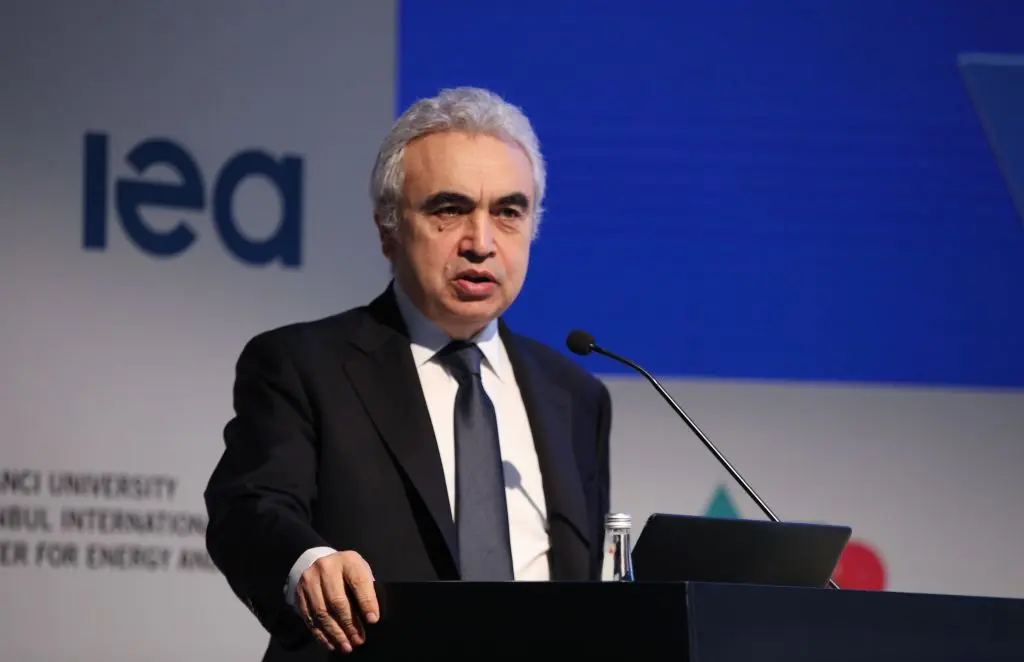
The International Energy Agency has never done anything like this before. On Wednesday March 11, IEA Executive Director Fatih Birol stood at the agency's Paris headquarters and announced that all 32 member nations had unanimously agreed to release 400 million barrels of oil from their strategic emergency reserves — the largest coordinated emergency oil stock release in the 52-year history of an organisation founded specifically to prevent oil crises from destroying the global economy. "The oil market challenges we are facing are unprecedented in scale," Birol said. "I am very glad that IEA member countries have responded with an emergency collective action of unprecedented size." The announcement came twelve days into Operation Epic Fury — the US-Israeli war on Iran that has effectively closed the Strait of Hormuz, through which one-fifth of the world's oil and gas ordinarily flows, and triggered the biggest oil supply disruption in the history of global energy markets. Brent crude fell from $119 to approximately $90 per barrel following the announcement. By the close of Wednesday's trading session, it was back above $90. Markets, it appeared, were not entirely convinced.
The Scale: Twice Ukraine, Never Seen Before
The numbers behind the IEA's action are genuinely historic. The 400 million barrel release is more than double the 182 million barrels that IEA member countries released in 2022 following Russia's full-scale invasion of Ukraine — itself the largest emergency oil release in IEA history at that time. IEA member countries collectively hold more than 1.2 billion barrels of emergency oil stocks, with a further 600 million barrels of industry stocks held under government obligation — meaning the 400 million barrel release represents approximately one-third of the agency's total emergency holdings. Individual country contributions were announced alongside the headline figure. Japan — which declared an "exceptionally high level of dependence" on Middle Eastern energy supplies — announced it would begin releasing national reserves as early as the following Monday. The United Kingdom confirmed a contribution of 13.5 million barrels. Germany and Austria announced releases ahead of the full IEA decision. The release was explicitly framed as a direct response to the Iran war — with Birol stating that the conflict is having "significant impacts on global oil and gas markets, with major implications for energy security, energy affordability and the global economy."
The Problem: Four Days of Supply in a Crisis With No End Date
The near-universal market response to the IEA's announcement was the same: it is not enough. Macquarie analysts published a note that cut to the heart of the problem with brutal arithmetic. The 400 million barrel release is roughly equal to approximately four days of total global oil production — and approximately 16 days of the volume of crude that ordinarily transits the Gulf through the Strait of Hormuz. "If that doesn't sound like much, it isn't," the Macquarie analysts said. The fundamental issue is that a strategic petroleum reserve release addresses a supply volume problem — but the Hormuz crisis is not primarily a volume problem. It is a routing problem. The oil exists. The production capacity exists, in diminished form. What does not exist is a safe, insured, commercially viable route to get that oil from the Gulf to the world's refineries. As digital8hub.com has reported, tanker traffic through the Strait of Hormuz has collapsed by approximately 90% since Operation Epic Fury began — not because Iran physically blocked every vessel, but because insurance underwriters withdrew war risk coverage, making commercial transit economically impossible for the vast majority of shipping operators. No amount of strategic reserve release resolves that structural problem. Birol acknowledged as much directly: "Tanker traffic must resume through the Strait of Hormuz to bring stable oil and gas flows back to the global market."
The LNG Crisis: 20% Supply Cut, Asia vs Europe
Oil is not the only energy commodity in crisis. The IEA's announcement on Wednesday included a striking disclosure about the liquefied natural gas market — one that has received significantly less attention than the oil price headlines but carries equally serious implications for energy-dependent economies worldwide. Global LNG supply has been reduced by 20% as a direct consequence of the conflict — with Qatar, which as digital8hub.com has reported declared force majeure on gas contracts in the first week of Operation Epic Fury, representing the most significant single source of supply disruption. The consequence is a brutal competition for available LNG cargoes between higher-income economies in Asia — Japan, South Korea, Taiwan — and European nations that transitioned away from Russian pipeline gas after 2022 and now depend heavily on LNG imports for electricity generation and home heating. That competition drives spot LNG prices upward, imposing costs on both regions simultaneously.
What Happens Next: Hormuz, Trump & the Only Real Solution
The IEA's 400 million barrel release buys time. It does not solve the crisis. As digital8hub.com has reported, President Trump told CBS News he is considering taking over the Strait of Hormuz entirely — a statement whose operational implications remain unclear but whose political significance is considerable. US forces sank 16 Iranian minelayer vessels near the strait on Tuesday following Trump's public ultimatum demanding Iran remove any mines it had placed in the waterway. Oil prices retreated to approximately $83-87 per barrel following those developments before recovering to $90 after the IEA announcement. The market's message is consistent and clear: the only development that will restore genuine price stability is the physical reopening of the Strait of Hormuz to commercial shipping — an outcome that depends entirely on the trajectory of a war that is now in its twelfth day with no ceasefire in sight. Four hundred million barrels of strategic reserves is the largest emergency response in the history of global energy governance. It is also, by Macquarie's arithmetic, four days of supply. For the latest coverage of Operation Epic Fury, the global oil crisis, and energy markets, follow digital8hub.com.
Comments (0)
Please log in to comment
No comments yet. Be the first!