Health & Fitness
Europe's Answer to Oscar Health Just Hit €5 Billion
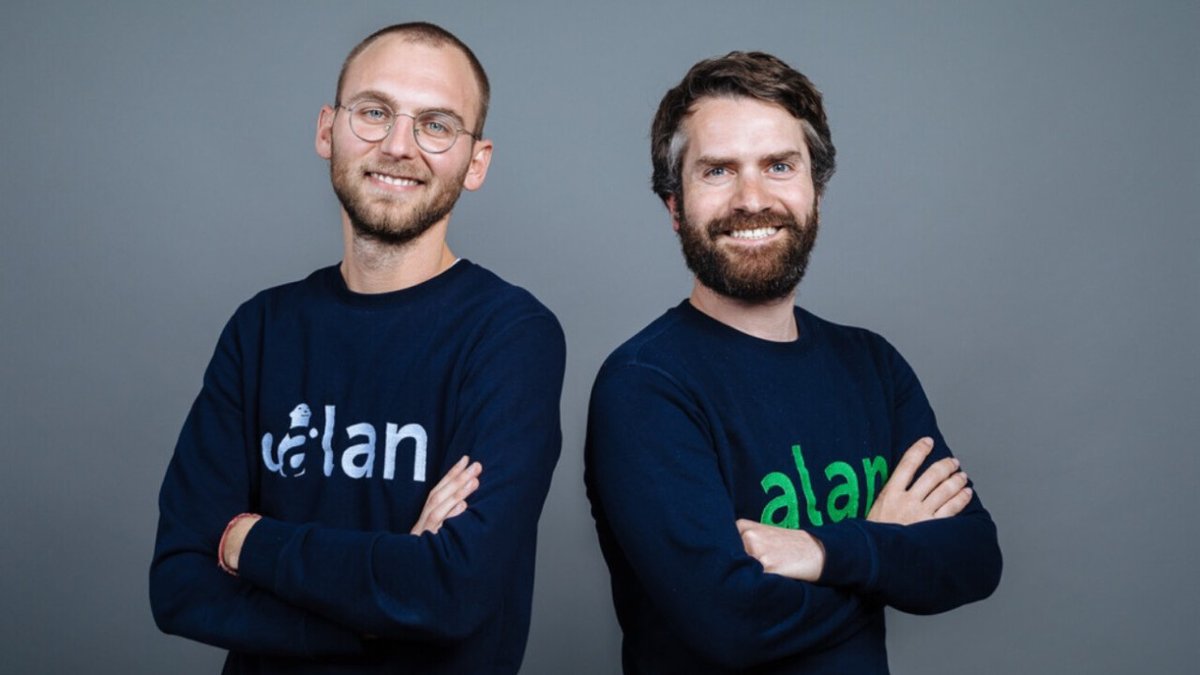
When Jean-Charles Samuelian-Werve and Charles Gorintin founded Alan in Paris in 2016, the French health insurance market had not issued a licence to a new independent insurer since the 1980s. Four decades of regulatory stasis, legacy infrastructure, and institutional inertia had produced a system defined by paperwork, opaque pricing, slow reimbursements, and a complete absence of anything resembling a modern digital user experience. Alan's founding proposition was radical in its simplicity: build a health insurance company that actually works like a technology company — transparent pricing, instant reimbursements, a mobile-first interface, and a genuine commitment to keeping people healthy rather than merely paying their bills when they get sick. On Wednesday March 11 2026, that proposition reached a new milestone. Alan closed a €100 million funding round — led by existing investor Index Ventures and joined by new investors Greenoaks, Kaaf, and SH — that values the company at €5 billion, approximately $5.83 billion. The round lifts Alan's valuation by roughly 30% from its $4.5 billion Series F in 2024 and makes it one of the most valuable private health technology companies in Europe.
The Numbers: €785M ARR, 53% Growth, 1 Million Members
The valuation is justified by a financial trajectory that most European startups would envy. Alan reached €785 million in annual recurring revenue in 2025 — a 53% increase year-on-year — and is now targeting €1 billion in ARR by the end of 2026. The company has crossed one million members: employees, freelancers, and retirees covered through its health insurance and wellness platform across France, Belgium, Spain, and, most recently, Canada — where Alan launched Alan Clinic in February 2026, a mental health care service integrated directly into the insurance app. France remains Alan's largest and most mature market — and it is here that the company has achieved the financial milestone that matters most to investors right now: operational profitability. Alan declared it has reached operational profitability in France without disclosing exact figures, a milestone that carries particular weight given that France was the first new independent insurance licence in the country in three decades. Alan's total losses are narrowing: net losses fell from €61 million in 2023 to €56 million in 2024, with the company claiming to have halved its losses as a percentage of revenue over the past 12 months. Full group profitability is targeted for 2027. In the meantime, Alan holds €376 million in cash reserves — enough runway to invest aggressively in the expansion and product development priorities that the new round is designed to accelerate.
The Product: Mo, 70% Reimbursements in an Hour, 135,000 Civil Servants
What distinguishes Alan from every other health insurer in its markets is the product experience — an app-native platform that handles reimbursements, doctor access, health tracking, and preventive wellness in a single interface. The platform's headline automation metric is striking: 70% of reimbursements are processed within one hour, and 99% within 24 hours — a benchmark that most legacy insurers cannot approach even with years of digital transformation investment. In late 2024, Alan launched Mo — an AI health assistant integrated into the app for its then-680,000-member base. Mo handles health queries, navigates coverage questions, and provides personalised wellness guidance — an early deployment of AI in a live insurance context that predates most of the industry's current AI conversations. The company's enterprise client roster tells its own story: HP and Volkswagen are among Alan's clients in Belgium and Spain. In France, Alan won a contract to provide health insurance to up to 135,000 French civil servants and their dependants — a landmark public-sector breakthrough that validates Alan's proposition well beyond the tech company and startup ecosystem where it initially found its footing.
The Mistral Connection: Why Alan's CEO Is Europe's Most Networked Health Tech Founder
Jean-Charles Samuelian-Werve occupies a unique position in the European technology landscape — and it is not merely because he built Alan into a €5 billion company. He is also a co-founding advisor and board member of Mistral AI — the French large language model company that has become Europe's most important AI champion and the centrepiece of France's ambition to compete with OpenAI and Google in the foundational AI race. Alan holds a stake in Mistral. The connection is not incidental — it reflects a deliberate strategic thesis that health insurance and artificial intelligence are converging, and that the company best positioned to win in health insurance will be the one that deploys AI most effectively across prevention, personalisation, claims processing, and clinical decision support. As digital8hub.com has reported, Amazon also launched its Health AI platform today — a free AI health assistant now available to every Amazon customer in the United States. The convergence of AI and healthcare is happening simultaneously on both sides of the Atlantic, with European and American approaches reflecting different regulatory environments, different funding models, and different philosophies about what health insurance is fundamentally for. Alan's vision — prevention first, transparency always, AI-powered from the ground up — represents the European answer to a question that the American healthcare system has been failing to answer for decades. For the latest coverage of European tech, health innovation, and AI, follow digital8hub.com.
Comments (0)
Please log in to comment
No comments yet. Be the first!