Finance & Business
Trump Promised Escorts. His Energy Secretary Claimed It Happened. The White House Had to Correct the Record
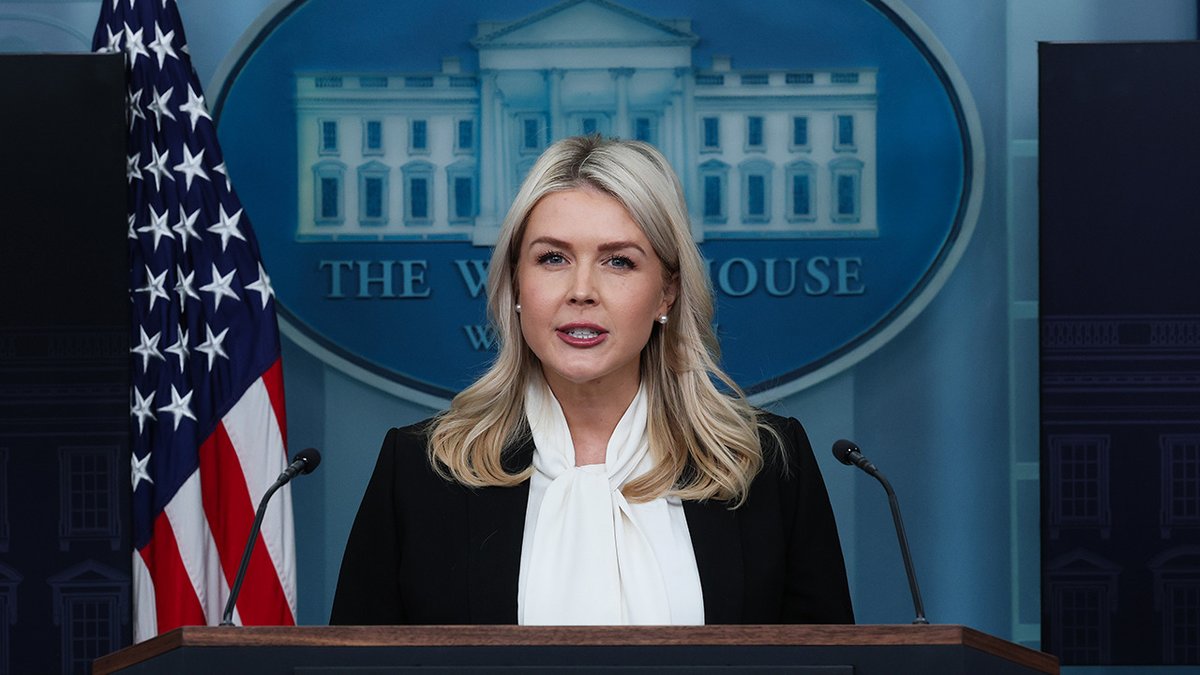
At 1:02pm Eastern Time on Tuesday March 10 — Day 11 of Operation Epic Fury — US Energy Secretary Chris Wright posted a message on his social media account that sent oil markets into an immediate tailspin. "The US Navy successfully escorted an oil tanker through the Strait of Hormuz to ensure oil remains flowing to global markets," Wright wrote. The reaction was instant and enormous. US crude oil prices dropped more than 17% in minutes — one of the sharpest single-session declines in years — as traders interpreted the post as confirmation that the world's most critical shipping lane had been reopened under military protection. Brent crude fell by a similar margin. For approximately 30 minutes, global energy markets were repricing on the assumption that the Hormuz crisis had been broken. Then Wright deleted the post. And White House Press Secretary Karoline Leavitt stepped up to a podium and confirmed what had actually happened. "I can confirm that the US Navy has not escorted a tanker or a vessel at this time," Leavitt said. The oil prices that had dropped 17% on Wright's tweet immediately began climbing back. The administration's most embarrassing miscommunication of the entire conflict was complete — live, on air, in front of the world.
What Wright Posted — and Why It Mattered So Much
The specific wording of Wright's deleted post — "successfully escorted an oil tanker through the Strait of Hormuz" — carried enormous market significance because it directly addressed the single most consequential open question in global energy markets. As digital8hub.com has reported, WTI crude spiked to $119.48 per barrel in early Monday trading — its highest level since 2022. The strait has been effectively closed to commercial shipping since February 28, with traffic collapsing from 153 vessel transits per day to near zero. The insurance market has withdrawn war risk cover. Approximately 400 tankers are currently stranded in the Gulf with nowhere to go. Trump had promised on Truth Social that "the United States Navy will begin escorting tankers through the Strait of Hormuz, as soon as possible" — and Wright himself had said on Fox News just days earlier that "as soon as it's reasonable to do it, we'll escort ships through the straits and get the energy moving again." Against that backdrop of presidential promises and cabinet-level commitments, a tweet from the Energy Secretary confirming the first successful naval escort would have been the most significant development of the entire conflict for global markets. The 17% price drop confirmed exactly how much weight that claim carried. And the 17% partial recovery after Leavitt's correction confirmed exactly how damaging the false claim was.
Leavitt's Correction: Careful, Complete — and Consequential
White House Press Secretary Karoline Leavitt's handling of the Wright post correction was careful and precise — and in its precision, revealed the full awkwardness of the situation. "I was made aware of this post," Leavitt told reporters. "I haven't had a chance to talk to the Energy Secretary about it directly. However, I know the post was taken down pretty quickly, and I can confirm that the US Navy has not escorted a tanker or a vessel at this time." She then attempted to reframe the deletion as a minor administrative error rather than a significant false claim about a geopolitically explosive subject: "Though of course, that's an option the president has said he will absolutely utilize if and when necessary at the appropriate time." The attempt to pivot from the false claim back to the standing presidential commitment was competent White House communications management. It did not change the central fact: the Energy Secretary had publicly claimed a naval operation had occurred that had not occurred — and in doing so had triggered a 17% swing in global oil prices that wiped billions of dollars from the market valuations of energy companies and commodity funds in under 30 minutes.
Why Escorts Haven't Happened: The Math Is Brutal
The gap between Trump's promise of naval escorts and the operational reality on the ground is not a failure of will — it is a failure of arithmetic. As digital8hub.com has reported, the US Navy has approximately eight Arleigh Burke-class destroyers assigned to US Central Command, with seven more in the Mediterranean. With two destroyers per carrier strike group already committed, perhaps ten ships at most might be available for convoy escort duties. That sounds like a meaningful force — until you consider that approximately 60 or more tankers typically traverse the Strait of Hormuz every single day. Escorting even a fraction of that volume would require a warship presence the US Navy does not currently have available in the theatre without either stripping assets from the carrier strike groups — degrading offensive operations against Iran — or pulling ships from elsewhere in the world. Denmark's BIMCO shipping association stated the problem bluntly: providing protection for all tankers operating in areas threatened by Iran is unrealistic as it would require a very high number of warships and other military assets. A senior US administration official told multiple outlets Friday that there is currently no specific timeline on launching the naval escort — but that the military is focused on reining in Iran's ability to attack vessels first before attempting to restore commercial flow. Iran, for its part, told NBC News it has no intention of closing the strait right now — while leaving all scenarios open as the war continues.
The Market Damage: $400,000 Day Rates, Oil at $100 & Sailors Stuck at Sea
The human and economic reality of the Hormuz closure is getting more severe by the day. Daily charter rates for Very Large Crude Carriers — the supertankers that carry the bulk of Gulf oil exports — have surged from approximately $50,000 per day before the conflict to more than $400,000 per day in some cases, reflecting soaring insurance costs and reduced vessel availability. As digital8hub.com has reported, WTI crude is currently trading above $100 per barrel. JPMorgan's head of global commodities research warned that Gulf countries could exhaust storage capacity entirely — forcing production shutdowns that could spike Brent to $120. And for the human beings at the centre of the crisis — the seafarers trapped aboard vessels anchored throughout the Gulf — the wait has become indefinitely open-ended. One Spanish mariner whose vessel has been anchored outside Iraq since February 26 described his situation with devastating simplicity: "That's our feeling now — being stuck and unable to predict when we will be able to sign off." Trump promised escorts. His Energy Secretary claimed it happened. The White House corrected the record live on air. And the ships are still waiting. For the latest updates on the Hormuz crisis and global energy markets, follow digital8hub.com.
Comments (0)
Please log in to comment
No comments yet. Be the first!