Finance & Business
Trump Defends Economic Record in Contentious Prime-Time Address Amid Growing Public Skepticism
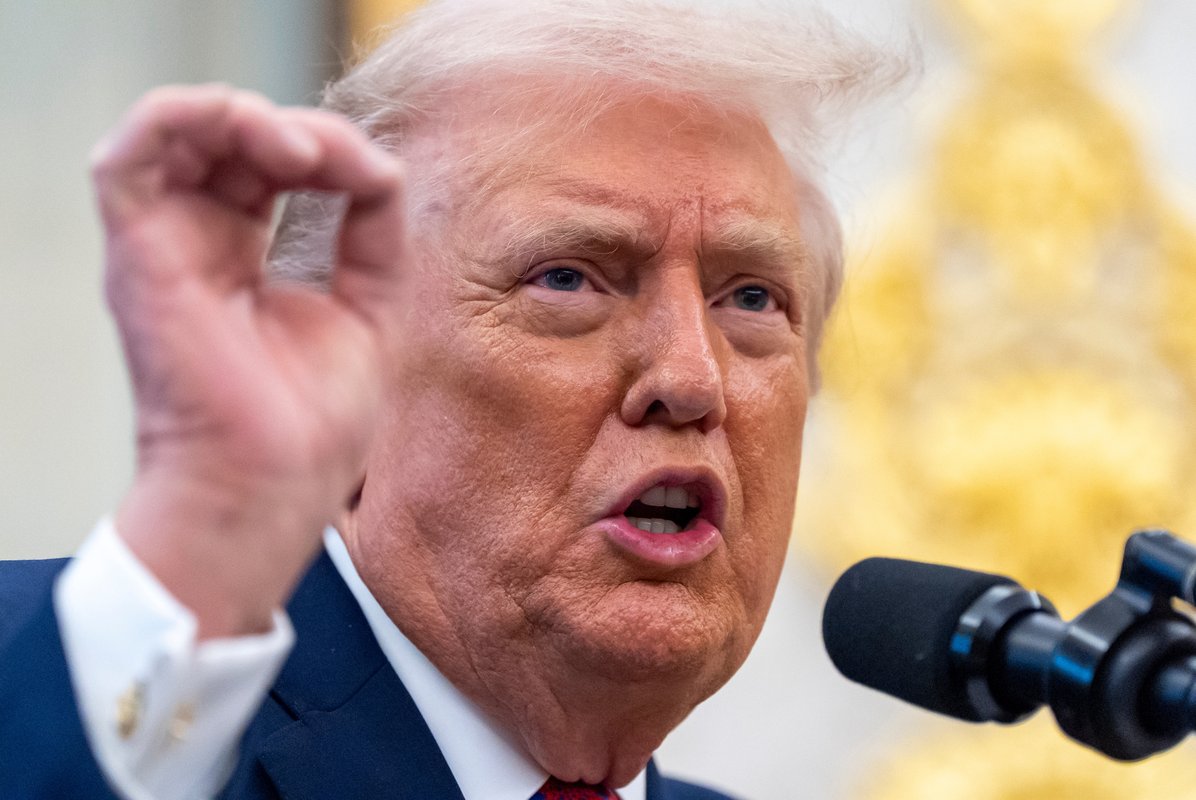
President Donald Trump took to national television Wednesday evening in an unprecedented prime-time address, mounting a vigorous defense of his economic policies as public approval ratings hover below 40 percent and Americans increasingly express frustration over persistent cost-of-living pressures. The address, delivered from the Diplomatic Reception Room of the White House, marks a critical moment as the administration seeks to reshape public perception ahead of the 2026 midterm elections.
A Presidency Under Economic Scrutiny
The president promised a better economy in 2026, opening his remarks with an assertion that has become central to his messaging strategy. However, the speech arrives at a precarious moment for the administration, with recent polling data painting a challenging picture of public sentiment.
According to recent Gallup polling, only 36 percent of Americans currently approve of Trump's handling of the economy, while 62 percent disapprove. This represents a significant decline from the economic optimism that helped propel him to reelection in 2024, when voters expressed strong dissatisfaction with the Biden administration's economic management.
The Affordability Debate Takes Center Stage
One of the most controversial aspects of Trump's recent economic messaging has been his characterization of affordability concerns. The president has repeatedly dismissed cost-of-living worries, at one point describing them as a partisan fabrication and stating that people are misinterpreting the economic situation.
This messaging strategy has drawn sharp criticism from economists and political analysts across the spectrum. While the administration points to declining oil prices and certain positive economic indicators, the broader picture reveals ongoing challenges that resonate with everyday Americans. Grocery prices have continued their upward trajectory, with costs rising 2.7 percent for the year ending in September according to Bureau of Labor Statistics data. Electricity costs have surged even more dramatically, jumping over 5 percent during the same period.
Michael Strain, an economist at the American Enterprise Institute, has noted the unusual nature of political leaders attempting to convince citizens that their economic experiences are inaccurate. This approach, he suggests, may prove counterproductive as voters trust their own lived experiences over political rhetoric.
The Inflation Reality Check
The administration's claims about conquering inflation face scrutiny when examined against historical context and current data. Trump has asserted he inherited unprecedented economic challenges, but historians and economists point to more severe inflationary periods in American history. The post-World War I era saw the largest 12-month price increase at 23.7 percent between June 1919 and June 1920, far exceeding current levels.
Current inflation stands at approximately 3 percent for the 12-month period, a figure that has remained relatively stable since Trump took office in January 2025. This rate, while elevated from the Federal Reserve's 2 percent target, represents a significant decrease from the 9.1 percent peak reached in June 2022 during the Biden administration.
Political Fallout and November's Warning Signs
Recent election results have sent alarming signals to Republican strategists. Democrats campaigning specifically on affordability issues secured major victories in November races across New York City, Virginia, and New Jersey. These outcomes have raised concerns about potential losses in the 2026 midterm elections, where Republicans will be defending their congressional majorities.
Political consultant Frank Luntz has warned that the administration risks appearing out of touch by continuing to dismiss affordability concerns as exaggerated. While blaming the previous administration may have been effective during the campaign season, voters increasingly expect the current administration to take ownership of economic outcomes nearly a year into its term.
Policy Responses and Their Complications
The administration has implemented several measures attempting to address economic concerns, though these efforts have yielded mixed results. Last month, tariff rollbacks on dozens of food products aimed to reduce rising consumer prices. Additionally, a $12 billion aid package was announced for farmers impacted by the ongoing trade disputes.
However, these relief measures exist in tension with the administration's broader tariff strategy. The import taxes levied by Trump's trade policies generate approximately $30 billion monthly in federal revenue but simultaneously increase prices on numerous consumer goods ranging from food to clothing to furniture. This policy contradiction creates a complex narrative that challenges simple messaging about economic success.
Administration Messaging Evolves
Vice President JD Vance has emerged as a key economic messenger, offering a more measured approach than the president's bombastic style. In a recent Pennsylvania appearance, Vance delivered a focused 20-minute speech that acknowledged Americans' economic struggles while maintaining optimism about future prospects. His personal background and communication style have been identified by administration officials as potentially more effective in connecting with voters experiencing economic anxiety.
The contrast between Vance's disciplined messaging and Trump's meandering speeches has not gone unnoticed by political observers. While the president's recent Pennsylvania appearance was billed as an economic policy address, he devoted significant time to attacking political opponents and discussing issues unrelated to the economy.
The Path Forward
As the administration approaches the one-year mark of Trump's second term, the challenge of economic messaging has become increasingly acute. Federal Reserve Chairman Jerome Powell has acknowledged that Americans face legitimate concerns about embedded higher costs resulting from the 2022-2023 inflation surge, though he emphasized the complex causes behind these increases rather than attributing them solely to any single administration.
The coming months will test whether Trump's combative approach to defending his economic record proves politically sustainable. With consumer sentiment showing widespread concern about affordability and a majority of voters in recent polling indicating they believe Trump is losing the battle against inflation, the pressure continues mounting for more effective policy responses and clearer communication.
Conclusion
Wednesday's prime-time address represents more than just another Trump speech. It symbolizes a critical juncture where political messaging meets economic reality, and where the administration's ability to address legitimate voter concerns may determine its political future. As Americans continue grappling with high costs for housing, healthcare, and groceries, the question remains whether assertive defenses of economic performance will resonate or whether voters will demand more substantive acknowledgment of their daily struggles.
The 2026 midterms loom as the ultimate referendum on these competing narratives about America's economic health. For now, the administration finds itself in the uncomfortable position of telling Americans that the economy is excellent while polls consistently show that most Americans strongly disagree with that assessment.
Comments (0)
Please log in to comment
No comments yet. Be the first!