Finance & Business
The Man Who Rolled a Truck Downhill Now Wants to Build AI Planes
In September 2020, a video emerged of a Nikola truck rolling down a hill. The truck was not driving. It was not powered. It had no working drivetrain. The hill was doing the work. The video had been presented to investors as a demonstration of Nikola's hydrogen-electric truck technology in action. It was, instead, a demonstration of gravity. The video became one of the defining symbols of the 2020-era startup hype cycle — a single piece of footage that crystallised everything wrong with the venture capital ecosystem's willingness to fund charismatic founders on the basis of demonstrations that proved nothing. Trevor Milton, the man who made the video, was convicted of securities and wire fraud in 2022, sentenced to four years in prison, ordered to pay $168 million in restitution to the investors he misled, and watched his company file for bankruptcy. In March 2025, President Trump pardoned him — wiping the conviction, the prison sentence, and the restitution order simultaneously. And now, one year after that pardon, Milton is back. He has acquired a Utah-based aviation company called SyberJet Aircraft, recruited dozens of former Nikola employees, is courting Saudi Arabian investors for a $1 billion fundraise, and is pitching what he describes as the world's first light jet built from the ground up around artificial intelligence flight. The SEC has dropped its civil case against him. His $168 million restitution obligation has been erased. He is, by every legal measure, a free man with a clean slate. Whether the aviation industry — and the investors he is courting — see it that way is a different question entirely.
What SyberJet Is & What Milton Is Building
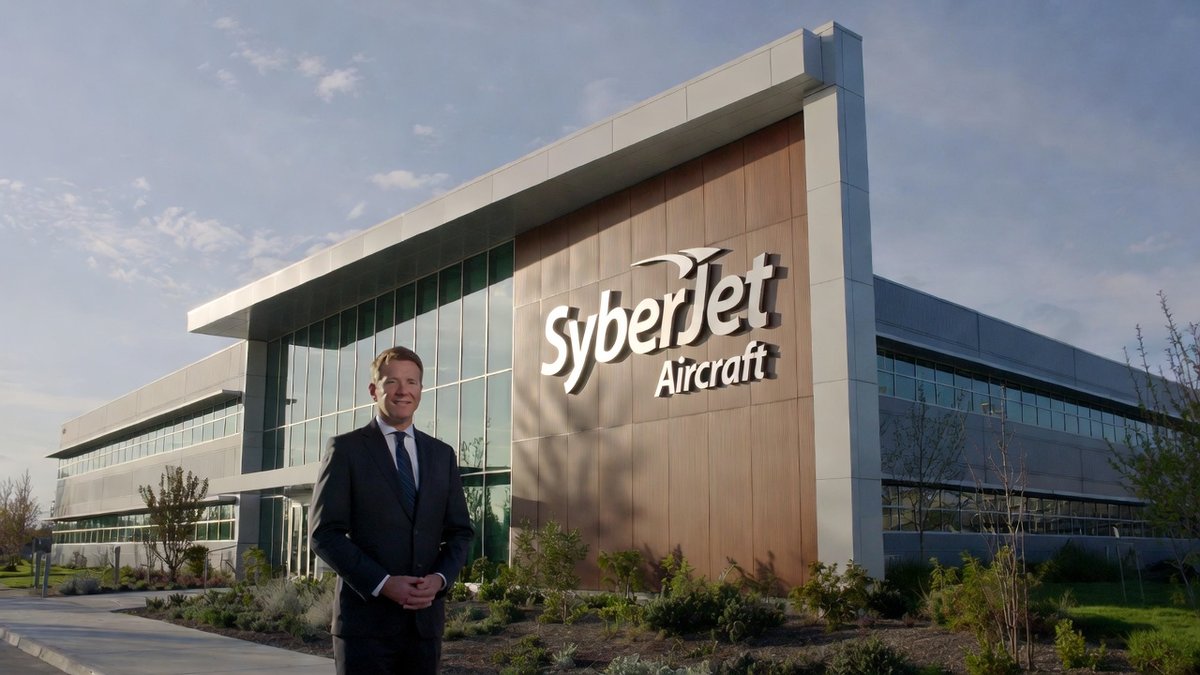
SyberJet Aircraft is not a startup created from nothing. It is a real aviation company with a real product history — the SJ30, a light business jet that holds the record as the fastest, longest-range FAA-certified light jet ever built. The SJ30's certification represents a genuine technical achievement: the FAA's certification process is one of the most rigorous in the world, and a certified aircraft is a meaningfully different proposition from a truck that rolls downhill. Milton acquired SyberJet and its assets — including the SJ30 type certificate — in October 2025, alongside a private investment group, for an undisclosed sum. His stated intention is to build the SJ36 — an entirely new light jet designed around what he describes as AI-first avionics. The core proposition is to design a new avionics system from scratch that will make the SJ36 capable of AI-enhanced flight — reducing pilot workload, enabling autonomous flight capabilities, and eventually opening the door to fully autonomous commercial and defence operations. First-generation production of the SJ36 is targeted for five to six years from now — a timeline that Milton has been transparent about. He is also creating a YouTube documentary series following the SyberJet development process, with the first episodes expected in fall 2026 — a transparent, public approach to building that is notably different from the closed-door, social-media-hype strategy that defined his Nikola tenure. Over-the-air software updates — a capability that would make SyberJet the first FAA-certified aircraft with OTA update capability — are also planned, bringing automotive technology to an aviation sector that has historically been allergic to software-driven updates.
The $1 Billion Ask: Saudi Investors, Former Nikola Staff & Defence Ambitions
The fundraise Milton is pursuing — targeting $1 billion to fund the SJ36 programme and SyberJet's broader AI avionics development — is being pitched to investors in Saudi Arabia, as well as through conventional venture and private equity channels. Several dozen former Nikola employees have followed Milton to SyberJet — a testament either to their personal loyalty to a founder they believe was wronged, or to the difficulty of finding aerospace and engineering employment in a tight market, depending on your perspective. SyberJet has also spent several hundred thousand dollars on lobbying — a signal that defence contracts are a serious part of the business model. The US Air Force's AFWERX innovation programme — which funds autonomous systems, AI-driven aviation, and advanced avionics development — represents a potential government revenue stream that would give SyberJet credibility and capital without requiring it to immediately convince commercial aviation customers to fly in an AI-piloted jet. The defence angle is not incidental. Autonomous aviation for military applications — surveillance, logistics, training, contested-environment operations — faces a significantly lower certification burden than commercial autonomous flight, where passenger safety standards are existential. A light AI jet that proves itself in military applications is a very different commercial proposition than one that has never flown a paying passenger.
The Credibility Question: "10 Times Harder Than Nikola"
The line that has attracted the most attention from the Wall Street Journal's report is Milton's own assessment of what he is attempting: "Planes will be 10 times harder than Nikola ever was." The statement is simultaneously an act of remarkable candour and a deeply ambiguous one. It is candid because it acknowledges, implicitly, that Nikola was hard — harder, presumably, than Milton publicly communicated to the investors he was convicted of misleading. It is ambiguous because the person making the admission is the same person who told those investors a rolling truck was driving under its own power. As digital8hub.com has reported this week, Nvidia and Uber announced the most ambitious autonomous vehicle deployment in history at GTC 2026 — 100,000 robotaxis across 28 cities by 2028 — while Jensen Huang unveiled DLSS 5 and the Vera Rubin platform. The AI and autonomous systems space is attracting extraordinary capital from extraordinarily credible players. Trevor Milton's re-entry into that space, via a real aviation company with a real FAA-certified product, is a more credible proposition than his critics will immediately acknowledge. Whether $1 billion of investor capital should flow to a pardoned fraud convict whose last company is now bankrupt and whose investors lost tens of millions of dollars — that is the question that Saudi backers, venture capitalists, and American defence procurement officers will each have to answer for themselves. For the latest coverage of AI, aviation, and startup news, follow digital8hub.com.
Comments (0)
Please log in to comment
No comments yet. Be the first!