Finance & Business
The End of the Search Box: How Google Is Replacing Keywords With AI Agents
For 25 years, searching the internet has looked more or less the same: open Google, type a few words, scroll through a list of blue links, and click through to find what you need. It was imperfect, often frustrating, but utterly familiar.
That era is now officially over.
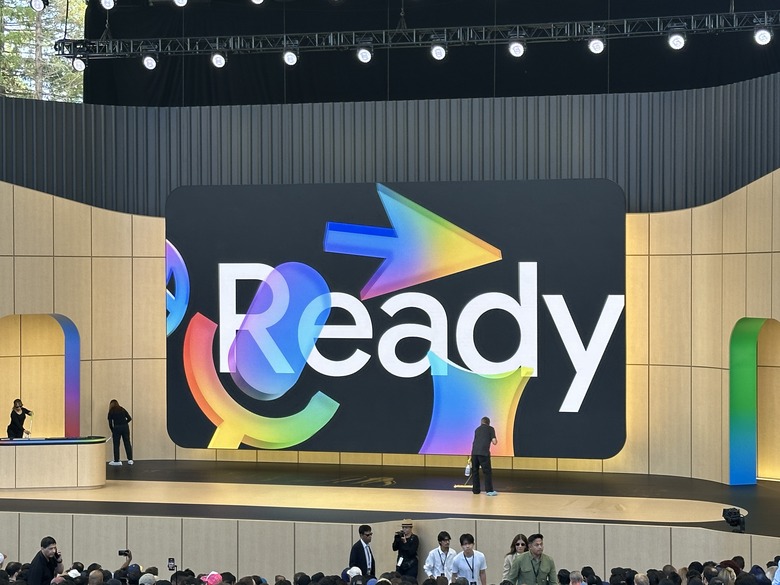
At its annual I/O developer conference this week, Google unveiled what it called its biggest overhaul of Search in over a quarter of a century — replacing the traditional keyword-based search box with an AI-powered interface built on Gemini 3.5 Flash, introducing autonomous "information agents" that browse the web on your behalf 24/7, and announcing that AI-generated answers, not links to websites, are now the future of how the world finds information.
The implications are enormous — for users, for businesses, for publishers, and for anyone who relies on the internet to work.
What Google Actually Announced at I/O 2026
The headline change is the redesign of the Search box itself — what Google describes as its most significant upgrade to the input field in 25 years. The new "intelligent search box," powered by Gemini 3.5 Flash, accepts not just text but images, files, video, and even open Chrome tabs. Rather than returning a list of results, it drops users into AI-generated interactive experiences, complete with custom visualisations, tools, and real-time simulations tailored precisely to the question being asked.
The numbers framing the announcement are staggering. AI Mode — Google's conversational search interface launched just a year ago — has already crossed one billion monthly users, with queries more than doubling every quarter. AI Overviews, the feature that places AI-generated summaries above traditional results, now reaches 2.5 billion monthly users. Google isn't testing the waters of AI search — it's already swimming in the deep end.
Key features announced at I/O 2026 include:
Information Agents — AI systems designed to continuously monitor the web for users, tracking apartment listings, shopping deals, sports updates, and other personalised searches in the background, sending updates when relevant information appears. You set the brief; the agent does the legwork — permanently.
Generative UI — Search can now build custom responses on the fly — generative layouts including interactive visuals, tables, graphs, and simulations assembled in real time to match the specific question being asked. Ask about astrophysics and get an interactive diagram. Ask about a recipe and get a personalised tracker.
Mini App Builder — Users can create their own custom mini apps directly inside Search using plain language. Advanced features like information agents and the mini-app builder will initially be available to paid Google AI Pro and Ultra subscribers this summer, before a wider free release.
Agentic Booking — Users will be able to compare prices, check availability, and complete bookings directly through Search — and in some cases, Google said the AI may even contact businesses on behalf of the user.
From Search Engine to Answer Engine
The philosophical shift here is significant. Google is no longer competing solely on information retrieval — it is repositioning Search as an active assistant capable of monitoring the web 24/7, booking services, generating interfaces, and maintaining workflows.
At Google Marketing Live 2026, Google signalled that the two-decade bargain of humans typing keywords into a box and advertisers paying to intercept them is coming to an end. The future Google described looks less like search and more like delegation — AI systems researching products, comparing options, and steering consumers toward decisions before they ever visit a website.
As Google's advertising chief Vidhya Srinivasan put it: "We are not just bringing ads to AI search experiences — we are reinventing what an ad is."
What This Means for Publishers and Websites
Here's where it gets complicated — and for anyone running a website, potentially alarming.
The changes are expected to further reduce referral traffic to third-party websites and publishers, who have already seen declining traffic from Google due to the earlier rollout of AI Overviews. When an AI agent answers a question completely within Google's ecosystem, there is no click, no visit, no page view — and no ad revenue for the publisher whose content trained the model to answer it.
Google has attempted to address those concerns, saying traditional web results will continue to appear alongside AI-generated responses: "This new search box does not mean that you'll only get AI responses." But the direction of travel is clear.
SEO spent decades optimising for clicks. Today, visibility depends on structured relevance, authority, and usefulness — and traditional rankings are becoming only one part of search visibility. Brands and publishers that want to remain visible in this new landscape will need to think less about keywords and more about whether their content is something an AI system can easily interpret, reference, and trust.
The Competitive Landscape
Google's aggressive AI pivot doesn't exist in a vacuum. The move intensifies competition with AI-driven search rivals such as OpenAI, Perplexity AI, and Microsoft Copilot, all of which are pushing conversational AI as an alternative to conventional web search. ChatGPT recently crossed 900 million weekly active users. Perplexity has been quietly eating into Google's market share among tech-forward users who prefer direct answers to link lists.
Google's response isn't to defend its legacy format — it's to out-AI the competition on its own turf. And with 2.5 billion monthly AI Overview users already in its ecosystem, it has the scale to do exactly that.
What Should You Do About It?
Whether you're a casual user, a content creator, a business owner, or a digital marketer, the Google I/O 2026 announcements carry real, practical implications:
For users: The Search experience is about to get significantly more powerful — and more personalised. AI agents that track listings, deals, and updates on your behalf could save hours of repeated searching every week. Lean in.
For businesses: Structured data, accurate product information, and high-authority content are now table stakes. If an AI agent is making purchasing decisions on behalf of consumers, you want to be the answer it trusts.
For content creators and publishers: Diversify your traffic sources now. Social, newsletters, direct audience relationships — anything that doesn't depend entirely on a Google referral click is worth investing in.
For marketers: The keyword is dying. The answer is everything. Content that is genuinely useful, deeply structured, and clearly authoritative will outperform content optimised for clicks alone.
The Bottom Line
Google's I/O 2026 announcements represent the most fundamental shift in how the internet works since the search engine itself was invented. For a quarter of a century, Google Search has opened with the same proposition: a blank white rectangle, a blinking cursor, and the implicit instruction to reduce your question to a handful of keywords. On Monday, Google declared that era over.
What replaces it is more powerful, more personal, and more consequential than anything that came before. The question isn't whether AI is changing Search — it's whether you're ready for what Search is becoming.
Stay ahead of the biggest shifts in technology, AI, and digital culture at digital8hub.com — your daily guide to what's changing and why it matters.
More on Digital8Hub:
AI Tools That Are Already Replacing Traditional Workflows in 2026
Tech Trends 2026: The Biggest Shifts Reshaping the Digital World
How to Future-Proof Your Website in the Age of AI Search
Comments (0)
Please log in to comment
No comments yet. Be the first!