Finance & Business
TCS Just Put Robots, Drones & AI on the Factory Floor in Michigan — and It's Only the Beginning
Troy, Michigan has been the beating heart of American automotive and industrial manufacturing for over a century. It is the city where Ford, GM, and Stellantis send their engineers to solve hard problems. It is a city that understands, better than almost anywhere else in the world, what it means to build things at scale. On March 9, 2026, Tata Consultancy Services chose Troy as the location for its seventh Gemini Experience Center — a facility that represents one of the most ambitious deployments of Physical AI in a manufacturing context anywhere in the world. Built in partnership with Google Cloud and featuring TCS's own Physical AI Blueprint, the centre is designed to do something that most enterprise AI deployments never achieve: move artificial intelligence off the screen, out of the data centre, and into the physical world of factory floors, production lines, and industrial environments where the real work happens.
What Is Physical AI — And Why Does It Matter for Manufacturing?
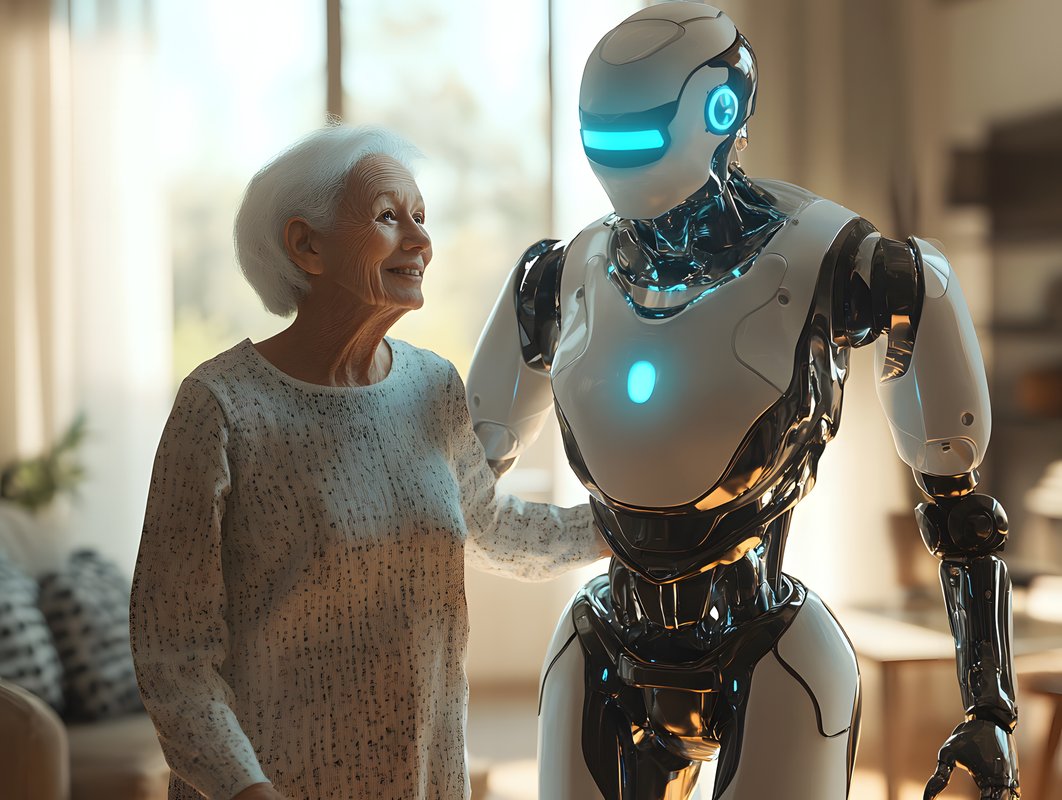
The term Physical AI refers to artificial intelligence that operates in and interacts with the real, physical world — not just processing data in the cloud, but controlling robots, operating drones, monitoring environments through sensors, and making real-time decisions that have physical consequences. It is the difference between an AI model that analyses a production report and an AI system that autonomously patrols a factory floor, detects a safety violation, alerts a supervisor, and logs the incident — all without human intervention. TCS's President of Manufacturing Anupam Singhal described the stakes precisely: "Physical AI is where intelligence moves to the edge — into the real world of operations. With the launch of our Physical AI Gemini Experience Centre for Manufacturing, we are enabling manufacturers to extend visibility and decision-making into environments that are difficult, risky, or inefficient for humans to access." That framing is important. The factory environments that Physical AI is designed to penetrate are not merely inconvenient for human workers — they are genuinely dangerous. Extreme heat, toxic chemicals, confined spaces, high-voltage equipment, and heavy machinery create conditions in which human monitoring is inherently limited and inherently risky. Physical AI changes that calculus entirely.
What the Troy Centre Actually Does: Robots, Drones & Predictive Maintenance
The Troy facility's capabilities are built around the TCS Physical AI Blueprint — an end-to-end framework that integrates four distinct technology layers: AI-powered robotics including both quadruped and humanoid robots, advanced sensing technologies, edge intelligence, and secure cloud orchestration via Google Cloud. The centre enables manufacturers visiting the facility to explore, test, and scale four core use cases. Autonomous patrolling — quadruped robots navigating factory floors independently, monitoring for safety violations, equipment anomalies, and environmental hazards without requiring human operators. Environmental monitoring — continuous AI-powered surveillance of temperature, air quality, chemical levels, and other environmental parameters in real time, triggering alerts when conditions move outside safe operating parameters. PPE compliance — computer vision systems that automatically verify whether workers on the floor are wearing the correct personal protective equipment for their specific work environment, flagging violations instantly and logging them for supervisory review. Predictive equipment health monitoring — AI systems that analyse sensor data from machinery to identify patterns that precede equipment failure, enabling maintenance teams to intervene before a breakdown occurs rather than after. Each of these use cases addresses a specific pain point that has historically cost manufacturers billions in downtime, injuries, regulatory penalties, and insurance claims. The Troy centre gives manufacturers the ability to see these solutions working in a real environment before committing to deployment at scale.
The Human-in-the-Loop Philosophy: AI That Works With People, Not Instead of Them
One of the most important aspects of TCS's Physical AI approach — and one that distinguishes it from more utopian visions of fully autonomous factories — is its emphasis on what it calls a human-in-the-loop design philosophy. The Troy centre is explicitly designed around the principle that AI systems operate alongside the workforce to enhance safety and operational resilience — not to replace human workers outright. Singhal described the centre as designed to help create more adaptive and future-ready industrial environments — with the emphasis on adaptation rather than displacement. Google Cloud's Vice President and General Manager of Cloud AI Saurabh Tiwary reinforced this framing, noting that the collaboration aims to equip global manufacturers with the intelligence to build more autonomous, resilient, and data-driven enterprises — while fully optimising their business models with Google Cloud's technology. The language is deliberate and consistent: autonomy is the goal, but human oversight and collaboration remain central to the architecture. As digital8hub.com has reported, the broader AI agent revolution — from OpenClaw in China to GPT-5.4 from OpenAI — is raising fundamental questions about the balance between human and machine decision-making across every industry. TCS's human-in-the-loop philosophy represents one thoughtful answer to that question in the manufacturing context.
The Global Network: 13 Centres by End of 2026
The Troy facility is the seventh in what TCS and Google Cloud are building into a genuinely global network of Physical AI deployment hubs. The existing six Gemini Experience Centres are located in Bengaluru, New York, Chennai, Riyadh, Singapore, and São Paulo — a distribution that covers Asia, the Americas, the Middle East, and Southeast Asia. Six additional centres are scheduled to launch before the end of 2026, bringing the total to 13. The geographic logic of the network is deliberate: TCS is placing Gemini Experience Centres in the cities and regions where its largest manufacturing clients operate — giving those clients direct access to a physical demonstration environment where they can test Physical AI solutions in conditions that closely approximate their own operational environments. Troy's selection is the clearest expression of that logic. Michigan is the state where American automotive manufacturing was born. It is the state where the tension between automation and employment is most acutely felt. And it is the state where the argument for Physical AI — AI that makes factories safer, more efficient, and more competitive without eliminating the workforce — is most urgently needed. TCS has placed its seventh centre exactly where the conversation about the future of manufacturing is loudest. For the latest coverage of AI, manufacturing technology, and the Physical AI revolution, follow digital8hub.com.
Comments (0)
Please log in to comment
No comments yet. Be the first!