Finance & Business
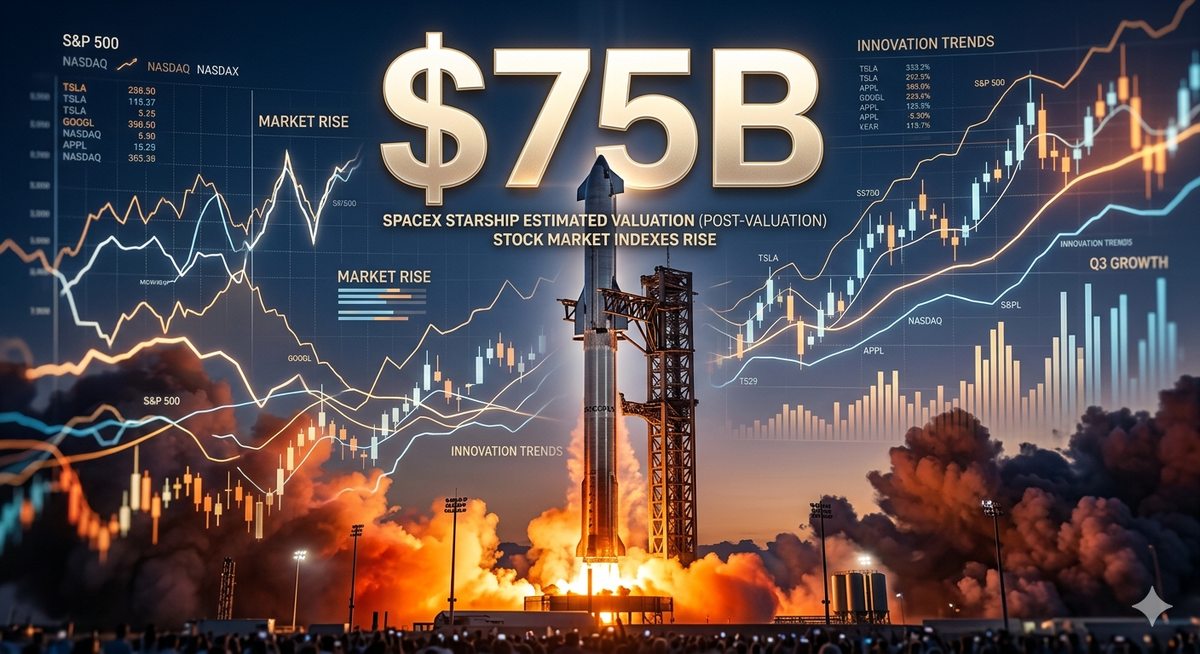
SpaceX Plans to Set IPO Price at $135 Per Share, Targeting Record $75 Billion Raise – Sources
SpaceX, the world’s most valuable private company, is preparing for one of the largest initial public offerings in financial history. According to multiple sources familiar with the plans, the rocket and satellite giant intends to price its shares at $135 each in its upcoming IPO, aiming to raise as much as $75 billion.This ambitious target would value SpaceX at well over $200 billion post-money and easily surpass previous record-breaking IPOs, including those of Alibaba, Meta (Facebook), and Snowflake.The Road to IPOElon Musk’s space company has been preparing for a public listing for several years. After years of speculation, internal discussions have accelerated in recent months as SpaceX achieved key milestones: Starship test flights, Starlink’s rapid global expansion, and record revenue from both launch services and satellite internet.The $135 per share target represents a significant premium over recent private share sales, which have valued the company between $150 billion and $210 billion in secondary markets. By setting a relatively conservative public entry price, SpaceX and its bankers appear to be aiming for strong first-day performance and sustained investor interest.Why $75 Billion?The massive raise size is driven by several factors:Starlink Expansion: The satellite internet constellation requires enormous capital to reach global coverage and profitability.
Starship Development: Fully reusable Starship remains extremely capital-intensive.
New Initiatives: Projects like Starlink Direct-to-Cell, point-to-point Earth transport, and potential lunar/Mars missions.
Shareholder Liquidity: Early investors, employees, and Musk himself may want to monetize some holdings.
A $75 billion raise would be almost double the previous record for a U.S. IPO and would give SpaceX substantial dry powder for its ambitious goals.Valuation ContextAt $135 per share, SpaceX would enter the public market with one of the highest valuations ever for a newly listed company. For comparison:Meta’s 2012 IPO raised $16 billion at a $104 billion valuation.
Alibaba’s 2014 IPO raised $25 billion at a $231 billion valuation.
SpaceX’s valuation would place it among the top 10 most valuable companies in the world on day one, ahead of many established giants.Investor AppetiteDemand is expected to be overwhelming. Major institutional investors, sovereign wealth funds, and retail investors have been waiting for years to buy SpaceX shares. The company’s combination of proven execution, visionary leadership, and massive addressable markets (satellite broadband, space tourism, national security launches) makes it one of the most attractive IPO candidates in decades.However, some analysts caution that the valuation leaves little margin for error. Any delays in Starship development or slower-than-expected Starlink growth could pressure the stock price post-IPO.Elon Musk’s RoleAs SpaceX’s founder and largest shareholder, Elon Musk is expected to retain significant control through dual-class share structures. He has previously said he wants SpaceX to remain mission-driven rather than purely profit-focused, even as a public company.Musk’s involvement with multiple companies (Tesla, xAI, X, Neuralink, The Boring Company) will likely be closely watched by investors concerned about divided attention.Market ImplicationsA successful SpaceX IPO would have ripple effects across the entire space and technology sectors:Increased visibility and legitimacy for commercial space companies
Potential valuation uplift for peers like Rocket Lab, AST SpaceMobile, and Planet Labs
Stronger investor appetite for deep-tech and frontier technology investments
Benchmark for other high-profile IPO candidates waiting in the wings
Risks and ChallengesDespite the excitement, several risks remain:Execution Risk: SpaceX must continue delivering on ambitious technical timelines.
Regulatory Hurdles: Increased scrutiny as a public company, especially regarding Starlink’s global operations.
Valuation Pressure: A high initial valuation could lead to post-IPO volatility if growth expectations aren’t met quickly.
Geopolitical Risks: SpaceX’s heavy involvement with U.S. government contracts and international operations adds complexity.
What Comes Next?SpaceX is reportedly working with Goldman Sachs, Morgan Stanley, and other top banks to prepare the S-1 filing. The company aims to go public sometime in late 2026 or early 2027, pending regulatory approval.If the $75 billion target is achieved, it would represent a historic moment — not just for SpaceX, but for the entire commercial space industry that Musk has helped pioneer.Final ThoughtsSpaceX’s planned IPO at a $135 share price with a potential $75 billion raise would be a landmark event in both financial markets and human space exploration. It would reward early investors, provide capital for ambitious future projects, and bring public market scrutiny to one of the most innovative companies of our time.For Elon Musk, it would be another chapter in an already legendary entrepreneurial journey. For the space industry, it could mark the true beginning of the commercial space age.The countdown to SpaceX’s public debut has officially begun.
Comments (0)
Please log in to comment
No comments yet. Be the first!