Finance & Business
Saudi Aramco Reports 26% Jump in Q1 2026 Profit — Iran War Chaos Becomes Aramco's Windfall
There is a cruel arithmetic at work in the Gulf crisis of 2026. For every ship unable to transit the Strait of Hormuz, for every LNG cargo rerouted at enormous cost, for every nation watching its energy import bill spiral upward — there is a balance sheet somewhere registering the other side of that ledger. And no balance sheet is registering it more emphatically than Saudi Aramco's.
Saudi Aramco reported a 25% jump in first-quarter profit on Sunday, showing its resilience as US-Iran war tensions curtail Strait of Hormuz shipping, with the state oil giant's East-West crude pipeline running at full capacity to mitigate the impact to supplies. digital8hub
Aramco's adjusted net income for Q1 2026 rose by 26% year-on-year and by 34% quarter-on-quarter. The profit figure beat analyst forecasts. The world's top oil exporter earned a net profit of $32.5 billion in the three months ended March 31, beating an LSEG consensus estimate of $30.95 billion. digital8hubdigital8hub
The numbers are extraordinary — and the story behind them is even more so. At digital8hub.com, we break down exactly what drove Aramco's blockbuster quarter, why the East-West Pipeline has become the most strategically important piece of energy infrastructure on earth, and what the results tell us about the new shape of global energy markets in the Iran war era.
The Numbers: A Historic Quarter
The scale of Aramco's Q1 2026 outperformance deserves careful appreciation.
Aramco's net income rose by 25.5% year-on-year during the first quarter to 120.13 billion Saudi riyals ($32.04 billion), compared to 95.68 billion riyals ($25.51 billion) in the corresponding period of 2025. Google News
Total revenue surged nearly 7% from a year earlier to $115.49 billion due to higher prices and volumes sold of both crude oil and refined and chemical products. digital8hub
Aramco's average crude oil realised price from January to March was $76.9 per barrel, up from $76.30 in the first quarter of 2025 and from $64.10 in the previous quarter. digital8hub
The results marked Aramco's first quarterly profit increase after 12 consecutive quarters of decline, reflecting the sharp tightening in global energy markets following the outbreak of conflict in the Gulf earlier this year. Oil prices climbed sharply during the quarter, rising from the mid-$60 range in early February to above $100 per barrel by March after Iran imposed restrictions on hydrocarbon transit through the strategic Strait of Hormuz. Google News
For shareholders, the dividend news was equally positive. The board declared a Q1 2026 base dividend of $21.9 billion, up 3.5% year-on-year, to be paid in the second quarter. digital8hub
The East-West Pipeline: Aramco's Secret Weapon
The single most important operational story of Aramco's Q1 2026 results is not the profit figure itself — it is the infrastructure that made it possible.
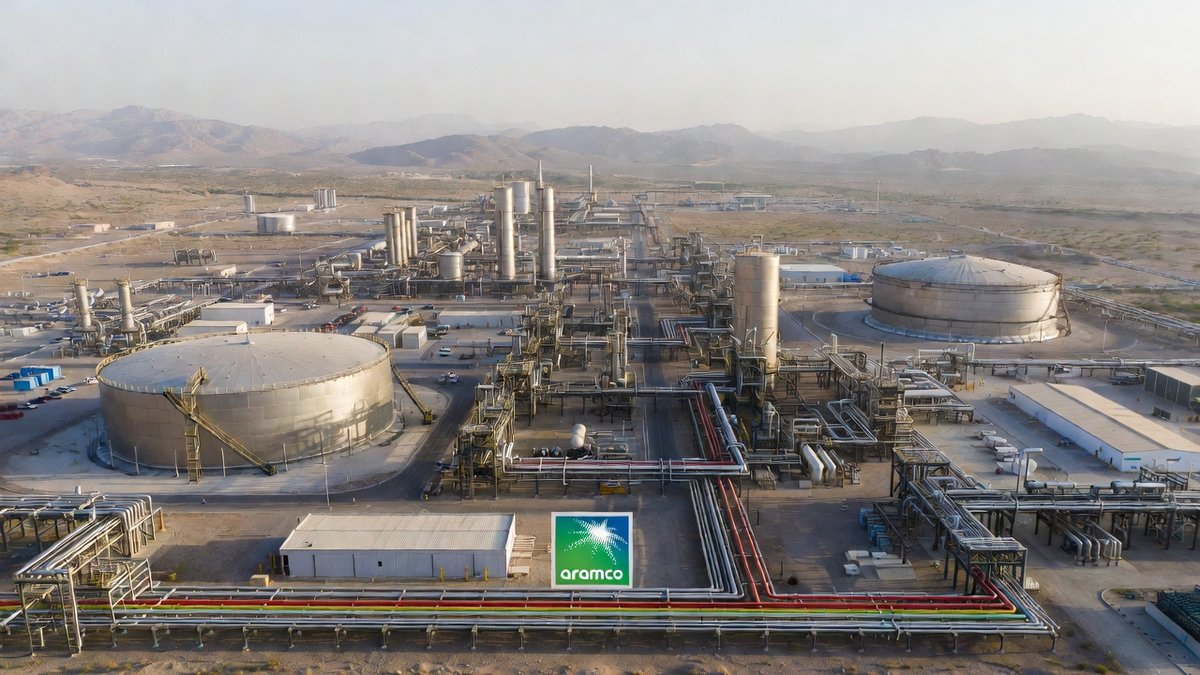
Aramco's East-West Pipeline reached its maximum capacity of seven million barrels per day in the first quarter. Aramco increased exports by using a pipeline that avoids shipping through the Strait of Hormuz, which has been disrupted by the Iran war. digital8hubdigital8hub
The East-West Pipeline can supply about 2 million barrels per day to refineries on Saudi Arabia's west coast, leaving 5 million barrels per day for export. digital8hub
The strategic significance of this infrastructure cannot be overstated. While Iran's actions have effectively weaponised the Strait of Hormuz — cutting off the primary export route for vast quantities of Gulf oil and gas — Saudi Arabia has been able to route its own production through an entirely different corridor, maintaining export volumes while simultaneously benefiting from the price surge that the supply disruption has generated.
Aramco President and CEO Amin H. Nasser said: "Aramco's first-quarter performance reflects strong resilience and operational flexibility in a complex geopolitical environment. Our East-West Pipeline, which reached its maximum capacity of 7.0 million barrels of oil per day, has proven itself to be a critical supply artery, helping to mitigate the impact of a global energy shock and providing relief to customers affected by shipping constraints in the Strait of Hormuz." digital8hub
The pipeline — running from Aramco's vast Eastern Province oil fields across the width of Saudi Arabia to the Red Sea port of Yanbu — was originally built as a strategic redundancy precisely for scenarios like the current one. Its value in peacetime was debated. Its value in the current crisis is incalculable.
The Hormuz Factor: Disruption as Profit Engine
The brutal reality of Aramco's Q1 2026 results is that the same crisis devastating the global economy is generating historic profits for the company most positioned to benefit from it.
Iran's blockade of the Strait of Hormuz has resulted in the loss of nearly a billion barrels of oil from global markets — a supply shock of historic proportions that has driven prices from the mid-$60s to above $125 per barrel as we have covered extensively across our Gulf crisis series. digital8hub
The company stated that the increase was primarily driven by "higher crude oil prices, higher crude oil volumes sold, and increased sales of refined and chemical products," despite rising operating costs, taxes, and zakat obligations linked to stronger earnings. Google News
Brent crude prices rose by 95% over the first quarter, and are up 67% year-to-date. digital8hub
For Aramco — whose production costs are among the lowest in the world and whose pipeline infrastructure has allowed it to maintain and even increase export volumes while competitors struggle with Hormuz closure — the price surge has been almost entirely additive to profitability. The company that built the East-West Pipeline as an insurance policy is now cashing in that policy at maximum value.
The CEO's Warning: Don't Celebrate Too Early
For all the strength of Q1's numbers, CEO Amin Nasser has been notably measured in his public commentary — a man whose long experience of oil market cycles has made him wary of declaring any situation permanent.
Nasser said: "Recent events have clearly demonstrated the vital contribution of oil and gas to energy security and the global economy, and are a stark reminder that reliable energy supply is critical. Despite these headwinds, Aramco remains focused on its strategic priorities and is leveraging both its domestic infrastructure and its global network to navigate disruption." digital8hub
Aramco chief warned of 'catastrophic' consequences for oil markets if Hormuz closure persists — a statement that reflects an awareness that sustained disruption, while profitable for Aramco in the short term, creates systemic risks for the global energy system on which Aramco's own long-term prosperity depends. digital8hub
The world cannot function indefinitely at $125+ oil. Demand destruction, recession, and geopolitical realignment all become more probable at sustained high prices — and all create their own risks for a company whose value is ultimately tied to the continued global appetite for hydrocarbons.
What Aramco's Results Reveal About the New Energy World
Aramco's Q1 2026 results are not merely a corporate earnings story. They are a window into the structural transformation of global energy markets that the Iran war has accelerated.
The world's energy system will change in big ways as a result of the Iran war, the CEOs of key oil and gas companies told investors on their earnings calls over the past two weeks. The disruption has demonstrated the fragility of the global energy system. digital8hub
Several structural shifts are already visible in the data. Energy trade routes are being permanently redrawn — with the Red Sea corridor via the East-West Pipeline becoming more important and the Hormuz route less reliable as a long-term assumption. Infrastructure that allows energy to bypass traditional chokepoints is being recognised and priced as strategic assets of the first order. And the companies — and nations — with the foresight to build that infrastructure before the crisis are now reaping rewards that will compound for years.
For Saudi Arabia, Aramco's results are a geopolitical as well as a financial event. The Kingdom's ability to maintain and increase energy exports while Iran's own exports are strangled by the blockade it provoked has fundamentally altered the regional balance of energy power — with consequences that will shape Middle Eastern geopolitics long after the current military crisis has been resolved.
For global investors, Aramco's Q1 results are a reminder that in periods of geopolitical disruption, the companies and commodities that provide the things the world cannot do without tend to generate returns that no other investment class can match.
For the latest financial analysis, energy market coverage, and in-depth reporting on the Gulf crisis and its global consequences, follow digital8hub.com — where smart money meets the digital future.
Comments (0)
Please log in to comment
No comments yet. Be the first!