Finance & Business
One Launch Away From 10,000: SpaceX's Starlink Mission Tonight Could Cross the Most Significant Satellite Milestone in History
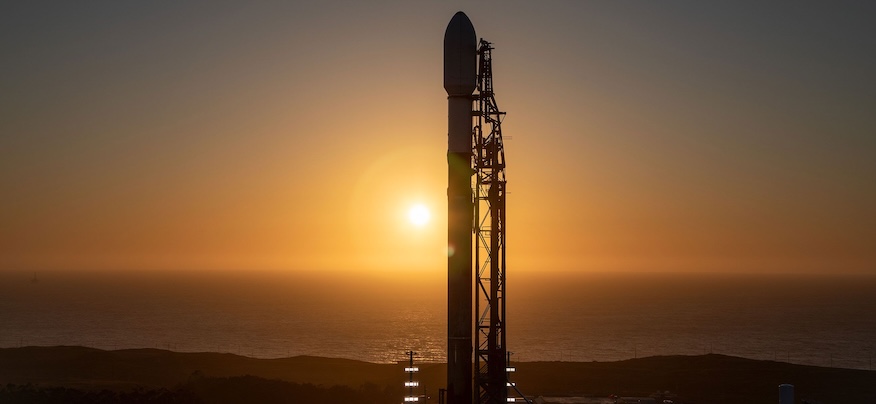
In May 2019, SpaceX launched 60 satellites into low Earth orbit on a single Falcon 9 rocket and changed the space industry forever. The launch was the beginning of Starlink — a broadband internet constellation that Elon Musk described at the time as a network capable of funding SpaceX's Mars ambitions by providing affordable high-speed internet to every corner of the planet. Seven years, hundreds of launches, and thousands of satellites later, tonight's mission from Vandenberg Space Force Base in California arrives at a milestone that no satellite operator in the history of spaceflight has ever reached: SpaceX is on the cusp of operating more than 10,000 active Starlink satellites simultaneously in low Earth orbit. The Starlink Group 17-24 mission — carrying 25 Starlink V2 Mini Optimized satellites — is scheduled to lift off tonight at 10:19:09 PM PDT from Space Launch Complex 4 East at Vandenberg Space Force Base. If the launch proceeds on schedule and deployment is confirmed, the Starlink constellation will cross or approach the 10,000-satellite threshold — a number that, when SpaceX first proposed it to the FCC in 2016, was widely described as unrealistic, unnecessary, and potentially destabilising to the orbital environment.
Tonight's Mission: B1088, Its 14th Flight & the Drone Ship Catch
The Falcon 9 rocket flying tonight carries the tail number B1088 — a veteran booster making its 14th flight, with a distinguished mission history that includes the launch of NASA's SPHEREx space telescope, the Transporter-12 rideshare mission, two classified National Reconnaissance Office missions, and nine previous Starlink deliveries. Its 14th flight is another demonstration of Falcon 9's extraordinary reusability — a characteristic that has made SpaceX the world's most prolific launch provider by an extraordinary margin. More than eight minutes after liftoff, B1088 will attempt a propulsive landing on the drone ship "Of Course I Still Love You" — stationed in the Pacific Ocean on a southerly trajectory from Vandenberg. The satellite payload — 25 Starlink V2 Mini Optimized satellites — will be deployed approximately one hour after liftoff into a low Earth orbit designed to integrate with SpaceX's existing constellation architecture. As digital8hub.com has reported, SpaceX has now completed 674 Starlink satellite launches in 2026 alone — a figure that represents a cadence of approximately two to three launches per week maintained consistently across the entire year.
The 10,000-Satellite Milestone: What It Actually Means
The number 10,000 is extraordinary in the context of the entire history of spaceflight. Before SpaceX began deploying Starlink in 2019, the total number of active satellites in orbit around Earth — from every operator, every country, every agency, across every orbit — was approximately 2,000. In seven years, SpaceX alone has added five times that number to low Earth orbit, operating a constellation that now dwarfs every other satellite network ever built by a factor of several multiples. The operational significance of 10,000 simultaneously active satellites is a step-change in coverage density, network capacity, and service resilience. More satellites in a given orbital shell mean shorter distances between the user terminal and the nearest overhead satellite — reducing latency, increasing bandwidth, and improving reliability in marginal coverage conditions. As digital8hub.com has reported this week, Starlink is now available in Kuwait — where the ongoing Gulf conflict has disrupted terrestrial internet infrastructure — alongside recent expansions to the Galápagos Islands and Niue in the Pacific. The constellation's global reach is increasingly literal: there are now few populated areas on Earth where Starlink does not provide some level of coverage.
The Broader Context: Starlink Kuwait, 32 Launches in 2026 & Mars
Tonight's launch is SpaceX's 33rd orbital mission of 2026 — a pace that, if sustained, would produce more than 120 orbital launches in a single calendar year from a single company. No launch provider in history has approached that figure. SpaceX's reusable Falcon 9 fleet — flying boosters like B1088 on their 14th, 20th, and even 27th flights — is the industrial foundation that makes the cadence possible. Elsewhere in the Starlink story this week, SpaceX confirmed Starlink availability in Kuwait — a development with particular resonance given that as digital8hub.com has reported, Kuwait has been struck by Iranian drones on multiple occasions during Operation Epic Fury, disrupting communications infrastructure across the country. Satellite internet that bypasses terrestrial infrastructure entirely has gone from a commercial convenience to a genuine resilience tool in a region where the ground-based network has become unreliable. Elon Musk's original vision — affordable internet everywhere, funding the path to Mars — is, measured by the milestone SpaceX approaches tonight, closer to realised than anyone outside of SpaceX's own projections would have predicted seven years ago. The launch window opens at 10:19 PM PDT. Watch live at spacex.com. For the latest coverage of SpaceX, Starlink, and all space industry news, follow digital8hub.com.
Comments (0)
Please log in to comment
No comments yet. Be the first!