Finance & Business
One Company Will Now Own Local TV News for 80% of America — The Nexstar-Tegna Deal Just Closed
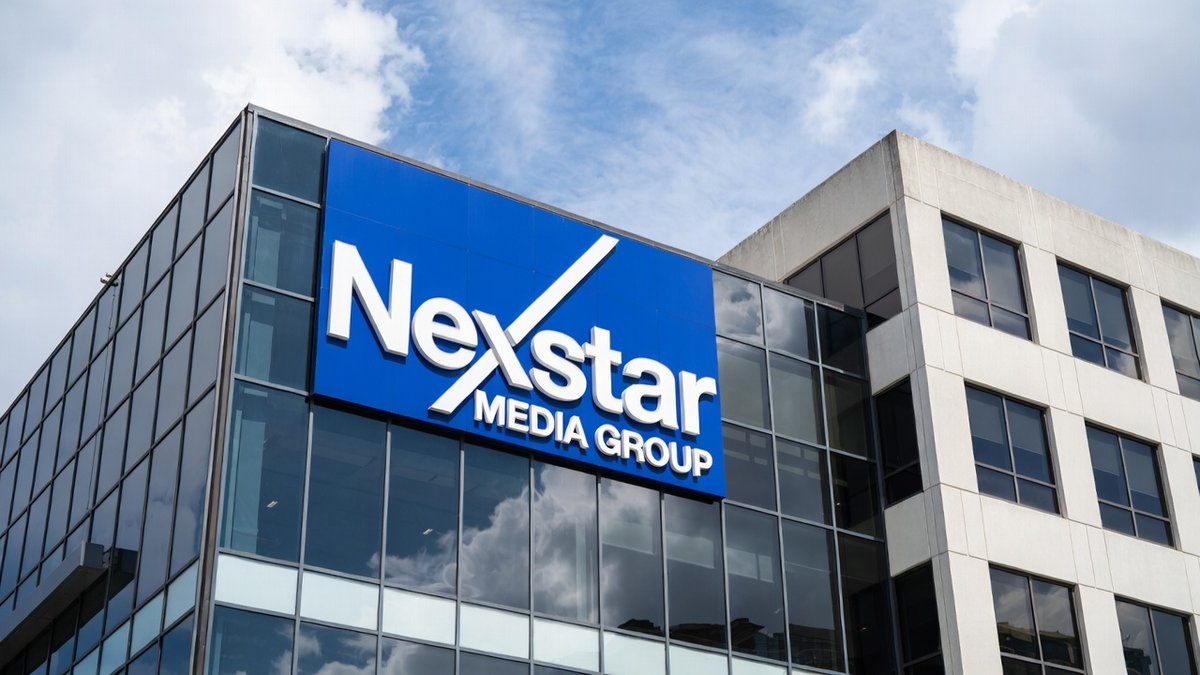
One company now controls local TV news for eight out of every ten American households. Nexstar Media Group — already the largest owner of local television stations in the United States before today — completed its $6.2 billion acquisition of TEGNA Inc. on Thursday March 20, following approvals from both the Federal Communications Commission and the Department of Justice that arrived within hours of each other. The deal, announced in August 2025 at $22 per TEGNA share — a 31% premium to the company's 30-day average — was always going to reshape the American local broadcasting landscape. The combined entity now owns 259 full-power television stations across 44 states and the District of Columbia, variously affiliated with ABC, CBS, Fox, and NBC. Its reach: approximately 80% of all US television households. A single company. Local news. Eight in ten American homes. The deal closed even as eight state attorneys general and DirecTV were simultaneously filing lawsuits to block it. As Perry Sook, Nexstar's chairman, president, and CEO put it: "We are very pleased to complete this transformational transaction."
The FCC's 39% Rule — And How It Was Waived
The legal architecture that has prevented this kind of broadcast consolidation for decades was not repealed to make the Nexstar-TEGNA deal possible. It was waived. FCC rules have long prohibited a single company from owning television stations that, combined, reach more than 39% of all US television households. The rule was designed precisely to prevent the concentration of local news ownership that today's deal represents. The combined Nexstar-TEGNA entity will reach at least 60% — and by some estimates 80% — of US households, depending on how reach is calculated. FCC Chairman Brendan Carr — a Trump appointee — signed off on the waiver, citing Nexstar's commitments to expand local news investment, maintain existing retransmission rates for pay-TV providers through November 2026, and comply with equal opportunity employment standards. Nexstar was also required to divest six stations as a condition of approval — a concession that reduces the headline station count from 265 to 259. The waiver represents one of the most significant departures from decades of broadcast ownership policy in FCC history — and its political context is inescapable. President Trump endorsed the merger in a Truth Social post in February 2026, calling it good for local communities and a necessary response to the dominance of Big Tech in the media landscape.
The Lawsuits: Eight States, DirecTV & the Clayton Act
The merger closed on Thursday. The lawsuits arrived the same day. Eight state attorneys general — from California, New York, Colorado, Illinois, Oregon, North Carolina, Connecticut, and Virginia — filed a federal antitrust lawsuit just hours before Nexstar confirmed the deal's completion, alleging the combination violates Section 7 of the Clayton Act, which prohibits mergers that substantially lessen competition or tend to create a monopoly. The states' core argument is straightforward: by owning 259 stations reaching 80% of US households, Nexstar will have extraordinary leverage over cable and satellite distributors in retransmission consent negotiations — allowing it to demand higher fees that will ultimately be passed to consumers. DirecTV — which has had contentious retransmission negotiations with Nexstar in the past — filed its own separate lawsuit, making the same core argument from a distributor's perspective. Nexstar's commitment to hold retransmission rates at existing levels through November 2026 was designed to address exactly these concerns — but the states and DirecTV clearly found that commitment insufficient. The lawsuits do not unwind the acquisition — it has closed — but they represent the beginning of a legal battle that could impose conditions, force additional divestitures, or in an extreme outcome compel a partial unwinding of the deal.
What It Means for Local News: Synergies, Savings & the Communities in Between
The case for the Nexstar-TEGNA merger — made repeatedly by Perry Sook and endorsed by FCC Chairman Carr — is that local broadcasting is under existential pressure from Big Tech and streaming, and that only scale can generate the revenue necessary to sustain local journalism. Nexstar has pointed to its record with TEGNA's predecessor companies and its own Tribune Media acquisition as evidence that consolidation under its ownership has maintained or increased local news output. Critics — including the eight state AGs and media watchdog groups — argue that consolidation historically leads to staff reductions, homogenised content, and the replacement of genuinely local journalism with shared content produced centrally and distributed across multiple markets. As digital8hub.com has reported, the broader media landscape is undergoing simultaneous consolidation through the Warner Bros.-Paramount Skydance merger and Disney's transition to a new CEO. The Nexstar-TEGNA deal adds a third transformational media transaction to a week in which the American entertainment and news industry is being reorganised at a speed and scale not seen since the Telecommunications Act of 1996. Nexstar's 259 stations. 80% of American households. One company. For the latest coverage of media, business, and the future of local news, follow digital8hub.com.
Comments (0)
Please log in to comment
No comments yet. Be the first!