Finance & Business
Oil at $100, Global Recession Risk & Market Chaos — How the Iran Strike Could Shake the World Economy
The bombs have fallen on Tehran. Now the world waits for the economic aftershock. Operation Epic Fury — the coordinated US-Israel military offensive against Iran launched on February 28, 2026 — has sent a cold wave of fear through global energy markets. When Asian trading opens on Sunday evening, oil prices are expected to spike sharply. And if Iran follows through on its most extreme threat — closing the Strait of Hormuz — the consequences for the global economy could be catastrophic.
Iran's Oil Footprint: Bigger Than You Think
Iran is not just another oil producer. It is the fourth-largest producer in OPEC, pumping approximately 3.3 million barrels per day — roughly 3% of global output. Despite years of US sanctions, Iran has continued to export around 1.9 to 3 million barrels per day, with the vast majority going to Chinese refineries. More than 80% of Iran's crude exports are destined for China — meaning Beijing is the country most immediately exposed to any disruption in Iranian supply.
But Iran's direct oil output is only part of the story. The country's strategic location is what makes energy markets truly nervous right now.
The Strait of Hormuz: The World's Most Dangerous Chokepoint
Every oil analyst, economist, and geopolitical strategist is focused on one thing right now: the Strait of Hormuz. This narrow waterway between Iran and Oman is the single most important oil transit corridor on the planet. Approximately 20 million barrels of crude oil and petroleum products pass through the Strait every single day — accounting for nearly 20% of global liquid oil consumption and 20% of global liquefied natural gas exports. One quarter of all global seaborne oil trade flows through this narrow passage.
Iran has repeatedly threatened to close the Strait in the event of a military attack. That threat has always been treated as a bluff — until now. With US and Israeli forces actively striking Iranian territory and Iran retaliating against US military bases across the Gulf, the threat of Strait disruption has never felt more real.
If the Strait of Hormuz is closed or made unsafe for commercial shipping — even partially — the exports of Saudi Arabia, Kuwait, the UAE, Iraq, and Qatar would all be trapped simultaneously. There is no pipeline infrastructure capable of rerouting that volume of oil around the blockade. The resulting supply shock would be immediate, dramatic, and global.
What Happens to Oil Prices?
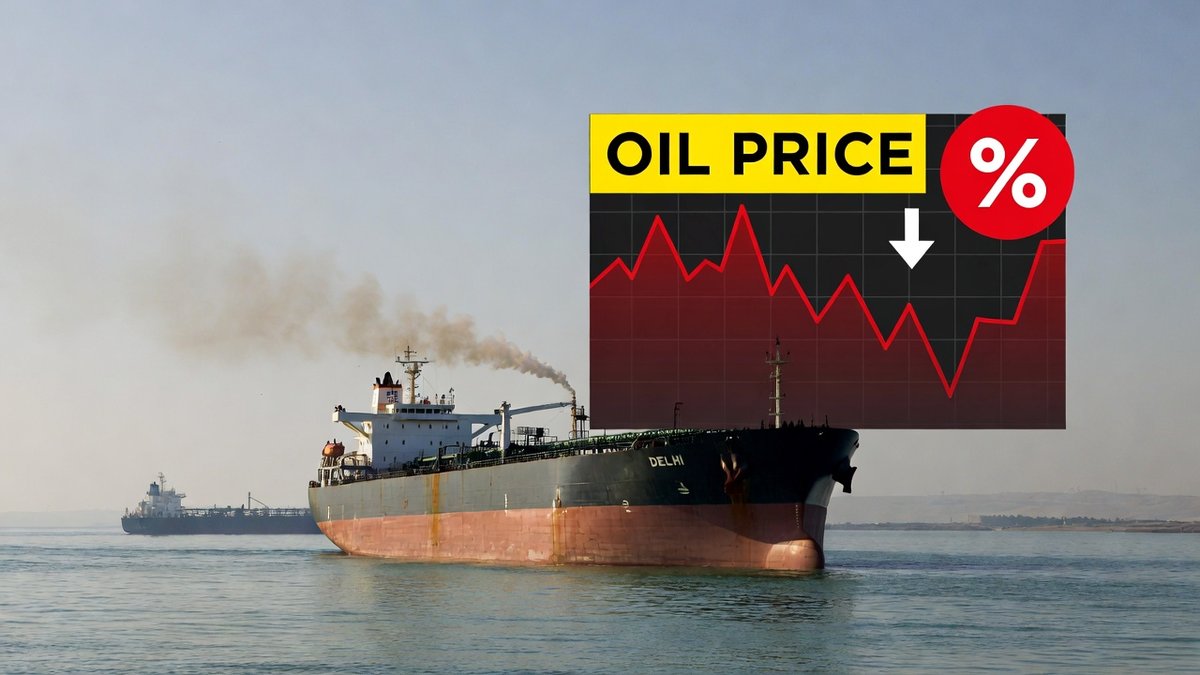
When Asian markets open on Sunday, oil prices are expected to jump sharply. Brent crude closed at $72.87 per barrel on Friday — already up 2.87% on the day as markets priced in conflict risk. Analysts at Vanda Insights expect a knee-jerk jump to $80 per barrel when trading resumes. If hostilities persist and the Strait faces genuine disruption, prices could surge toward $100 per barrel or beyond.
There is one cushion — the world is currently oversupplied with oil. OPEC+ producers, particularly Saudi Arabia and the UAE, hold significant spare capacity that could partially offset Iranian supply disruptions in the short term. The US Strategic Petroleum Reserve holds approximately 415 million barrels — roughly six months of US imports — which the Trump administration has indicated it is prepared to deploy if prices spike aggressively.
But here's the critical distinction every analyst is making right now: duration matters. A short, sharp conflict that ends quickly would likely produce a temporary price spike that fades as markets stabilise. A prolonged conflict — or a sustained blockade of the Strait — would be an entirely different story.
The Recession Risk
A prolonged closure of the Strait of Hormuz could tip the global economy into recession. That is not hyperbole — it is the consensus view of energy economists and geopolitical risk consultants assessing the worst-case scenario. The last time something close to this scale of Middle East disruption occurred, in the 1970s oil crisis, the global economy suffered years of stagflation.
Beyond oil, financial markets are bracing for a broader risk-off shock. Global equities are expected to open lower on Monday — potentially down 1% to 2% or more. Capital is expected to flow into safe-haven assets: US dollars, Japanese yen, gold, and US Treasury bonds. Yields on Treasuries are expected to fall as investors rush to safety, while the dollar strengthens. Emerging market economies — already under pressure — face a particularly difficult environment if energy costs surge and dollar strength tightens financial conditions.
What Comes Next
Everything depends on how the next 48 to 72 hours unfold. If Operation Epic Fury achieves its objectives quickly and Iran's military capability is significantly degraded, markets may stabilise faster than feared — as they did after the June 2025 Israeli strikes on Iranian nuclear sites. If the conflict expands into a prolonged regional war, the economic consequences will compound rapidly.
The world has never been here before — not quite like this. A US-Israel joint military operation targeting the leadership of a major oil-producing nation, with missiles already fired at US bases across the Gulf. The Strait of Hormuz is not yet closed. But the world is watching it very, very closely.
For the latest updates on the Iran crisis and global markets, follow digital8hub.com.
Comments (0)
Please log in to comment
No comments yet. Be the first!