Finance & Business
Nvidia Unveils Next-Gen AI Chips and Deepens Mercedes Autonomous Driving Partnership at CES 2026
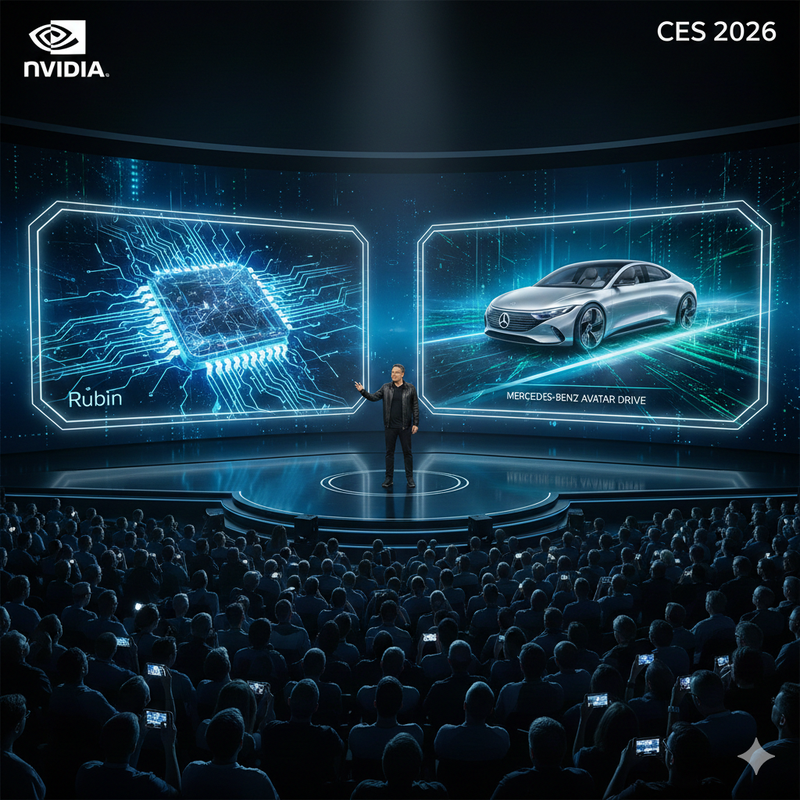
Nvidia Kicks Off CES 2026 with Major AI Chip Reveals and Mercedes Autonomous Driving PartnershipDuring his highly anticipated keynote at CES 2026 on January 5, Nvidia CEO Jensen Huang unveiled the company's latest advancements in artificial intelligence hardware and software, including the new Rubin GPU architecture set for release in 2027 and the powerhouse Rubin Ultra planned for 2028. The announcements underscore Nvidia's relentless pace in the AI race, while a deepened partnership with Mercedes-Benz highlights real-world deployment of Nvidia's autonomous driving technology.The keynote, titled "The Dawn of AI," drew massive crowds and set the tone for the week-long consumer electronics showcase in Las Vegas.Next-Generation AI Chips: Rubin and Rubin UltraNvidia surprised analysts by skipping an extended Blackwell cycle and jumping straight to the Rubin architecture, named after astronomer Vera Rubin. Key details:Rubin GPUs (R100 family): Launching in the second half of 2027, featuring a new NVLink switch for massive scaling, HBM4 memory, and up to 50% better performance-per-watt than Blackwell.
Rubin Ultra: A larger variant arriving in 2028, designed for the most demanding training and inference workloads, with even higher memory bandwidth and core counts.
Huang emphasized annual cadence: "We are now on a one-year rhythm—Blackwell this year, Rubin next, then Rubin Ultra." This aggressive roadmap responds to rising competition from AMD, Intel, and custom silicon from hyperscalers like Google and Amazon.The chips will power Nvidia's DGX systems and cloud offerings, with early access for partners like Microsoft Azure, Google Cloud, and Oracle.Nvidia DRIVE Thor: Powering the Future of Autonomous Cars with MercedesA major highlight was the expanded collaboration with Mercedes-Benz, which will deploy Nvidia's next-generation DRIVE Thor system-on-chip across its future vehicle lineup starting in 2027.DRIVE Thor, announced previously but detailed further at CES, consolidates multiple functions:Centralized compute for automated driving, in-cabin AI, and digital cockpit.
Up to 2,000 TOPS of performance for Level 3+ autonomy.
Support for multi-sensor fusion (cameras, radar, lidar) and generative AI features inside the vehicle.
Mercedes will use DRIVE Thor in its upcoming electric and autonomous models, including next-gen EQ vehicles and the Vision AVTR-inspired concepts. The partnership builds on existing use of Nvidia tech in current MBUX infotainment systems.Huang demonstrated live in-car AI capabilities: real-time route optimization, personalized cabin experiences, and natural-language interaction powered by Nvidia's foundation models.Broader AI Ecosystem AnnouncementsNvidia also showcased:Nvidia Cosmos: A new foundation model for physical AI and robotics training.
Project GR00T: Advancements in humanoid robot development with partners like Figure and Apptronik.
Expanded Nvidia ACE for digital avatars and gaming NPCs.
The company reported strong demand for Blackwell, with production ramping and revenue guidance exceeding expectations.Market Reaction and Industry ImpactNvidia shares rose over 3% in after-hours trading following the keynote, reflecting investor confidence in the roadmap. Analysts praised the Rubin reveal as a bold move to maintain leadership amid intensifying AI chip competition.The Mercedes partnership validates Nvidia's automotive pivot, where the company now claims over $14 billion in design wins across major OEMs including Tesla, Volvo, and BYD.As AI infrastructure spending continues surging—projected to top $500 billion in 2026—Nvidia's accelerated innovation cycle positions it to capture the lion's share.CES attendees can experience Nvidia's demos at the central hall booth through January 9, including DRIVE Thor simulators and Rubin architecture previews.With these announcements, Nvidia once again sets the pace for the AI era, blending cutting-edge silicon with practical deployments in consumer vehicles.
Comments (0)
Please log in to comment
No comments yet. Be the first!