Finance & Business
Netflix Just Got More Expensive — Here's Whether It's Still Worth It
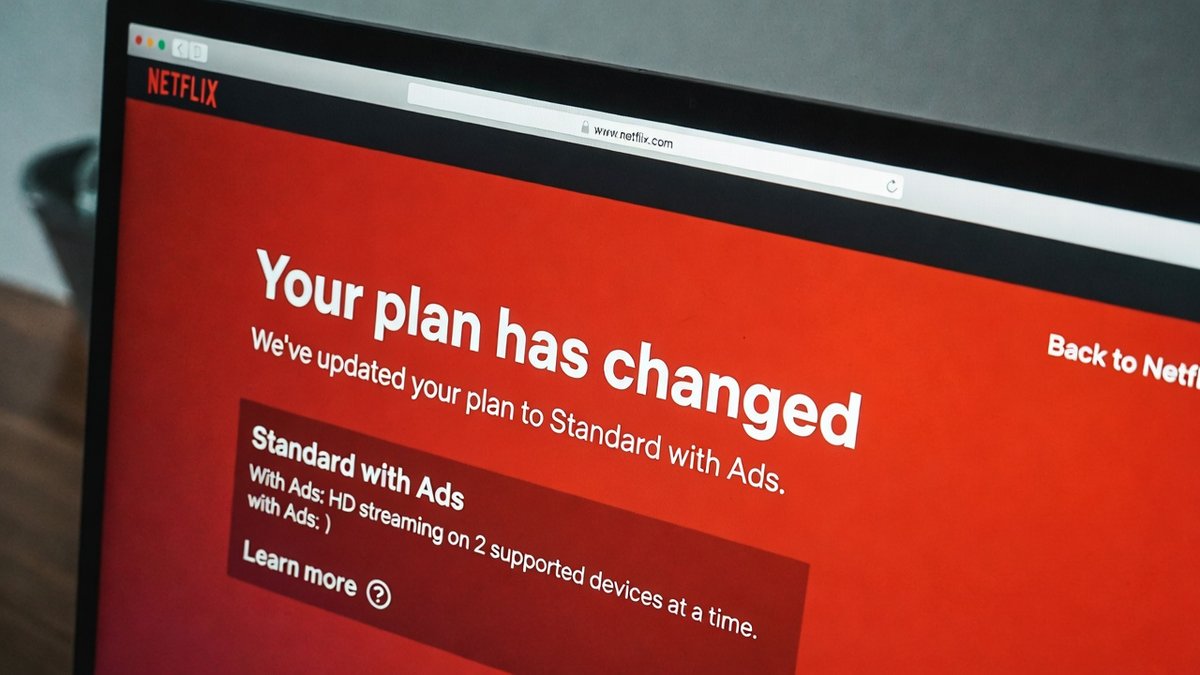
Here we go again. Netflix has raised its prices — and this time, no plan has been spared.
Effective today, March 26, 2026, Netflix has quietly updated its Plans and Pricing page with new subscription fees across all three of its major tiers. New subscribers will see the new prices immediately. Existing subscribers will be notified by email at least one month before the higher prices kick in on their billing cycle.
At digital8hub.com, we've been tracking the streaming wars closely — and this latest move from the world's most powerful streaming platform raises some important questions. Here's everything you need to know.
The New Prices: Every Plan, Every Change
Here is exactly what Netflix now costs in the US:
PlanOld PriceNew PriceIncreaseStandard with Ads$7.99/month$8.99/month+$1Standard (no ads)$17.99/month$19.99/month+$2Premium (no ads, 4K)$24.99/month$26.99/month+$2
Extra member add-ons have also increased:
Ad-supported extra member: now $6.99/month (up from $5.99)
Ad-free extra member: now $9.99/month (up from $8.99)
The new pricing represents an average 11% increase across the product suite. The Standard plan has now more than doubled in price from where it sat just a few years ago — it was $9.99 before the 2023 hike, $15.49 before the January 2025 hike, $17.99 until today, and now $19.99.
Why Is Netflix Raising Prices Again?
Netflix's official line is that the price increases "reflect improvements to our wide range of entertainment and the quality of our service." That is corporate-speak for: we think we're worth more than you're currently paying us.
The reality is a little more complicated — and a little more interesting.
Netflix is spending $20 billion on content in 2026, up from $18 billion last year. It is investing heavily in live events — including boxing, NFL games, and major awards shows — as well as video podcasts, games, and a complete redesign of its mobile app. It now has more than 325 million subscribers worldwide. It projects ad revenue to double to approximately $3 billion in 2026. And it is targeting full-year revenue of $50.7 billion to $51.7 billion.
Netflix is not a company in distress. It is a company that believes it has pricing power — and based on its track record, it is almost certainly right. The streaming platform has the lowest subscriber churn rate in the industry. In plain English: when Netflix raises prices, most subscribers grumble and stay anyway.
There is also a significant financial context to today's announcement. Last month, Netflix walked away from its $82.7 billion bid for Warner Bros. Discovery — choosing not to counter Paramount Skydance's higher offer. As a result, Netflix pocketed a $2.8 billion breakup fee. Subscribers and commentators have been quick to note the irony: Netflix collected nearly $3 billion for walking away from a deal, then immediately raised prices for customers. Netflix CFO Spence Neumann acknowledged the windfall but was clear that the two are unconnected: "Now we move forward, and we move forward with $2.8 billion in our pocket that we didn't have a few weeks ago."
What You're Paying For
Let's be honest about what has changed — and what hasn't.
The Standard and Premium plans have not added new features with this price hike. You still stream on the same number of devices. The picture quality remains the same. The same household-sharing rules apply.
What Netflix has added since its last price increase in January 2025 includes: expanded live event coverage, a video podcasts section, a growing games library, a redesigned mobile interface, and a steady stream of high-profile original content including new seasons of established franchises.
Whether that output justifies a 11% average price increase is a genuinely personal calculation — and the answer will differ depending on how much you use the platform.
What This Means for the Standard With Ads Plan
The most significant element of today's announcement — beyond the headline numbers — is what it means for the ad-supported tier.
When Netflix launched its Standard with Ads plan in 2022, it cost $6.99 per month and had never been raised. It was positioned as the permanent affordable option — the floor that wouldn't move. That idea is now dead. The ad tier has been raised twice in the space of 14 months, and at $8.99 per month, it is no longer the bargain entry point it once was.
At $8.99 per month with ads, you're now paying more than what Netflix's entire standard subscription used to cost just a few years ago — and you're watching commercials while doing it. Citi analyst Jason Bazinet has already predicted another potential hike around October 2026. If that materialises, the ad-supported plan will have been raised three times in under two years.
Is Netflix Still Worth It?
Here's the honest answer: it depends entirely on how you use it.
If Netflix is your primary streaming service and you watch it regularly — several hours a week, across the range of its content — then yes, even at $19.99 for Standard or $26.99 for Premium, it remains the best-value proposition in the streaming market. The content library is unmatched, the original programming is consistently world-class, and the platform experience is superior to virtually every competitor.
If you subscribe to multiple streaming services — Netflix, Disney+, Apple TV+, Prime Video, Paramount+, and Max — the calculus shifts significantly. At nearly $27 per month for 4K Netflix plus the cost of your other subscriptions, you may well be spending more on streaming than you used to spend on cable. That comparison — which Netflix executives hate — is becoming harder to dismiss.
The smart play for budget-conscious subscribers: downgrade to Standard with Ads at $8.99, accept the commercials, and redirect the savings to a single other streaming service. At that price, Netflix remains a genuine bargain relative to what it offers.
How Does It Compare to the Competition?
ServiceAd-SupportedStandardPremiumNetflix$8.99$19.99$26.99Disney+$7.99$13.99N/AApple TV+N/A$9.99N/AAmazon Prime$8.99$14.99N/AMax (HBO)$9.99$16.99$20.99
Netflix remains the most expensive mainstream streaming service at the premium tier — but it is also, by most measures, the most comprehensive. The question is whether the gap in content quality justifies the gap in price. For many subscribers, it still does. For an increasing number, it no longer does.
What Happens Next?
Netflix will not stop here. The company has telegraphed that price increases are part of its long-term revenue strategy — alongside membership growth and advertising revenue. A further increase in late 2026 is considered likely by multiple analysts. If and when it arrives, the Premium plan will be knocking on $30 per month — a figure that, not long ago, would have seemed unthinkable for a streaming service.
For now, existing subscribers have time. Netflix will notify you by email one month before the new prices apply to your account. Use that window to evaluate whether your current plan still makes sense for your viewing habits.
Stay across every development in streaming, technology, and the digital economy exclusively at digital8hub.com — your trusted source for the insights that matter to your money and your life.
Comments (0)
Please log in to comment
No comments yet. Be the first!