Finance & Business
Minnesota Medicaid Fraud Scandal: How Up to $9 Billion in Taxpayer Money May Have Been Stolen
A massive fraud scandal unfolding in Minnesota has shocked the nation, with federal prosecutors estimating that up to $9 billion in taxpayer money may have been stolen through systematic abuse of state-administered federal programs. The staggering scale of the alleged theft—nearly equivalent to Somalia's entire annual GDP—has prompted FBI Director Kash Patel to announce unprecedented denaturalization and deportation proceedings against convicted fraudsters.
The $18 Billion Question
On December 18, 2025, First Assistant U.S. Attorney Joe Thompson made a stunning announcement during a news conference in Minneapolis. Of the approximately $18 billion in federal funds that supported 14 Minnesota-run programs since 2018, Thompson believes "half or more" likely represents fraud.
The 14 programs under investigation include critical services such as autism therapy, housing stabilization for people leaving addiction treatment, child nutrition assistance, and healthcare services. These programs were designed to help Minnesota's most vulnerable populations, making the alleged fraud particularly egregious.
Thompson described the situation as involving industrial-scale fraud, a term that captures the systematic and coordinated nature of the schemes. This wasn't a few isolated bad actors exploiting minor loopholes—investigators believe they've uncovered an organized network of fraudulent providers operating across multiple programs simultaneously.
"When I say significant amount, I'm talking on the order of half or more, but we'll see," Thompson stated during the press conference. "When I look at the claims data and the providers, I see more red flags than I see legitimate providers."
Comparing the Fraud to Somalia's GDP
To put the potential $9 billion in losses into perspective, Somalia's entire GDP was $11.97 billion in 2024 according to the country's Bureau of National Statistics. This means the alleged fraud in Minnesota approaches the economic output of an entire nation, making it one of the largest systematic abuses of federal welfare programs in recent U.S. history.
The comparison to Somalia's GDP has taken on additional significance because 82 of the 92 defendants charged so far in related fraud cases are Somali Americans, according to the U.S. Attorney's Office for Minnesota. Minnesota has the largest Somali population in the United States, with more than 80,000 people of Somali descent living in the Twin Cities area.
This demographic reality has made the fraud scandal politically and culturally fraught, with community leaders urging officials and the public not to stigmatize an entire community based on the alleged crimes of individuals. "Fraud is an issue of individual wrongdoing, not community identity," said Yusuf Abdulle, the Minneapolis-based imam who directs the Islamic Association of North America.
The Viral Video That Brought National Attention
While federal investigators had been working on these cases for years, the fraud scandal exploded into national consciousness after independent journalist Nick Shirley posted a 42-minute video to social media on December 26, 2025. The video, which has been viewed by more than 79 million people, documented Shirley's attempts to visit multiple daycare centers that had reportedly received millions in state funds.
In many cases, Shirley found empty facilities with no children present, despite these centers billing taxpayers for childcare services. The video showed buildings with misspelled signs, locked doors during business hours, and no evidence of the services supposedly being provided. According to the investigation, some facilities received over $4 million in government funds while appearing completely non-operational.
"This might be my most important work yet. We uncovered over $110,000,000 in ONE day," Shirley wrote when posting the video. The footage sparked immediate outrage across social media and prompted responses from high-profile political figures including Vice President JD Vance and billionaire Elon Musk.
FBI Director Patel's Response and Denaturalization Threat
On December 28, 2025, FBI Director Kash Patel issued a lengthy statement on social media confirming that the FBI had already surged personnel and investigative resources to Minnesota before the recent viral video amplified public awareness. The statement detailed the scope of the investigation and introduced a dramatic escalation in potential consequences for convicted fraudsters.
"To date, the FBI dismantled a $250 million fraud scheme that stole federal food aid meant for vulnerable children during COVID," Patel wrote, referring to the Feeding Our Future case. "The investigation exposed sham vendors, shell companies, and large-scale money laundering tied to the Feeding Our Future network."
Patel revealed that to date, federal prosecutors have charged 78 individuals in connection with these schemes, with 57 already convicted on various counts including wire fraud, money laundering, and conspiracy. The charges span multiple fraud schemes beyond just the Feeding Our Future case.
Most significantly, Patel announced that many convicted fraudsters are being referred to immigration officials for possible denaturalization and deportation proceedings where eligible. This represents a major policy shift, signaling that citizenship itself may be revoked for those who engaged in systematic fraud against taxpayers.
"Furthermore, many are also being referred to immigrations officials for possible further denaturalization and deportation proceedings where eligible," Patel stated. Denaturalization would strip convicted criminals of their American citizenship before deporting them back to their countries of origin.
The Feeding Our Future Case: $250 Million Stolen
The Feeding Our Future scandal represents one of the largest components of the broader fraud investigation. This organization was supposed to distribute federal food aid to children in need during the COVID-19 pandemic but instead became what prosecutors describe as a hub for sham vendors, shell companies, and large-scale money laundering.
Seventy-eight defendants have been charged in the Feeding Our Future fraud case, with 56 convictions obtained so far. The ringleader, Aimee Bock, was found guilty by a jury of fraudulently creating and operating Federal Child Nutrition Program sites throughout Minnesota. The scheme allegedly diverted approximately $250 million in federal funds intended to feed vulnerable children.
What made this fraud particularly audacious was the attempt to obstruct justice after charges were filed. Abdimajid Mohamed Nur and others were charged for attempting to bribe a juror with $120,000 in cash delivered in a gift bag. Those responsible pleaded guilty and were sentenced, with one defendant receiving a 10-year prison term and nearly $48 million in restitution orders in related cases.
Housing Stabilization Program: $302 Million in Questionable Spending
Beyond child nutrition fraud, investigators have uncovered massive irregularities in Minnesota's Housing Stabilization Program. According to the Department of Justice, this program paid out $302 million over 4.5 years despite being budgeted for only around $12 million over the same timeframe.
The Housing Stabilization Program was designed to help vulnerable adults leaving addiction treatment centers find stable housing. Instead, Acting U.S. Attorney Joseph H. Thompson said most of the $300 million in spending appears to be fraudulent, with companies created to provide zero services while submitting claims to Medicaid and pocketing federal funds.
The scale of overbilling—approximately 25 times the intended budget—suggests systematic exploitation rather than mere administrative inefficiency. Prosecutors believe that fraudulent providers identified a program with weak oversight and exploited it aggressively, creating shell companies specifically to bill for services never rendered.
Autism Services Fraud: Nearly $220 Million at Risk
Another major component of the investigation involves autism therapy services, where prosecutors estimate potential fraud approaching $220 million. The autism program was supposed to provide one-on-one therapy for children with autism, a critical service for families managing developmental challenges.
Instead, investigators found companies billing for therapy sessions that never occurred, therapists who didn't exist, and children who were never seen. The fraud put services at risk for people who desperately needed them while enriching criminal enterprises that saw vulnerable families as an opportunity for exploitation.
When combined, the confirmed and suspected fraud across Feeding Our Future ($300 million), Housing Stabilization ($302 million), and Autism Services ($220 million) totals approximately $822 million—and that's before considering the additional billions potentially lost from the other 11 programs under investigation.
How the Fraud Worked: Industrial-Scale Operations
Thompson's description of "industrial-scale fraud" captures how these schemes operated with a level of organization and coordination rarely seen in welfare fraud cases. Rather than isolated individuals exploiting specific programs, investigators found interconnected networks of fraudulent providers operating across multiple programs simultaneously.
The fraud typically involved several key elements:
Shell Companies: Fraudsters created legitimate-looking businesses with official registrations, tax identification numbers, and professional websites. These companies existed on paper and had all the trappings of real service providers but delivered little or no actual services.
Phantom Services: Providers billed for services never rendered to clients who either didn't exist or never received care. In the childcare cases, centers claimed to serve hundreds of children but operated out of empty buildings.
Money Laundering: Once fraudulent payments were received, the money was quickly moved through complex networks of accounts to obscure its origins. Significant amounts were wired internationally, particularly to Kenya, Turkey, and China.
Real Estate Purchases: Thompson revealed that significant amounts of fraudulently obtained funds were used to purchase real estate in Nairobi, Kenya's capital, which has a large Somali diaspora. One defendant in the Feeding Our Future case spent hundreds of thousands of dollars on an aircraft in Nairobi, while another wired $1.5 million to China and Kenya.
The International Dimension
The fraud's international dimension has added complexity to the investigation and recovery efforts. Once funds leave the United States, recovering them becomes exponentially more difficult, requiring cooperation from foreign governments and navigation of different legal systems.
Thompson noted that much of the fraudulently obtained money has been sent abroad, with substantial real estate purchases in Nairobi and property acquisitions in Mediterranean coastal areas of Turkey. One defendant bought property in Alanya, Turkey, while others established business interests in Kenya that investigators are still working to trace.
Initially, some reports suggested that stolen funds might have been funneled to Al-Shabaab, the militant Islamist group operating in Somalia. The Treasury Department launched an investigation into these allegations, though Thompson stated clearly: "There's no indication that the defendants that we've charged were radicalized or seeking to fund al-Shabab or other terrorist groups."
Representative Ilhan Omar of Minnesota told reporters: "If there was a linkage in the money that they have stolen going to terrorism, then that is a failure of the FBI and our court system in not figuring that out." She added that she is "pretty confident" any link between Minnesota fraud and terrorism represents a false claim.
Governor Walz Under Fire
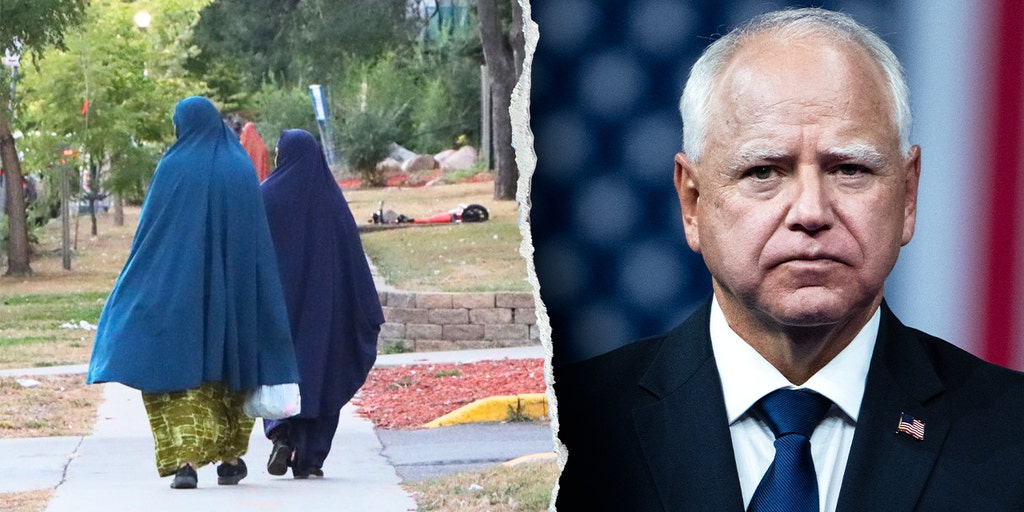
Democratic Minnesota Governor Tim Walz has faced intense criticism over the fraud scandal, particularly from Republican opponents who argue his administration failed to detect and prevent the systematic theft of taxpayer dollars despite warning signs.
In November 2025, a number of state employees accused Walz of engaging in "systemic" retaliation against whistleblowers who warned of the fraud schemes. These whistleblowers alleged that state officials were reluctant to act against suspected fraud to avoid "political backlash among the Somali community" and accusations of racism.
Walz has defended his administration's response, stating in November during a press conference: "If you're committing fraud, no matter where you come from, what you look like, what you believe, you are going to go to jail." In October 2025, Walz initiated a third-party audit and paused payments to the 14 high-risk Medicaid programs for 90 days.
"We will not tolerate fraud, and we will continue to work with federal partners to ensure fraud is stopped and fraudsters are caught," Walz said in a statement. He also appointed a director of program integrity tasked with finding and preventing fraud statewide.
However, these defensive measures haven't stopped Republican critics from highlighting what they view as failures in state oversight. Vice President JD Vance accused Walz of sitting "idly by while billions were stolen from hardworking Minnesotans." Billionaire Elon Musk went further, posting "Prosecute @GovTimWalz" in response to the viral investigative video.
President Trump's Response
President Donald Trump has capitalized on the Minnesota fraud scandal to advance his immigration policy agenda, specifically targeting the Somali community. In October 2025, Trump announced he would suspend Temporary Protected Status for Somali immigrants, describing Minnesota as "a hub of fraudulent money laundering activity."
During a cabinet meeting in December 2025, Trump stated that Somali immigrants "contribute nothing" and threatened to send them "back to where they came from." He also said the influx of Somali refugees had "destroyed our country," linking immigration policy directly to the fraud cases.
Trump's statements and policy responses have been controversial, with immigration advocates and civil rights organizations arguing that collective punishment of an entire community based on individual criminal acts violates fundamental principles of justice and due process. Community leaders have pushed back strongly against rhetoric they view as stigmatizing tens of thousands of law-abiding Somali Americans.
The political dimension of the scandal has complicated efforts to address the underlying problems. Some observers worry that partisan fighting and inflammatory rhetoric about entire communities may distract from the practical work of improving program oversight, prosecuting actual criminals, and recovering stolen funds.
Similar Schemes in Other States
Minnesota isn't the only state grappling with large-scale welfare fraud involving individuals from the Somali community. Whistleblowers in Maine and Ohio have alleged similar schemes targeting federal programs in those states, though the scope appears smaller than what investigators have uncovered in Minnesota.
The pattern across multiple states suggests that once fraudsters identified successful schemes and weak points in program oversight, they shared information and replicated tactics in different jurisdictions. This interstate dimension may explain why federal authorities rather than state agencies have taken the lead in prosecutions—the schemes cross state lines and involve federal funds, making them federal crimes.
Patel's Warning: "Tip of a Very Large Iceberg"
Perhaps the most concerning aspect of FBI Director Patel's December 28 statement was his assessment that what has been uncovered so far represents just "the tip of a very large iceberg." This suggests that despite charging 78 defendants and securing 57 convictions, investigators believe significant additional fraud remains undetected or under investigation.
"The FBI believes this is just the tip of a very large iceberg. We will continue to follow the money and protect children, and this investigation very much remains ongoing," Patel wrote. This language indicates that the final tally of fraudulent losses could potentially exceed even the shocking $9 billion estimate that Thompson discussed.
The ongoing nature of the investigation also means that additional charges are likely forthcoming. Patel's post signals that more arrests and revelations could emerge in the coming months as investigators continue analyzing claims data across all 14 targeted programs.
Program Integrity and Oversight Failures
The Minnesota fraud scandal raises fundamental questions about program integrity and government oversight. How did fraudulent providers bill for hundreds of millions or even billions of dollars in services never rendered without detection? What systemic failures allowed these schemes to operate for years before discovery?
Several factors appear to have contributed to the oversight breakdown:
Rapid Program Expansion: During COVID-19, many programs expanded rapidly to meet urgent needs. This created opportunities for fraud as normal vetting processes were streamlined or bypassed to get services to people quickly.
Limited Verification: Many programs relied on self-reporting by providers without robust systems to verify that claimed services were actually delivered. Fraudsters exploited this trust-based approach.
Resource Constraints: State agencies administering federal programs often operate with limited staff and resources. They may lack the personnel needed for thorough audits and ongoing monitoring of providers.
Political Sensitivities: As whistleblowers alleged, concerns about being perceived as racist or targeting specific communities may have made officials reluctant to investigate red flags aggressively.
Complex Payment Systems: The complexity of Medicaid billing and payment systems makes it difficult to identify fraudulent patterns without sophisticated data analytics capabilities.
Reforms and Preventive Measures
In response to the scandal, Minnesota has implemented several reforms aimed at preventing future fraud:
Third-Party Audits: Independent auditors are reviewing all 14 high-risk programs to assess the full scope of losses and identify systemic vulnerabilities.
Enhanced Verification: New requirements for verifying that services claimed on bills were actually provided to real clients.
Program Integrity Director: Walz's appointment of a director specifically tasked with finding and preventing fraud represents an institutional commitment to oversight.
Temporary Payment Freezes: The 90-day pause in payments to high-risk programs provided time to review providers and implement stronger controls before resuming payments.
Federal Partnerships: Closer collaboration with federal law enforcement to share intelligence and coordinate investigations of suspected fraud.
However, critics argue these measures should have been in place from the beginning and represent closing the barn door after the horses have escaped. The fundamental question remains: how do you design programs that provide services efficiently to people in need while maintaining sufficient oversight to prevent systematic fraud?
Impact on Legitimate Service Providers and Clients
One of the most tragic aspects of the fraud scandal is its impact on legitimate service providers and the vulnerable clients they serve. When programs are temporarily frozen or subjected to enhanced scrutiny, it creates difficulties for honest providers trying to deliver real services.
Children genuinely needing autism therapy may face delays in receiving care while providers undergo additional vetting. Adults leaving addiction treatment may struggle to find stable housing when housing assistance programs are paused for audits. Childcare centers operating legitimately may face stigma or enhanced scrutiny that burdens their operations.
Thompson emphasized this concern during his December press conference: "The scale of fraud puts services at risk for people who need them, including adults leaving addiction treatment centers who needed help finding a stable place to live and children with autism who were seeking one-on-one therapy."
The fraud has also damaged public trust in social safety net programs more broadly. Taxpayers may question whether their dollars are actually reaching people in need or enriching criminals. This erosion of trust can make it politically difficult to maintain or expand programs that serve vulnerable populations, creating a secondary harm beyond the direct financial losses.
National Implications
While the fraud occurred primarily in Minnesota, its implications extend nationally. Other states are likely reviewing their own programs to identify similar vulnerabilities. Federal agencies responsible for overseeing state-administered programs face pressure to strengthen oversight and accountability.
The scandal may also influence debates about federal versus state administration of programs. Some may argue that federal agencies should take more direct control over program administration rather than relying on states. Others may counter that the problem isn't the structure but rather the need for better oversight regardless of who administers programs.
Immigration policy discussions will inevitably be influenced by the scandal, particularly given President Trump's vocal response and policy actions. The challenge will be addressing legitimate concerns about fraud and program integrity without stigmatizing entire immigrant communities or undermining America's tradition of welcoming refugees.
Looking Forward
As investigations continue and additional charges potentially emerge, several key questions remain unanswered:
Final Tally: Will the ultimate fraud losses approach the $9 billion estimate, exceed it, or prove lower once thorough audits are complete?
Recovery: How much of the stolen money can actually be recovered, particularly funds sent overseas or used for international real estate purchases?
Accountability: Beyond individual prosecutions, will anyone in state government face consequences for oversight failures that allowed the fraud to continue for years?
Prevention: Can effective reforms be implemented that prevent future large-scale fraud without creating excessive bureaucracy that hampers delivery of services to legitimate clients?
Community Impact: How can law enforcement pursue justice against actual criminals while avoiding collective stigmatization of entire communities?
The Minnesota Medicaid fraud scandal represents a watershed moment in the ongoing challenge of balancing efficient service delivery with robust oversight. The "industrial-scale" nature of the schemes uncovered by federal prosecutors demonstrates that traditional fraud detection methods are inadequate when facing organized, sophisticated criminal enterprises specifically designed to exploit program vulnerabilities.
As FBI Director Patel warned, what has been uncovered so far may be just "the tip of a very large iceberg." The coming months will reveal the full extent of the losses and test whether reforms implemented can prevent similar schemes from victimizing taxpayers and vulnerable populations in the future. The stakes extend beyond Minnesota—the lessons learned here will shape how states across America administer federal programs and balance trust with verification in serving those most in need.
Comments (0)
Please log in to comment
No comments yet. Be the first!