Finance & Business
Jensen Huang Takes the SAP Center Stage Today — Everything You Need to Know About Nvidia GTC 2026
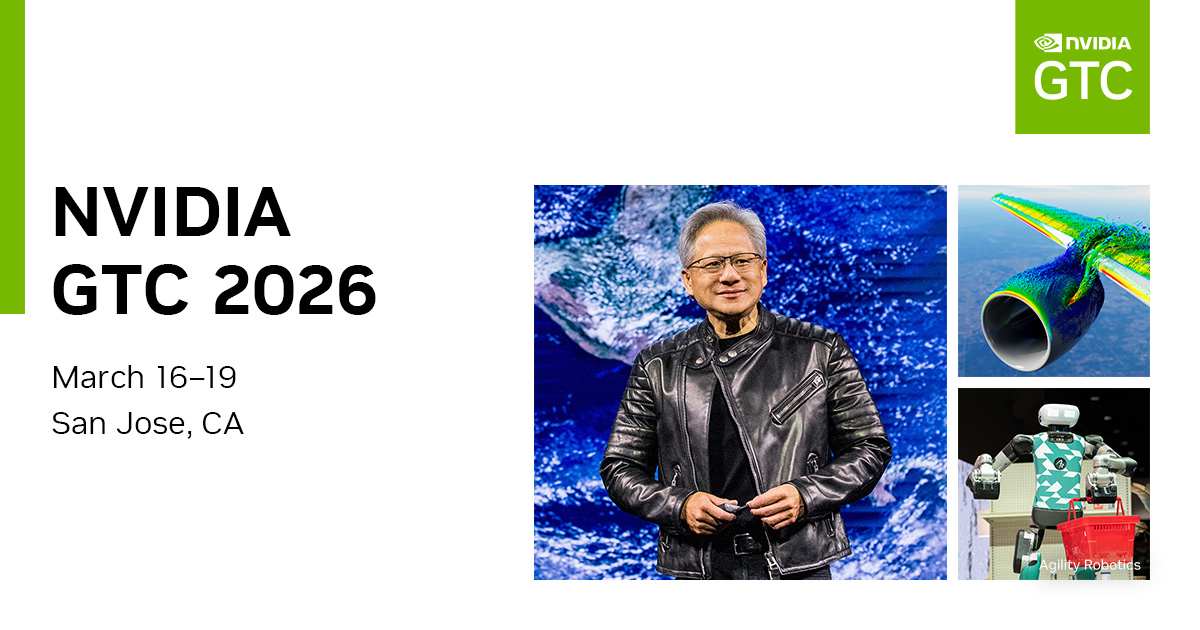
Every March, San Jose gets a little electric. This year, it gets a lot electric. Nvidia GTC 2026 — the GPU Technology Conference that has evolved from a graphics developer gathering into the single most consequential AI industry event on the calendar — kicked off on Sunday March 15 with full-day technical workshops at the San Jose Convention Center, and reaches its peak moment today, Monday March 16, when Nvidia founder and CEO Jensen Huang walks onto the floor of the SAP Center — home of the San Jose Sharks — at 11am PT to deliver a keynote address to an audience of 30,000 attendees drawn from 190 countries. The conference runs through Thursday March 19. The keynote streams free at nvidia.com for the millions more watching virtually. It is, by any measure, the Super Bowl of AI infrastructure — the event where Nvidia telegraphs its roadmap, competitors scramble to respond, enterprise buyers make multi-billion dollar purchasing decisions, and the future of artificial intelligence computing is laid out in leather-jacket-clad detail.
What to Expect: Vera Rubin, NemoClaw & the Groq Integration
Nvidia's 2025 GTC introduced the Blackwell architecture and outlined a data centre platform roadmap that sent enterprise buyers into multi-billion dollar purchasing cycles within weeks. GTC 2026 arrives with a set of expected announcements that are, if anything, more significant. The Vera Rubin platform — Nvidia's next-generation GPU architecture, named after the pioneering American astronomer — is expected to be a central focus of today's keynote. Huang previewed the Vera Rubin roadmap at last year's GTC, placing it in the second half of 2026 with Rubin Ultra following in 2027. Today's keynote is expected to deliver the full technical picture: architecture details, performance benchmarks, production timelines, and the TSMC manufacturing specifics that enterprise customers need to plan their infrastructure investments. Alongside Vera Rubin, Nvidia is expected to announce NemoClaw — an open-source enterprise AI agent platform that would give businesses a structured framework for building, deploying, and managing autonomous AI systems. As digital8hub.com has reported extensively, the AI agent landscape is one of the most actively contested spaces in technology right now — with Meta's acquisition of Moltbook, OpenAI's integration of OpenClaw, and Google's Gemini agent infrastructure all positioning for dominance of the layer that governs how AI systems act autonomously on behalf of humans and businesses. Nvidia's NemoClaw entry would place the world's dominant AI hardware company directly at the centre of the agent software ecosystem as well. The $20 billion acquisition of Groq — the AI inference chip company whose founder Jonathan Ross and president Douglas Wyntner both joined Nvidia after the deal closed in late 2025 — is also expected to feature prominently in today's announcements, with Huang outlining how Groq's inference acceleration technology will be integrated into Nvidia's full-stack AI platform. Nvidia's data centre revenue hit $193.5 billion in 2025. Groq's inference technology is designed to make that infrastructure run faster and more cost-efficiently — a combination that, if delivered at scale, would further entrench Nvidia's position at the top of the AI hardware market.
The N1 & N1X: Nvidia Enters the Laptop CPU Market
The announcement that has generated perhaps the most consumer-facing excitement ahead of GTC 2026 is Nvidia's expected unveiling of its first laptop CPUs: the N1 and N1X. Built on Arm architecture — the same foundation used by Qualcomm's Snapdragon X chips and Apple's M-series processors — the N1 and N1X are described as gaming-centric, reflecting Nvidia's deep roots in the consumer gaming market and its existing relationships with laptop manufacturers who already use Nvidia GPUs in their highest-performance machines. Nvidia's chips already power Nintendo's Switch and Switch 2 consoles. The company's gaming segment generated $22.5 billion in revenue in 2025. A proprietary laptop CPU — combining Nvidia's GPU expertise with an Arm-based processor architecture designed from the ground up for AI-accelerated gaming and creative workloads — would position Nvidia to capture value from every layer of the laptop computing stack simultaneously. The chips are not expected to generate the kind of transformative revenue that Nvidia's data centre business produces. But they represent a strategic statement: Nvidia is not merely an AI infrastructure company. It is a platform company — and the platform now extends to the device in your bag.
Physical AI, Robotics & the Open Frontier Models Panel
Beyond chips and agents, GTC 2026's broader programme reflects Nvidia's conviction that physical AI — the application of AI to systems that operate in the real world, from autonomous vehicles to industrial robots to humanoid machines — represents what Huang has called a multi-trillion dollar market opportunity. More than 700 sessions across the four-day conference cover topics from end-to-end robotics workflows and accelerated networking to multimodal AI agents and AI factory infrastructure. A highlight of Wednesday's programme is an open frontier models panel hosted by Huang himself, featuring leaders from Mistral AI — as digital8hub.com has reported, the French AI company whose co-founder connection to health insurtech Alan we covered earlier this week — alongside Cursor, LangChain, AI2, and other organisations shaping the open AI ecosystem. The panel reflects one of the most important shifts in the AI landscape over the past year: the rapid advancement of open frontier models that are making high-capability AI accessible to any developer or business with the infrastructure to run them. Nvidia — whose hardware runs those models — has an obvious and enormous interest in the open AI ecosystem's continued growth. Separately, Nvidia and Thinking Machines Lab announced a multiyear strategic partnership to deploy at least one gigawatt of next-generation Vera Rubin systems to support Thinking Machines' frontier model training operations — a deal that underlines the gigawatt-scale buildout that defines the current AI infrastructure moment. For the latest coverage of Nvidia GTC 2026, AI infrastructure, and all technology news, follow digital8hub.com.
Comments (0)
Please log in to comment
No comments yet. Be the first!