Finance & Business
Iran's Lavan Oil Refinery Attacked Hours After Ceasefire Announcement
Iran's Lavan Oil Refinery Attacked Hours After Ceasefire Announcement — What We Know
In a development that has sent a shockwave through already fragile peace efforts, an oil refinery on Iran's Lavan Island came under attack on Wednesday, April 8 — just hours after a two-week ceasefire between Iran, the United States, and Israel was announced to the world.
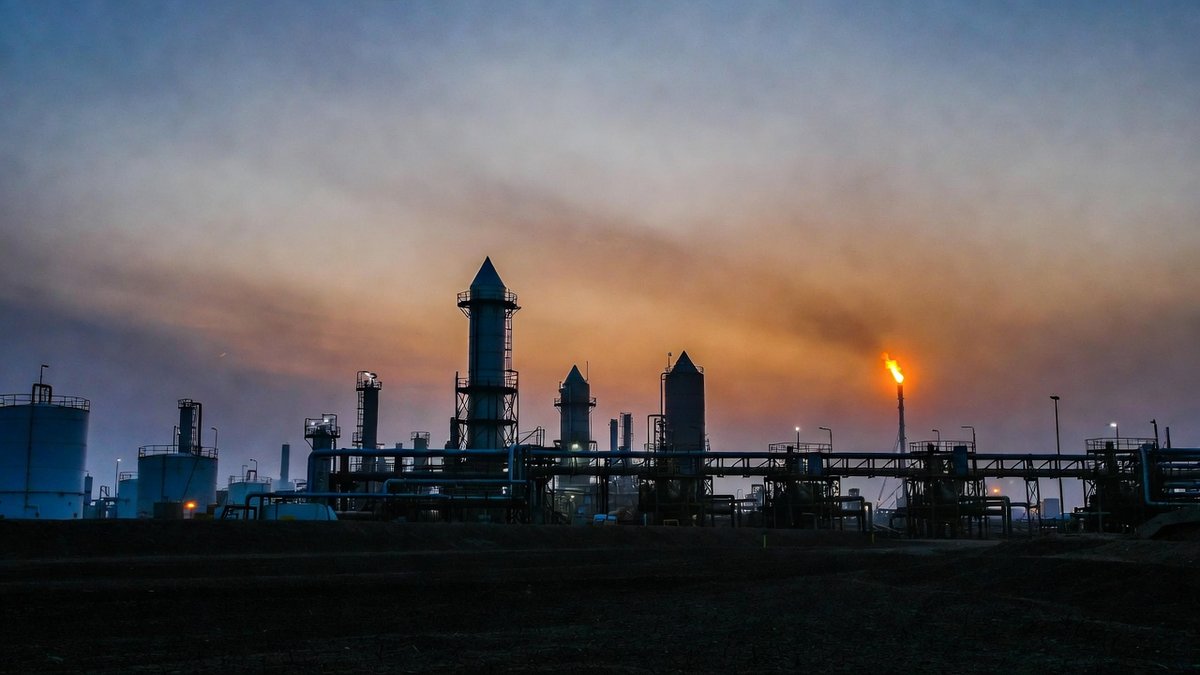
An oil refinery on Iran's Lavan Island came under attack on Wednesday morning, just hours after a ceasefire in the war was announced, AP reported, citing Iranian state television. The attack occurred at 10 a.m. local time. Firefighters were working to contain the blaze at the facility. No casualties were reported. Investing.com
The timing could hardly be more provocative — or more damaging to diplomatic efforts.
What Is the Lavan Oil Refinery?
The Lavan oil refinery is located on Lavan Island in the Persian Gulf, part of Iran's Hormozgan Province. Al Bawaba The island sits in a strategically critical position in the Gulf — close to Iran's coastline and near key shipping lanes that have been at the centre of the Strait of Hormuz crisis throughout this conflict.
The refinery is a key piece of Iran's energy infrastructure, processing crude oil for both domestic use and export. Striking it — especially in the immediate aftermath of a ceasefire announcement — carries enormous symbolic and strategic weight.
The Ceasefire That Wasn't Holding
The attack on Lavan Island came just hours after one of the most significant diplomatic developments of the five-week conflict. President Trump initially said Iran had proposed a "workable" 10-point plan that could help end the war he launched with Israel on February 28, and later announced he had agreed to halt bombing and attacks on Iran for two weeks. Yahoo!
But within hours of that announcement, the fragility of the deal became apparent. Hours after the ceasefire announcement, the United Arab Emirates reported that its air defences were firing at an incoming Iranian missile barrage. Kuwait's military said its forces were responding to an "extensive wave" of drone attacks. Yahoo!
Iranian state television reported that in violation of the ceasefire, US-Israeli forces targeted the Lavan Oil Refinery on Lavan Island. "At present, safety and firefighting teams are working to extinguish the flames and secure the area," Press TV posted on X. Republic World
Iranian authorities did not identify who was responsible for launching the attack on the refinery. Investing.com The US and Israel have not officially commented on the Lavan strike at the time of writing.
A Conflict Defined by Energy Infrastructure Strikes
The attack on Lavan fits a deeply troubling pattern that has defined this war from its earliest days — the systematic targeting of energy infrastructure on both sides.
The US-Israeli military campaign against Iran took a dangerous turn on March 18, 2026, with tit-for-tat strikes on critical energy infrastructure that amounted to the most serious regional escalation since the conflict began. An Israeli drone strike targeted facilities at Iran's Asaluyeh complex, damaging four plants treating gas from the offshore South Pars field. Tehran vowed to retaliate by hitting five key energy targets in Saudi Arabia, Qatar, and the United Arab Emirates. The Conversation
Iran has responded in kind at every stage. Brent crude oil, the international standard, briefly surged above $119 a barrel — up more than 60% since Israel and the United States started the war. The European benchmark for natural gas prices also rose sharply, roughly doubling in the past month. PBS
The Lavan refinery attack, if confirmed as a US-Israeli strike, would represent a continuation of this strategy even as both sides publicly claim to be standing down.
The Ceasefire Terms — Murky and Contested
Much about the ceasefire deal remains contested and unclear. Iran said the deal would allow it to formalise its new practice of charging ships passing through the Strait of Hormuz — but the terms were not clear, nor was it certain whether ships would feel safe using the crucial transit lane for oil. Yahoo!
Israel backed the ceasefire but Prime Minister Benjamin Netanyahu said it would not stop Israel's fight against Hezbollah in Lebanon. Pakistan, a key mediator, said the ceasefire included fighting in Lebanon — directly contradicting Netanyahu's position. Israel's military later confirmed it "continues fighting and ground operations" against Hezbollah. Yahoo!
In the streets of Tehran, pro-government demonstrators screamed "Death to America, death to Israel, death to compromisers!" after the ceasefire announcement and burned American and Israeli flags. Yahoo! The ceasefire, in other words, appears to have popular opposition within Iran itself — and operational non-compliance from Israel.
What Comes Next?
Pakistan said that talks over cementing a peace plan would begin in Islamabad as soon as Friday. Yahoo! But with attacks continuing on both sides in the immediate hours after the ceasefire announcement — including the Lavan refinery strike — the path to any durable peace remains deeply uncertain.
The attack on Lavan Island is being closely watched by energy markets, diplomatic observers, and the millions of civilians in the Middle East who have endured five weeks of one of the most devastating regional conflicts in decades.
Whether this is a rogue operation, a deliberate sabotage of the ceasefire, or a final act of the war that began February 28 is not yet clear. What is clear is that the world is watching — and holding its breath.
For the latest breaking news from the Iran war, energy markets, and global affairs, visit digital8hub.com — your trusted source for real-time analysis in 2026.
Comments (0)
Please log in to comment
No comments yet. Be the first!