Finance & Business
Iran Just Declared American Tech Infrastructure a War Target — Google, Amazon & Microsoft Are Now in the Crosshairs
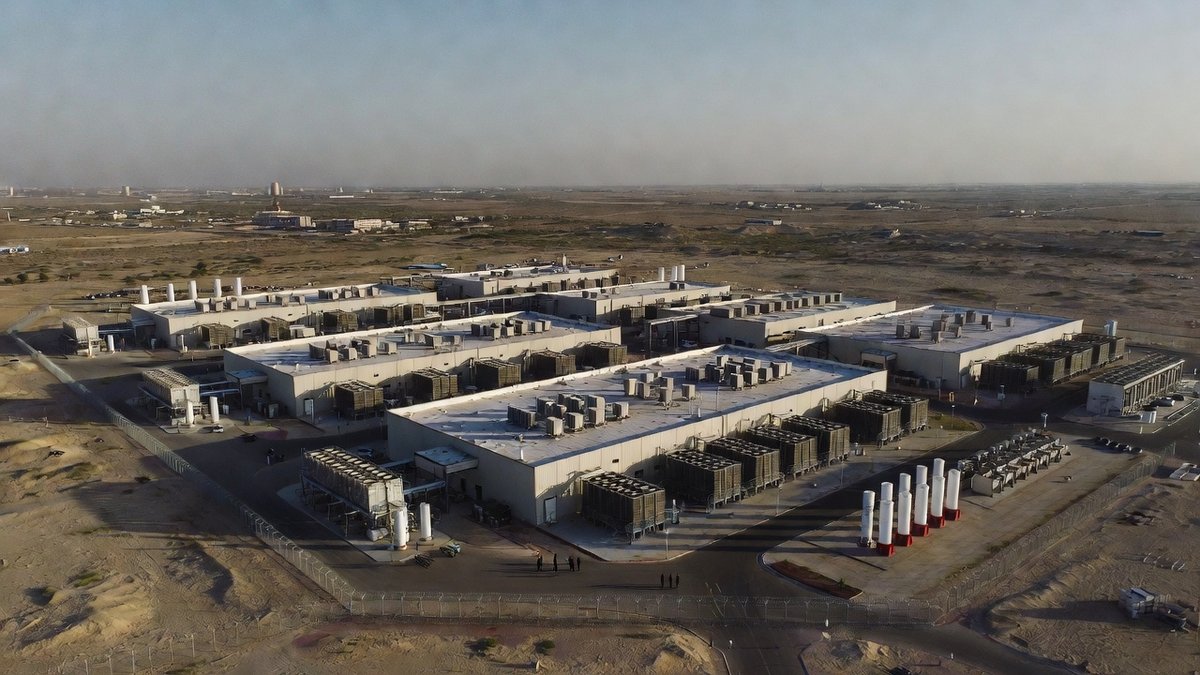
For eleven days, Operation Epic Fury was a war fought with missiles, drones, fighter jets, and naval assets — a kinetic conflict between state militaries in a defined geographic theatre. On Wednesday March 11, the Islamic Revolutionary Guard Corps formally extended the battlefield. In a statement carried by Iranian state media, the IRGC announced the start of targeting the enemy's technological infrastructure in the region — a declaration that places Google, Amazon, Microsoft, and every other American technology company operating data centres, cloud infrastructure, or regional offices in the Middle East directly in the crosshairs of a designated foreign terrorist organisation conducting an active retaliatory campaign against the United States and its allies. The announcement was not theoretical. The strikes had already begun.
What Has Already Been Destroyed: AWS Bahrain, Azure Middle East, Amazon UAE
The IRGC's declaration formalised what had been happening since the earliest days of Operation Epic Fury — but the scale and targeting precision of what has already been destroyed is only now becoming fully clear. As digital8hub.com has reported across our continuous coverage of the conflict, drone strikes knocked Amazon Web Services facilities offline in both the UAE and Bahrain in the first week of the operation — attacks that the IRGC framed explicitly as retaliation for Amazon's support of the enemy's military and intelligence activities. The rationale was direct and operationally coherent: data centres are not passive commercial infrastructure. They are the backbone of AI-driven military targeting, logistics coordination, intelligence analysis, and communications systems. When the US military uses artificial intelligence tools to plan operations, map targets, and analyse battlefield data, that computation runs on cloud infrastructure — infrastructure that, in the Middle East, belongs primarily to Amazon, Microsoft, and Google. The IRGC's Fars News Agency subsequently reported the destruction of a Microsoft Azure regional data centre — a strike that caused widespread disruption to banking applications across the affected area and represented the first confirmed destruction of a major American cloud platform's physical infrastructure in the history of modern warfare.
Google Warns: Cyberattacks Are Coming Everywhere
The kinetic strikes on physical infrastructure are only one dimension of the threat that Iran's declaration opens up. The cyber dimension — which as digital8hub.com has reported has been building since Operation Epic Fury began on February 28 — is now escalating toward what Google's own threat intelligence chief has described as an imminent and aggressive global campaign. John Hultquist, Chief Analyst at Google Threat Intelligence, issued one of the most direct public warnings from a major technology company in recent memory: Iran's IRGC-aligned cyber actors are not merely capable of ransomware and DDoS attacks — they are actively preparing to deploy them against the United States, Gulf Cooperation Council member states, and any other nation that has drawn Iran's anger during the conflict. "I'm absolutely expecting attacks by hacktivist fronts that aren't truly hacktivist fronts, that are just fronts for the Iranian Revolutionary Guard Corps," Hultquist said — describing the IRGC's preferred approach of using ideological-presenting hacker collectives as a layer of plausible deniability for state-directed operations. "I'm expecting ransomware incidents that aren't really ransomware incidents." The United Kingdom's National Cyber Security Centre issued a parallel advisory urging all organisations with operations in the Middle East to immediately review their cybersecurity posture — a rare public escalation that signals genuine concern at the governmental level about what is coming.
The Threat Ecosystem: CyberAv3ngers, Handala, MuddyWater & 15 Wiper Families
The IRGC's cyber offensive is not a single actor or a single tool. It is a layered ecosystem of state-directed groups, deniable proxies, and affiliated contractors that collectively represent one of the most capable and diverse offensive cyber programmes among all nation-state actors currently operating. CyberAv3ngers — the highest-priority IRGC-aligned cyber actor in the current threat landscape — presents publicly as an ideological hacktivist collective but was formally sanctioned by the US Treasury Department after officials linked six IRGC Cyber-Electronic Command officers to its operations. Its primary targets are industrial control systems and operational technology infrastructure — water treatment, power generation, oil and gas processing — making it one of the few cyber actors capable of causing physical damage to civilian infrastructure. Handala — operating under Iran's Ministry of Intelligence and Security direction rather than IRGC-CEC — has been identified by Unit 42 as the most prominent Iranian hacktivist persona currently active in the conflict. Its operational pattern is fast and opportunistic: compromise low-security systems, extract data, and time publication for maximum psychological impact. Handala operated through Starlink IP ranges during Iran's own domestic internet blackout in January 2026 — demonstrating an ability to maintain offensive operations even under conditions of domestic connectivity disruption. Iran's wiper arsenal — the collection of destructive malware designed to permanently destroy data on compromised systems — now encompasses more than 15 distinct families, including ZeroCleare, Meteor, Dustman, DEADWOOD, Apostle, BFG Agonizer, MultiLayer, and PartialWasher, among others. Active wiper campaigns are currently assessed to be underway against Israeli energy, financial, government, and utilities sectors. The same tools are available for deployment against American and Gulf state targets.
The Billions at Stake: Gulf Tech Investment Under Existential Threat
The IRGC's targeting declaration arrives at a moment when the Gulf region was in the middle of one of the most significant technology infrastructure buildouts in the world. As digital8hub.com has reported, Google, Microsoft, Amazon, and virtually every other major American technology company had made multi-billion dollar commitments to data centre construction, cloud infrastructure, and AI development facilities across the UAE, Saudi Arabia, Bahrain, Qatar, and Kuwait — investments driven by the region's combination of sovereign wealth, strategic location, and growing digital economy. Those billions are now under direct physical and cyber threat from a state actor that has demonstrated both the willingness and the capability to strike them. The strategic logic of the IRGC's targeting is not difficult to understand. Iran cannot match the United States and Israel in the air, at sea, or in the kinetic domain at scale. But it can impose asymmetric costs on American economic interests — costs that flow directly to boardrooms in Mountain View, Redmond, and Seattle, and that translate into pressure on US political leaders from America's most powerful corporate constituency. Operation Epic Fury began as a military campaign. It has become something more complicated — a conflict in which the battlefield now includes every server rack, every fibre cable, and every cloud platform in a region where the most powerful technology companies in the world have staked hundreds of billions of dollars on a peaceful future. That future is, for now, on hold. For the latest coverage of Operation Epic Fury, cybersecurity, and Big Tech, follow digital8hub.com.
Comments (0)
Please log in to comment
No comments yet. Be the first!