Finance & Business
Iran Blinds America: How a $30,000 Drone Took Out a $1.1 Billion US Radar in Qatar
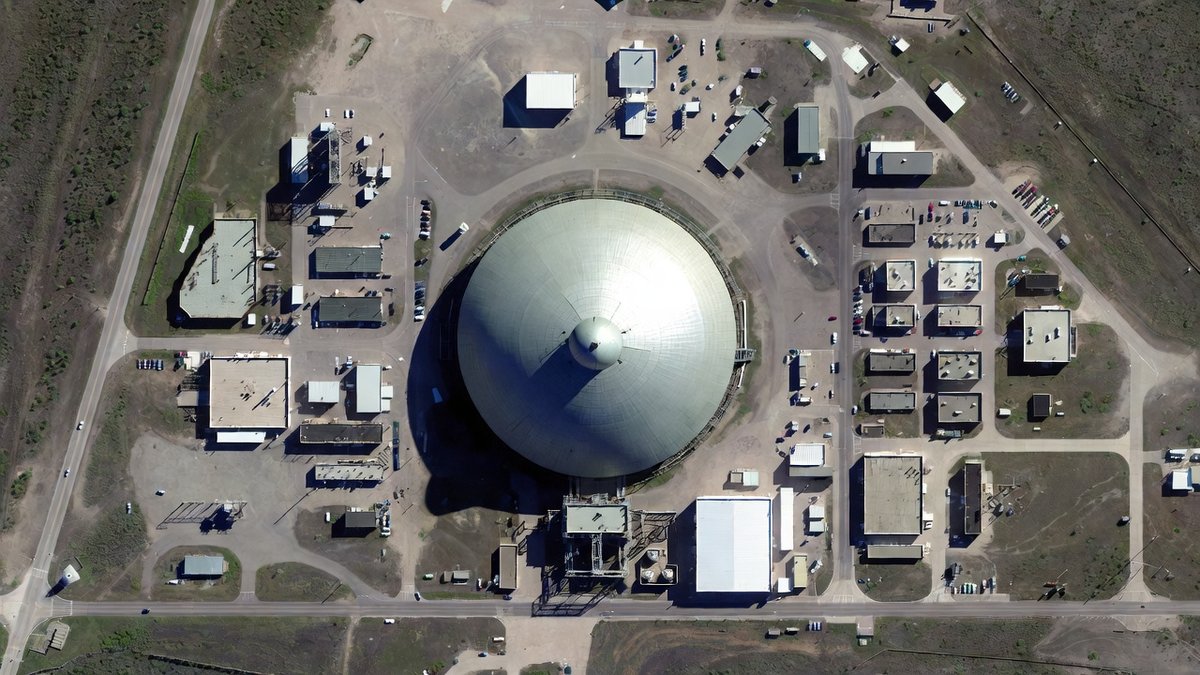
In warfare, the most decisive strikes are rarely the loudest. On February 28, 2026 — the opening day of Operation Epic Fury — Iran's Islamic Revolutionary Guard Corps quietly delivered what may prove to be the most strategically consequential single strike of the entire conflict. A precision missile hit the AN/FPS-132 Block 5 Upgraded Early Warning Radar at Al Udeid Air Base in Qatar — the largest US military installation in the Middle East — and destroyed it completely. The price tag: $1.1 billion. The replacement timeline: years. The strategic impact: immediate and severe.
What Was the AN/FPS-132 — and Why Did It Matter So Much?
The AN/FPS-132 Block 5 is not just a radar. It is the cornerstone of America's ballistic missile early warning architecture in the Gulf. Designed to detect and track long-range ballistic missile launches from distances of up to 5,000 kilometres, the system was positioned at Al Udeid specifically to monitor Iranian missile activities — providing US Central Command with critical early warning data that feeds directly into the integrated air defence network protecting allied Gulf states, American forces, and the broader regional security architecture.
The system was first approved for Qatar by the US Defence Security Cooperation Agency in 2013 — part of a broader American effort to bolster Gulf allies against Iranian threats. The contract was awarded to Raytheon with completion expected by 2021. At $1.1 billion, it was one of the most expensive single pieces of US military hardware deployed anywhere in the Middle East. It formed part of a layered defence network alongside Patriot missile batteries and Terminal High Altitude Area Defence systems — the combination designed to give US forces maximum reaction time against Iranian ballistic missiles.
That reaction time is now gone.
Qatar Confirms the Strike
Qatar's Ministry of Defence confirmed that an Iranian missile struck the radar facility — marking the first official Qatari acknowledgment of damage from Iran's retaliatory barrage on February 28. Qatar's air defence systems, including Patriot batteries supported by US forces, intercepted several incoming Iranian missiles over Doha and surrounding areas — but the AN/FPS-132 was hit. The IRGC described the radar as completely destroyed in a precision missile strike. Satellite imagery obtained through open-source intelligence channels appears to corroborate the claim, showing significant structural damage at the radar's location within Al Udeid.
The Broader Toll: $1.9 Billion in US Equipment Lost in Four Days
The AN/FPS-132 is the largest single loss — but it is far from the only one. In the first four days of Operation Epic Fury, Iran has targeted at least seven US military sites across the Middle East: the US Fifth Fleet's headquarters in Bahrain, Camp Arifjan and Ali Al Salem Air Base in Kuwait, Erbil Base in Iraq, the UAE's Jebel Ali Port, and Al Udeid Air Base in Qatar. Three F-15E Strike Eagles were lost in a friendly fire incident by Kuwaiti air defences — all six aircrew survived, but the aircraft did not, adding an estimated $282 million in losses. Iran also struck and destroyed satellite communications terminals at the US Navy's Fifth Fleet headquarters in Bahrain. In total, the US has suffered an estimated $1.9 billion in equipment losses in the first four days of the conflict.
What It Means: America's Gulf Shield Has Holes
The destruction of the AN/FPS-132 does not mean the US is defenceless in the Gulf. But it means the layered architecture that provided maximum warning time and maximum interception probability has been degraded in ways that cannot be quickly repaired. The absence of the long-range radar compresses strategic warning timelines — meaning US commanders have less time to identify, track, and engage incoming Iranian ballistic missiles. It places added pressure on remaining sensors, forces redistribution of coverage from other theatres, and creates gaps in the integrated picture that US Central Command relies on for decision-making.
The IRGC framed the strike in precisely these terms — declaring that with the destruction of these high-value defensive nodes, Iran's missile forces now operate with greater freedom to hit targets across the region. Whether that claim is operationally accurate depends on what replacement systems can be brought online and how quickly. What is certain is that Iran has demonstrated both the intelligence to locate and the precision to destroy some of the most expensive and heavily protected military assets America has ever deployed in the Middle East.
A $30,000 Shahed drone. A $1.1 billion radar. The mathematics of modern warfare have never been starker.
For the latest updates on Operation Epic Fury and the Iran conflict, follow digital8hub.com.
Comments (0)
Please log in to comment
No comments yet. Be the first!