Finance & Business
Global Oil Prices Surge as U.S. Strikes on Iran Jeopardize Fragile Peace Talks
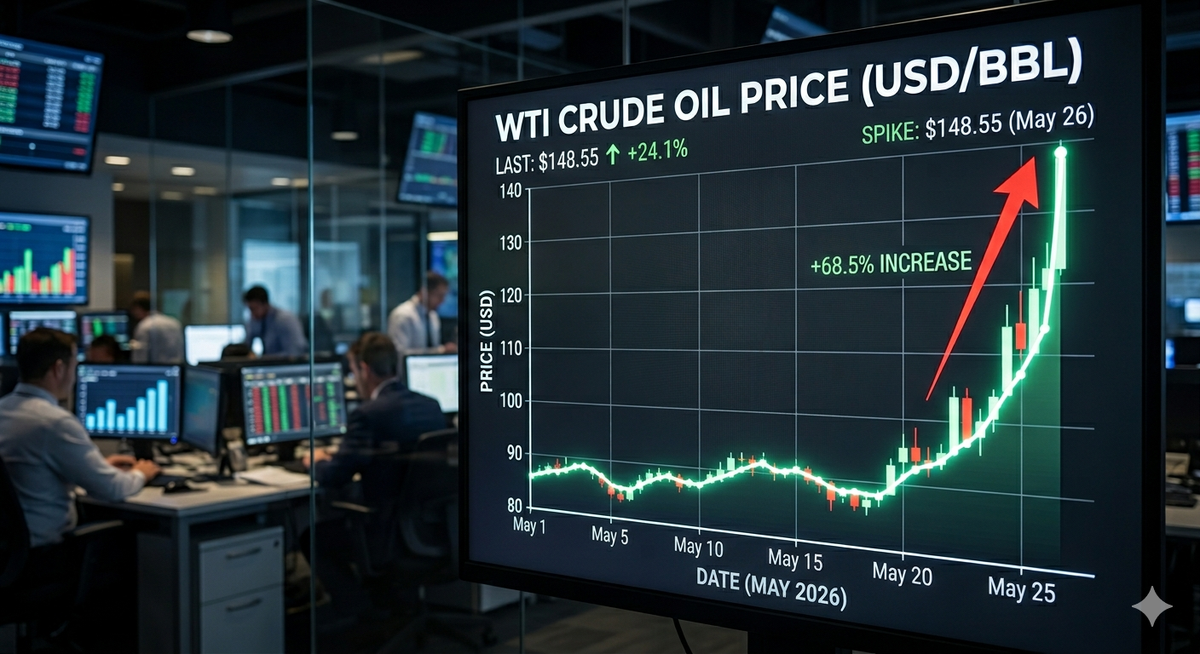
Global oil prices climbed more than 6% in a single trading session after the United States conducted targeted military strikes on Iranian military and nuclear-related sites, dramatically undermining the fragile peace negotiations that had driven prices lower just days earlier.The surprise strikes, confirmed by U.S. officials on May 23, 2026, mark a sharp reversal from the optimistic tone surrounding indirect peace talks between Washington and Tehran. Brent crude surged from $89.80 to over $95.50 per barrel, while West Texas Intermediate (WTI) climbed above $92.What HappenedAccording to Pentagon statements, the strikes were “limited and precise,” targeting facilities linked to Iran’s missile program and nuclear infrastructure. The operation was described as a response to “imminent threats” and alleged Iranian violations of recent ceasefire understandings.Iran’s Supreme Leader condemned the attacks as “an act of aggression,” promising a “strong response.” Iranian state media reported some casualties and damage at multiple sites, though independent verification remains limited.Immediate Market ReactionThe price spike reflects renewed fears of supply disruptions in the Persian Gulf. Even though the Strait of Hormuz has not been closed, the risk premium returned rapidly as traders priced in potential Iranian retaliation, including attacks on oil infrastructure or attempts to restrict shipping lanes.Energy analysts noted:Increased tanker insurance rates in the Gulf
Heightened activity in paper markets and futures trading
Strong gains in shares of defense contractors and U.S. shale producers
How This Clouds the Peace DealJust one week ago, markets were celebrating progress in U.S.-Iran negotiations, with reports of a potential framework agreement that could ease sanctions and restore Iranian oil exports. Those hopes have now been significantly damaged.U.S. officials insist the strikes were “necessary” and do not preclude future diplomacy, but Iranian leaders have stated that any negotiations are now “on hold” until the attacks are addressed.The situation puts President Trump in a difficult position. While he has pushed for a strong stance against Iran, he also campaigned on reducing U.S. military entanglements in the Middle East and securing better economic deals.Geopolitical RamificationsThis escalation occurs against a complex backdrop:Israel has reportedly urged stronger action against Iran’s nuclear program
China and Russia have condemned the strikes and called for restraint
European allies have expressed concern about regional stability and rising energy prices
Gulf states are on high alert, with Saudi Arabia and the UAE increasing security around their oil facilities
The International Energy Agency (IEA) warned that prolonged disruption could remove up to 2.5 million barrels per day from global markets if Iran retaliates aggressively or if shipping through the Strait of Hormuz is affected.Expert AnalysisEnergy market veteran Helima Croft (RBC Capital Markets) commented:
“The market had gotten too optimistic too quickly. This reminds everyone how fragile any potential U.S.-Iran deal really is. Geopolitical risk never fully disappears in this region.”Oil analyst Amrita Sen added that while prices may pull back if diplomacy resumes, the baseline risk level for oil has clearly risen. She expects Brent crude to trade in the $90–$110 range in the near term, depending on how Iran responds.Potential Scenarios Moving ForwardDe-escalation Path: Diplomatic channels (possibly through Oman or Qatar) manage to restart talks. Oil prices moderate after initial volatility.
Tit-for-Tat Escalation: Iran launches limited strikes on U.S. or allied assets, causing further price spikes and market uncertainty.
Prolonged Tension: Neither side seeks full war but maintains pressure, keeping oil prices elevated for months.
Broader Economic ImpactRising oil prices come at a sensitive time for the global economy. Higher energy costs could:Fuel inflation concerns
Pressure central banks’ interest rate decisions
Hurt consumers through higher gasoline and heating prices
Benefit oil-producing nations and U.S. shale producers
Airlines, shipping companies, and energy-intensive industries are already bracing for increased costs.ConclusionThe U.S. strikes on Iran have dramatically altered the short-term outlook for oil markets. What appeared to be a path toward de-escalation and lower prices has been replaced by renewed uncertainty and geopolitical risk.While markets have reacted swiftly, the coming days and weeks will be critical. Any sign of resumed diplomacy could ease pressure on prices, but further escalation risks pushing oil toward triple-digit levels.For now, traders, governments, and businesses worldwide are watching developments in the Middle East with heightened concern. The delicate balance between military action and diplomatic resolution will determine not only oil prices but also broader global economic stability in the months ahead.
Comments (0)
Please log in to comment
No comments yet. Be the first!