Finance & Business
Global Markets Update: Asian Shares Navigate Holiday Trading Amid Taiwan Tensions and S&P 500's Record Year
Asian markets kicked off the final trading week of 2025 with mixed results as investors navigated thin holiday volumes and heightened geopolitical concerns surrounding Taiwan. The subdued trading comes after a lackluster post-Christmas session on Wall Street, setting a cautious tone for year-end positioning across global markets.
Regional Market Performance Varies Across Asia
Japan's benchmark Nikkei 225 slid 0.44% to close at 50,526.92 on Monday, pulling back from recent gains as investors took profits ahead of the new year. Despite Monday's decline, the Nikkei has delivered impressive returns throughout 2025, benefiting from the artificial intelligence boom and a weaker Japanese yen that has bolstered the nation's major exporters.
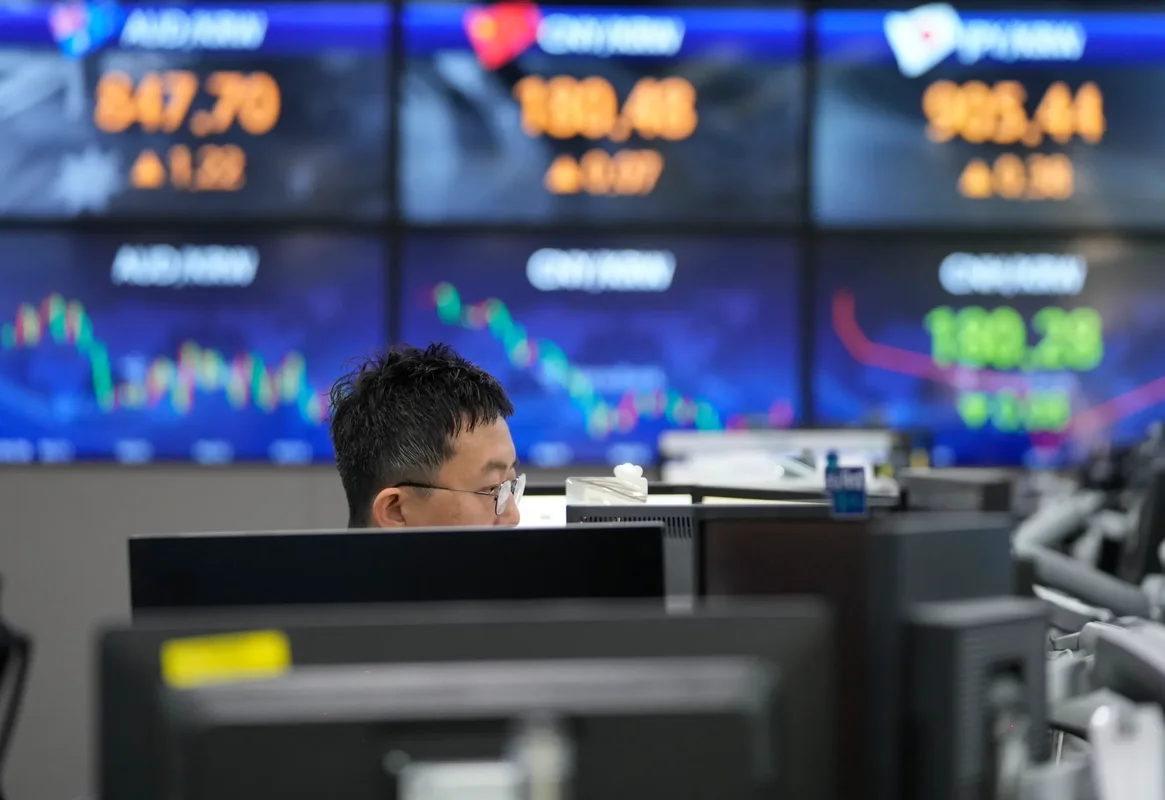
Meanwhile, South Korea's Kospi jumped 2.2% to end the trading day at 4,220.56, with the technology-heavy index receiving a boost from semiconductor stocks. The strong performance reflects continued optimism about global chip demand and artificial intelligence applications driving growth for Korean tech giants like Samsung Electronics.
Hong Kong's Hang Seng index jumped 0.7%, while the mainland Chinese CSI 300 dipped 0.38% to 4,639.37. The divergence between Hong Kong and mainland markets highlights ongoing uncertainty about China's economic trajectory and policy direction as we approach 2026.
Taiwan Tensions Cast Shadow Over Markets
The Chinese military dispatched air, navy and rocket troops to conduct joint military drills around Taiwan, which Beijing claims as its territory, warning against what it called separatist and external interference forces. The military exercises represent a significant escalation in cross-strait tensions and have introduced geopolitical risk into year-end trading.
Taiwan responded by placing its forces on alert and called the Beijing government the biggest destroyer of peace. The sharp rhetoric from both sides underscores the fragile state of relations in one of Asia's most sensitive geopolitical flashpoints.
The timing of these drills is particularly notable, coming after Beijing expressed anger over recent U.S. arms sales to Taiwan and comments from Japan's Prime Minister Sanae Takaichi suggesting Tokyo's military could potentially get involved in any conflict over the island. This represents a significant shift in Japan's traditionally cautious approach to the Taiwan question and adds another layer of complexity to regional security dynamics.
Despite these tensions, markets have thus far taken the developments in stride, with many investors viewing the exercises as political posturing rather than an immediate military threat. However, any escalation could quickly impact market sentiment, particularly for technology companies with significant exposure to Taiwan's semiconductor industry.
Wall Street's Strong 2025 Performance Provides Backdrop
With three trading days left in 2025, the S&P 500 has climbed nearly 18% this year, helped by deregulatory policies of the Trump administration and investor optimism about the future of artificial intelligence. This impressive gain has cemented 2025 as another banner year for U.S. equities, despite periodic concerns about inflation, interest rates, and geopolitical risks.
The post-Christmas trading session on Wall Street was characterized by light volumes and minimal movement, typical for the holiday period when many institutional investors are away. The market's ability to maintain its elevated levels going into year-end reflects underlying confidence in corporate earnings growth and economic resilience.
Artificial intelligence has emerged as the dominant investment theme of 2025, with companies across sectors racing to integrate AI capabilities and investors rewarding those making significant progress. This trend has benefited not only obvious winners like chip manufacturers and software companies but also firms successfully deploying AI to improve operational efficiency and customer experiences.
The Trump administration's deregulatory agenda has also provided tailwinds for various industries, particularly financial services, energy, and technology sectors. Reduced regulatory burdens and a more business-friendly approach from Washington have contributed to improved sentiment and higher corporate investment spending.
Commodities Show Divergent Trends
Precious metals markets delivered dramatic moves in holiday trading, with silver and gold both hitting fresh records before experiencing volatility. Spot silver rose to a fresh record high of above $80 per ounce earlier in the day before pulling back sharply over 5% to $74.93 per ounce. The extreme volatility in silver reflects a combination of speculative buying, supply tightness, and year-end portfolio positioning.
Gold has also maintained its strong momentum, supported by ongoing geopolitical uncertainties and concerns about long-term inflation. The precious metal's performance in 2025 has reinforced its status as a safe-haven asset even during periods when risk assets like stocks have also performed well.
In energy markets, U.S. benchmark crude oil gained 60 cents to $57.34 per barrel, while Brent crude, the international standard, advanced 62 cents to $60.86 per barrel. These modest gains come after Friday's declines, with oil prices finishing 2025 at moderate levels despite ongoing concerns about global demand growth and OPEC+ production decisions.
The relatively subdued oil prices reflect a balanced market where supply has kept pace with demand, preventing the dramatic price spikes seen in previous years. However, any disruption to Middle Eastern supply or unexpected demand surge could quickly alter this equilibrium.
Currency Markets Reflect Policy Divergence
The U.S. dollar fell to 156.28 Japanese yen from 156.56 yen, while the euro was unchanged at $1.1770. Currency movements in thin holiday trading can be exaggerated, but the direction reflects underlying policy dynamics between major central banks.
The dollar's strength against the yen throughout 2025 has been driven by the significant interest rate differential between the U.S. Federal Reserve and the Bank of Japan. While the Fed has maintained relatively restrictive monetary policy, the Bank of Japan has only recently begun normalizing rates after years of ultra-loose policy, creating an attractive carry trade for investors.
The yen's weakness has been a double-edged sword for Japan's economy. While it has boosted the competitiveness of Japanese exporters and contributed to the Nikkei's strong performance, it has also increased import costs and put pressure on consumer purchasing power through higher prices for imported goods and energy.
Looking Ahead: Key Factors for Early 2026
As we close out 2025 and look toward the new year, several key themes will likely dominate market attention. First, the trajectory of interest rates remains critical, with investors closely watching inflation data and central bank communications for clues about the timing and pace of any policy adjustments.
Second, geopolitical risks, particularly around Taiwan and the broader U.S.-China relationship, will require careful monitoring. Any escalation beyond military exercises to actual conflict would have profound implications for global supply chains, particularly in semiconductors and technology manufacturing.
Third, the artificial intelligence investment cycle shows no signs of slowing, but questions about valuations and realistic return expectations will become increasingly important. Markets will need to see continued evidence that AI investments are translating into tangible productivity gains and revenue growth.
Fourth, corporate earnings will face scrutiny as companies report fourth-quarter results and provide guidance for 2026. After a strong 2025, expectations are elevated, and companies will need to demonstrate continued growth to justify current valuations.
Investor Positioning in Thin Markets
The final days of December typically see reduced trading volumes as many market participants take year-end holidays. This thin liquidity can lead to exaggerated price movements in both directions, as smaller orders have outsized impacts on market prices.
Investors should exercise caution when interpreting price action during this period, as moves may not necessarily reflect fundamental changes in market outlook. The real test will come when full liquidity returns in January and institutional investors re-engage with markets.
Year-end also brings portfolio rebalancing and tax-loss harvesting activity, which can create temporary price distortions. Sophisticated investors often view these technical factors as potential opportunities, buying quality assets that have been oversold due to year-end positioning needs.
Regional Central Bank Policies Remain Divergent
The divergence in monetary policy between major central banks continues to be a defining feature of global markets. The U.S. Federal Reserve has maintained a relatively hawkish stance compared to other major central banks, supporting the dollar while creating headwinds for emerging markets with dollar-denominated debt.
The Bank of Japan's glacial pace of policy normalization reflects concerns about derailing the country's fragile economic recovery and the potential impact of higher rates on government debt servicing costs. Japan's massive government debt burden constrains the BOJ's flexibility in raising rates too aggressively.
The European Central Bank has navigated its own challenges, balancing weak growth in key economies like Germany against persistent inflation concerns. This has created a complex policy environment where guidance has been deliberately vague to maintain flexibility.
Technology Sector Leads Performance
The technology sector's dominance has been a consistent theme throughout 2025, with the artificial intelligence narrative driving outsized gains for chip manufacturers, cloud computing providers, and software companies. This concentration of gains in a narrow set of stocks has raised concerns about market breadth and the sustainability of the rally.
However, proponents argue that AI represents a genuine technological revolution comparable to previous paradigm shifts like the internet or mobile computing. The productivity enhancements and new business models enabled by AI could justify premium valuations if they deliver on their promise.
Japanese technology companies have been particular beneficiaries, with firms like Advantest and Tokyo Electron seeing strong demand for their semiconductor manufacturing equipment. This positions Japan as a critical player in the global AI infrastructure buildout.
Final Thoughts on Year-End Trading
As 2025 draws to a close, Asian markets find themselves navigating a complex landscape of geopolitical tensions, holiday-thinned liquidity, and the aftermath of a strong year for global equities. The mixed performance across regional markets reflects this uncertainty, with investors positioning cautiously ahead of what promises to be an eventful 2026.
The S&P 500's nearly 18% gain for 2025 has set a high bar for performance, and maintaining this momentum will require continued earnings growth, stable interest rates, and resolution of various geopolitical concerns. Asian markets will play a crucial role in this narrative, particularly given the region's centrality to global technology supply chains and its growing consumer markets.
The Taiwan situation bears particularly close watching, as any serious escalation could disrupt the semiconductor industry and create ripple effects throughout global technology supply chains. For now, markets appear to be taking a measured view, but complacency could prove costly if tensions escalate unexpectedly.
Investors heading into 2026 should maintain diversified portfolios, stay attuned to geopolitical developments, and prepare for potential volatility as full market liquidity returns in January. The foundation for continued gains exists, but execution will matter more than ever in what promises to be another dynamic year for global markets.
Comments (0)
Please log in to comment
No comments yet. Be the first!