Finance & Business
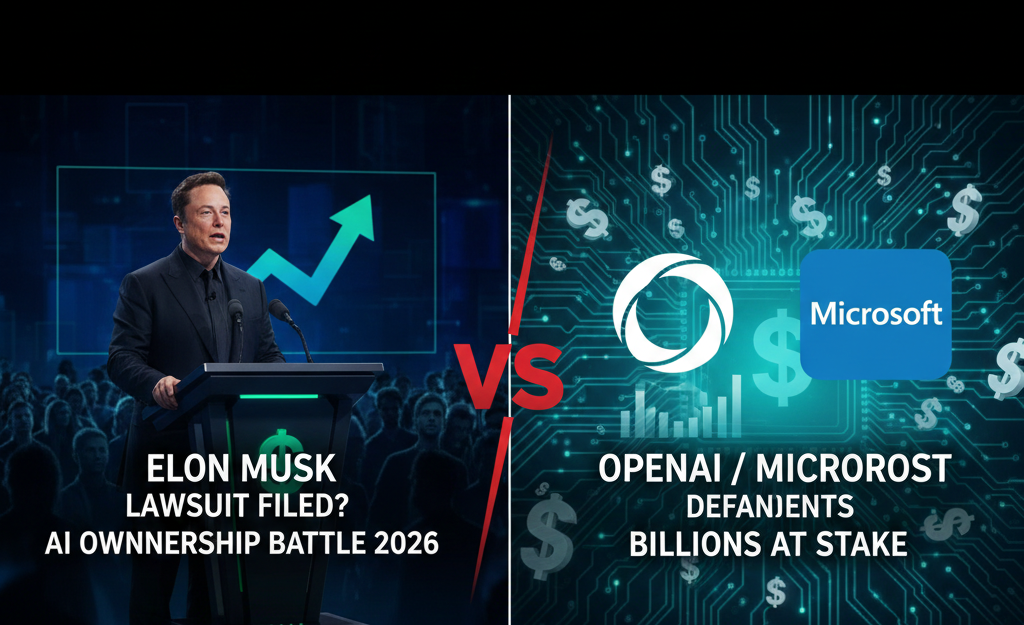
Elon Musk Seeks Up to $134 Billion in Damages from OpenAI and Microsoft: "Wrongful Gains" Claim in 2026 Lawsuit Escalates AI Feud
Elon Musk has dramatically escalated his long-running legal battle against OpenAI and Microsoft with a January 17, 2026 court filing demanding up to $134 billion in damages. Musk argues he is entitled to the "wrongful gains" the companies reaped from his early financial, reputational, and strategic contributions as a co-founder of OpenAI in 2015. The claim—ranging from $79 billion to $134 billion total—breaks down to $65.5 billion to $109.4 billion from OpenAI and $13.3 billion to $25.1 billion from Microsoft, per Musk's expert witness, financial economist C. Paul Wazzan.This filing, ahead of the April 2026 trial in California federal court, intensifies the feud between Musk and OpenAI CEO Sam Altman. Musk, who left OpenAI's board in 2018 and founded rival xAI in 2023 (with Grok chatbot), accuses OpenAI of abandoning its nonprofit mission to develop safe AGI for humanity—shifting to a for-profit model heavily partnered with Microsoft (which holds a ~27% stake and invested billions).Musk's team asserts: "Without Elon Musk, there'd be no OpenAI." They credit him with ~60% of early seed funding ($38 million personally), recruiting key talent, business scaling advice, and lending his credibility to attract partners. Wazzan's analysis ties these to OpenAI's current ~$500 billion valuation, arguing Musk deserves a proportional share as an early "investor" defrauded by the pivot.Key Details from the FilingDamages Range: Low end ~$79B; high end $134B (potential punitive damages/injunctions if liable).
OpenAI Portion: $65.5B–$109.4B from "ill-gotten" value.
Microsoft Portion: $13.3B–$25.1B as "aider and abettor" via partnership.
Trial Stakes: Musk seeks monetary damages plus possible injunctions (e.g., restructuring OpenAI or limiting Microsoft influence).
OpenAI fired back, calling the demand "unserious" and part of Musk's "harassment campaign." In a blog post "The truth Elon left out," they accused him of misrepresenting records and seeking control (citing old talks of his kids overseeing AGI). OpenAI/Microsoft filings challenge Wazzan's analysis as "made up," "unverifiable," and "implausible"—arguing it seeks an unprecedented transfer from a nonprofit to a former donor/competitor. They urged the judge to exclude the expert testimony.Microsoft has not commented on the amount but previously denied "aiding and abetting."Broader Context & ImplicationsThe lawsuit (filed 2024, allowed to trial January 2026) centers on whether OpenAI violated founding agreements by going for-profit and prioritizing Microsoft ties over public benefit. Musk's xAI competes directly (Grok vs. ChatGPT), raising questions about motives—financial, competitive, or ideological?If successful, $134B would be one of history's largest damages awards—though Musk's ~$700B+ fortune (post-Tesla packages) makes it symbolic. For AI, it could set precedents on nonprofit-to-profit transitions, founder rights, and governance in high-stakes tech.At digital8hub.com, we follow AI trends 2026, tech lawsuits, business rivalries, investment insights, and emerging gadgets. For guides on AI ethics, xAI vs OpenAI comparisons, or leveraging tools like Grok/ChatGPT for productivity, explore our resources on AI skills, tech trends, and balanced living.This $134B claim isn't just about money—it's a high-stakes battle shaping AI's future. Trial in April could deliver major rulings.
Comments (0)
Please log in to comment
No comments yet. Be the first!