Finance & Business
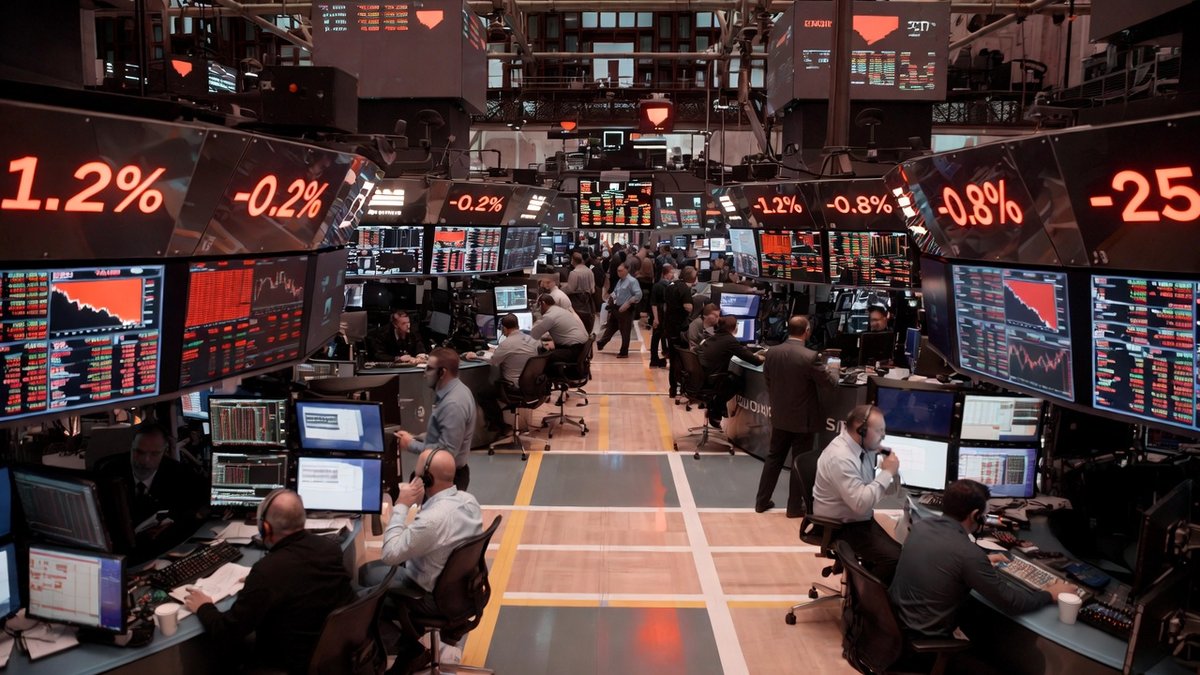
Dow Posts Lowest Close of 2026 as $800 Billion Is Wiped From US Markets
The bill for the Iran war arrived on Wall Street on Wednesday. The Dow Jones Industrial Average fell 768 points — 1.63% — to close at 46,225.15, its lowest level of 2026 and its first close below the 200-day moving average since last November. The S&P 500 fell 1.36% to 6,624.70. The Nasdaq Composite dropped 1.46% to 22,152.42. The combined market value destruction across US equities on Wednesday exceeded $800 billion — one of the largest single-day wealth erasures in the current market cycle. The selling was broad, disciplined, and driven by a convergence of three forces arriving simultaneously: a Federal Reserve that refused to cut rates and signalled it may not do so at all in 2026, a Producer Price Index reading that came in at more than double its forecast, and a fresh escalation in the Iran war — Israel's strike on the South Pars gas field and Iran's retaliatory attack on Qatar's Ras Laffan — that pushed energy prices to new highs and reignited the stagflation fears that have been building since the conflict began on February 28.
The Fed: No Cuts, Energy Risks & The Hawkish Hold
The Federal Reserve's March FOMC meeting concluded on Wednesday with the decision that markets had most feared: rates held steady at 3.5% to 3.75%, with no cut delivered and — critically — no clear signal that a cut was coming. A large group of FOMC members projected no rate cuts for 2026 at all, citing the surge in energy prices as a pro-inflationary risk that the committee was unwilling to accommodate with easier monetary policy. Fed Chair Jerome Powell, whose term expires in May 2026, acknowledged explicitly that the Middle East conflict's implications for US inflation were a significant factor in the committee's assessment — the first time the Fed has directly linked the Iran war to its monetary policy posture. The Fed's statement noted that "the implications of developments in the Middle East for the US economy represent an upside risk to inflation" — language that Wall Street interpreted as a signal that rate cuts are now off the table for the foreseeable future. The hawkish hold destroyed the last significant bullish catalyst that equity markets had been counting on: the expectation that the Fed would cut rates as geopolitical uncertainty mounted, providing a monetary cushion against the economic damage. That cushion is gone. As digital8hub.com has reported, the Dow peaked at an all-time high of 50,512 in early February — before Operation Epic Fury began on February 28. Wednesday's close of 46,225 represents a decline of approximately 8.5% from that peak in less than three weeks.
The PPI: 0.7% When 0.3% Was Expected — The Stagflation Signal
The data point that compounded the Fed's hawkish hold into genuine market panic was the February Producer Price Index — a measure of wholesale inflation that serves as a leading indicator of consumer price pressures. The PPI rose 0.7% in February — more than double the 0.3% increase that economists surveyed by Dow Jones had forecast. Todd Schoenberger, CIO at CrossCheck Management, captured the significance precisely: "This is structural inflation, not temporary, and is likely going to impact monetary policy deep into the third quarter. Add in the hotter energy prices we've seen since the Iran War began, which have yet to show in these reports, and Wall Street is bracing for rapidly rising prices that will clearly flow down to the consumer level." The combination of a hot PPI, a hawkish Fed, and $108 Brent crude is the textbook definition of stagflation conditions — slower growth, rising prices, and a central bank with its hands tied. Goldman Sachs issued a formal stagflation alert on Wednesday, simultaneously raising its recession probability estimate to 25% and recommending a "barbell portfolio strategy" — overweighting energy and defensive stocks while reducing exposure to growth and consumer discretionary. As digital8hub.com has reported, the Iran war has now cost the US more than $11.3 billion in direct military expenditure in its first week alone — a figure that does not include the economic cost of $108 oil, $800 billion in single-day market losses, or the long-term inflationary consequences of the largest energy supply disruption in history.
The Market Picture: Visa, Mastercard, Goldman & the Only Winners
The session's losers told the story of an economy bracing for stagflation. Visa fell 3.1% and Mastercard fell 3.7% — credit services companies whose revenues are sensitive to consumer spending slowdowns. Walmart fell more than 2.5%. Goldman Sachs fell 3.44% and JPMorgan Chase fell 2.32% — the banking sector pricing in both credit deterioration and the end of rate-cut expectations that had been supporting financial sector earnings. Boeing fell 2.64%. Nvidia fell 1.59%. Apple fell 1.88%. The only sector that ended Wednesday in positive territory — the only sector that has been consistently positive since February 28 — was energy. Chevron rose 1.37%. Travelers Companies rose 0.88%. Salesforce — benefiting from AI-driven enterprise demand that has proven more resilient to geopolitical disruption than hardware and consumer stocks — rose 3.37%. The VIX — Wall Street's fear gauge — dropped 4.9% to 22.37 after the close, as some investors began tentatively pricing in a diplomatic resolution to the Hormuz crisis. History suggests they may be optimistic. The Dow is now down more than 5% month-to-date — on pace for its worst month since 2022, when Russia's invasion of Ukraine sent oil to $120 a barrel. If Hormuz remains closed and the South Pars strike escalates further, Goldman Sachs analysts warn that WTI could test $150 per barrel — a level that would push the Dow toward 45,000 and definitively confirm the stagflation scenario that Wednesday's data made look inevitable. For the latest coverage of the US market, global energy, and Operation Epic Fury's economic impact, follow digital8hub.com.
Comments (0)
Please log in to comment
No comments yet. Be the first!