Finance & Business
Comcast to Split in Two, Spinning Off NBCUniversal and Sky
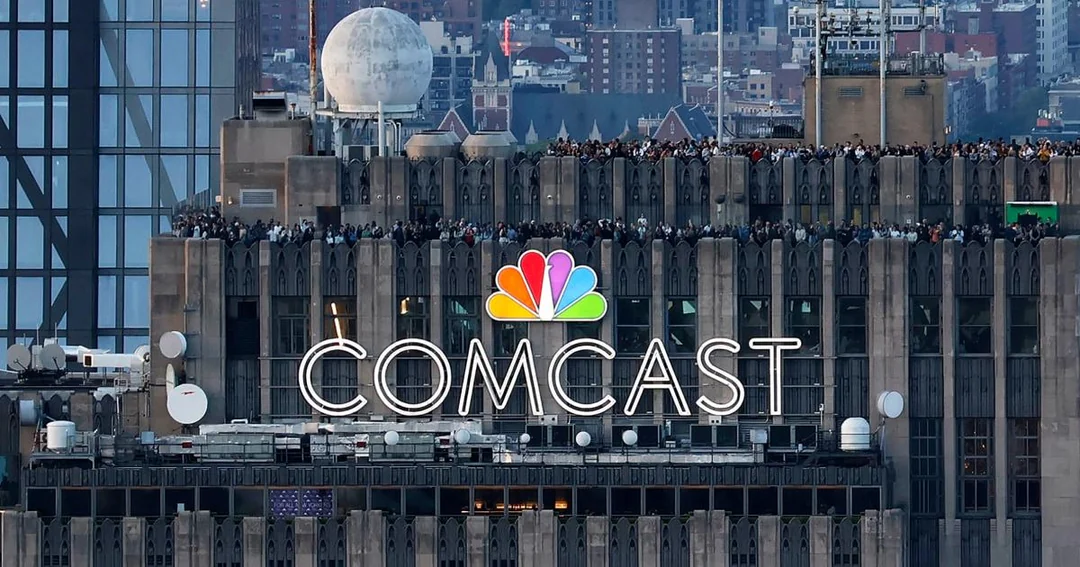
Comcast announced Monday it will split into two independent, publicly traded companies, spinning off NBCUniversal and Sky into a standalone media business while the parent company keeps its broadband, wireless, and connectivity operations. The deal is structured as a tax-free spinoff and is expected to close in about a year.
How the split breaks down
The new NBCUniversal will carry the company's full media and entertainment portfolio: Universal's theme parks, its film and TV studios, NBC and Telemundo, Peacock, Bravo, and Sky — the British broadcaster Comcast bought in 2018. What remains under the Comcast name will be a "pure-play" connectivity business focused on broadband, wireless, and business services. Comcast plans to hold onto a stake of up to 19.9% in the new NBCUniversal for up to a year after the split closes, which it has said it intends to sell off over time.
Leadership is splitting along the same lines: co-CEO Mike Cavanagh will run the new NBCUniversal, while former Comcast CFO Michael Angelakis returns to run the slimmed-down Comcast. Chairman Brian Roberts will stay involved across both companies rather than choosing one.
The market reaction was immediate
Comcast shares jumped as much as 26% in pre-market trading and settled into a 20%+ gain for the day — one of the stock's best single-day moves in nearly two decades. The rally spilled over into the rest of the cable sector, with Charter Communications and Liberty Broadband both climbing more than 20% as investors re-rated the whole industry on the assumption that more "untangling" deals could follow.
Why now
Comcast stock had lost roughly a third of its value over the past year, weighed down by the broader shift away from pay-TV bundles and toward streaming — a problem that has hit traditional media conglomerates across the board. Roberts framed the move on an investor call as recognizing that the technology and media businesses now have "distinct" opportunities better pursued separately rather than under one roof. Notably, Comcast executives pushed back directly on the idea that this is a prelude to selling NBCUniversal to a bigger buyer, calling that read "absolutely not" accurate — though several analysts covering the deal weren't convinced that's off the table long-term.
Why it matters
This closes the loop on a deal that defined an era of media conglomeration: Comcast bought NBCUniversal in 2011 on the logic that owning both the pipes and the content would let it cross-promote and bundle its way to dominance. Fourteen years later, with the stock essentially flat for most of that stretch and streaming having broken the old bundle economics, the company is conceding that bet didn't pay off as planned. One analyst covering the deal put it bluntly: there's no real synergy left between distribution and content businesses, and "those days are over." It's also Comcast's second major breakup in less than a year, following its earlier spinoff of its Versant cable networks — suggesting this isn't a one-off correction but a broader retreat from the vertical-integration model that dominated media dealmaking for most of the 2010s.
Comments (0)
Please log in to comment
No comments yet. Be the first!