Finance & Business
Citi, HSBC, Goldman, Standard Chartered: Wall Street Is Evacuating Dubai Right Now
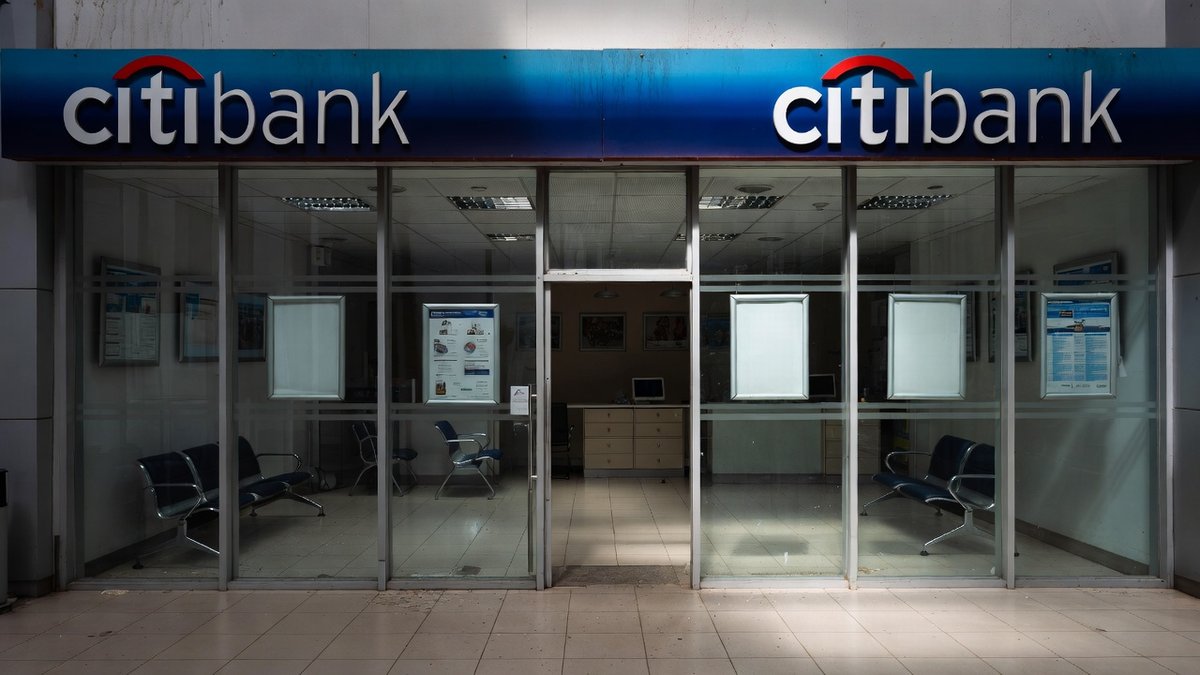
The war came for the banks on Wednesday March 11 — and the banks responded by leaving. In the space of 24 hours, the most concentrated cluster of international financial institutions outside of London, New York, and Singapore began shutting down, evacuating staff, and activating remote working protocols that had been prepared but nobody had expected to use. Citibank announced the closure of all its UAE branches and financial centres from Thursday March 12 to Saturday March 14 as a precautionary measure — a decision confirmed on the bank's own website and reported by Reuters early on Thursday morning. The announcement formalised what had already been happening: on Wednesday, Citigroup evacuated three of its buildings in the UAE — including offices in the Dubai International Financial Centre and Dubai's Oud Metha neighbourhood — and shifted to a fully remote model for all UAE-based colleagues. "The vast majority of our people in the UAE have been working remotely, and we have now moved to a fully remote model for all UAE-based colleagues," a Citi spokesperson said. "We are continuing to serve our clients without interruption. The decision to evacuate three of our buildings in the UAE was responsive to information we received and is consistent with our commitment to prioritise the safety of our colleagues. All colleagues are accounted for and are safe."
The Full Evacuation Picture: HSBC, Standard Chartered, Goldman, Deloitte & PwC
Citi was not alone. Standard Chartered — which has one of its largest regional presences in Dubai — began evacuating its Dubai offices simultaneously, telling staff to work from home until further notice. HSBC closed all its branches in Qatar until further notice, citing the safety of staff and customers in a text message sent directly to clients. Goldman Sachs told all its regional teams to work from home and adhere to local guidance — with a person with close knowledge of the firm's policies confirming that employee safety was the firm's primary consideration. Deloitte and PwC both closed their Dubai offices. The combined departure of Citi, Standard Chartered, Goldman Sachs, HSBC, Deloitte, and PwC from their physical premises in the UAE and Qatar represents a seismic signal about how the world's leading financial institutions are currently assessing the risk environment in the Gulf — and what they believe may be coming. These are not companies that evacuate lightly. They have business continuity plans, security teams, risk committees, and insurance frameworks designed to keep them operational in hostile environments. When all of them move simultaneously to remote operations and physical closure, the threat assessment driving that decision is serious.
Why They Left: Iran's "Free Rein to Target Banks" Declaration
The trigger for the financial sector's mass evacuation was a statement from Iran's Khatam al-Anbiya Central Headquarters — the IRGC's military operations command — that removed any ambiguity about the threat facing Western financial institutions in the Gulf. "The enemy has given us free rein to target economic centres and banks belonging to the United States and the Zionist regime," the statement said. The declaration came after the United States bombed Bank Sepah — one of Iran's largest state-owned banks — in Tehran, in a strike that Iran characterised as a direct attack on civilian financial infrastructure. As digital8hub.com has reported, the IRGC has already declared Google, Amazon, and Microsoft data centres in the region legitimate war targets — with AWS Bahrain and Azure Middle East facilities already struck. The extension of that targeting logic to banks and financial centres is a coherent escalation within the IRGC's publicly stated doctrine of asymmetric economic warfare. The IRGC's Ebrahim Zolfaqari added an oil price warning that underlines the economic dimension of Iran's strategy: "Get ready for oil to be $200 a barrel, because the oil price depends on regional security, which you have destabilised."
What Is at Stake: 290 Banks, $200 Billion, the Gulf's Financial Future
The Dubai International Financial Centre — from which Citi and Goldman evacuated their staff on Wednesday — is not merely a cluster of office buildings. It is the most significant financial hub between London and Singapore: home to more than 290 banks, approximately 500 wealth management firms, dozens of major law firms, and an asset base estimated at over $200 billion. It is the infrastructure through which billions of dollars of regional trade, investment, and capital flows are processed daily. It is the reason Dubai became one of the world's most significant cities in the space of a generation. The DIFC's physical evacuation — even temporary, even precautionary — has immediate consequences. Transactions that require in-person authorisation are delayed. Client meetings are cancelled. Regulatory filings are disrupted. Regional deal-making — already severely impacted by the conflict — slows further. And the reputational signal to the global financial community is stark: the Gulf is not currently safe for business. As digital8hub.com has reported, Iran simultaneously struck fuel storage tanks at Bahrain's Muharraq Airport on Thursday, hit Dubai's Al Bada'a neighbourhood with drones, and struck Kuwait's airport for the second consecutive day. The financial sector is not evacuating in response to a theoretical threat. It is evacuating in response to a pattern of strikes that has already hit commercial infrastructure across every major Gulf city. The question is not whether the DIFC will be targeted. The question is whether the war ends before it is. For the latest coverage of Operation Epic Fury, the Gulf financial crisis, and global market developments, follow digital8hub.com.
Comments (0)
Please log in to comment
No comments yet. Be the first!