Finance & Business
Bending Spoons Surges 40% on Nasdaq Debut, Defying the SaaS Slump
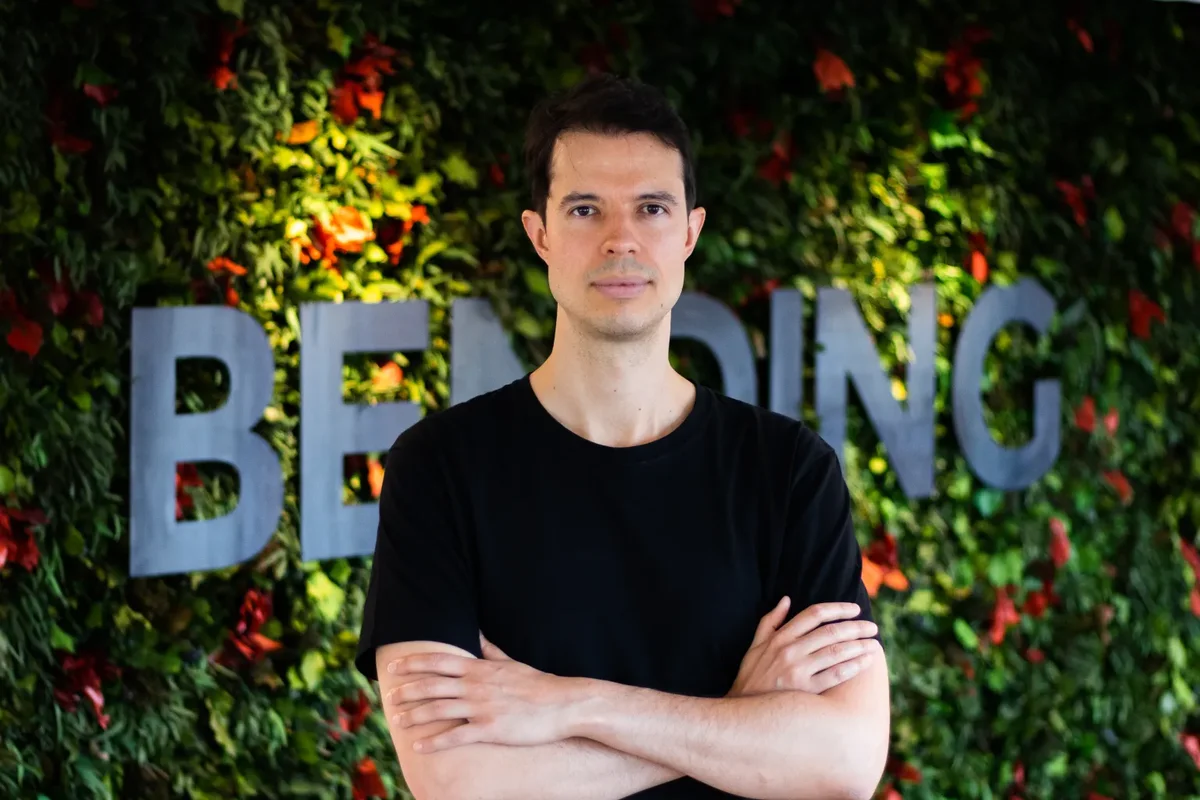
Bending Spoons, a company that acquires and revitalizes stagnating but well-known tech firms, saw its shares surge in its market debut, closing at $40.50 on Wednesday — nearly 40% above its $29 IPO price. At that valuation, the 13-year-old Milan, Italy-based company has a market capitalization of $25.7 billion, more than double its last private valuation of $11 billion. The firm and investors including Baillie Gifford sold 57.97 million shares after marketing them at $26 to $28 — meaning it priced above its own marketed range and still popped 40%, a signal that underwriters left significant demand on the table. TechCrunch + 2
What Bending Spoons actually does
Most people have never heard of Bending Spoons. But they've almost certainly used something it owns. The company has grown rapidly by acquiring aging but once popular brands like AOL, Eventbrite, Evernote, Meetup, and Vimeo, then turning them profitable — typically through aggressive cost-cutting, launching new features, and raising prices. The portfolio also includes WeTransfer and a string of smaller consumer apps. Co-founder and chief product officer Matteo Danieli has described the mission as placing the company "as an operator that takes beloved brands and makes them much better." TechCrunchTechCrunch
While the company's approach is similar to private equity, there is one key difference: Bending Spoons has no plans to sell these businesses. The model is buy, rebuild, and hold — indefinitely. That long-term orientation is part of what makes it unusual in a landscape dominated by funds with fixed timelines and exit targets. TechCrunch
The numbers that made investors pay attention
The financial turnaround Bending Spoons has engineered across its portfolio is what drove the IPO's reception. Annual revenue expanded 95% year-over-year to $1.31 billion for the full year 2025, and growth accelerated sharply in the first quarter of 2026, with revenue jumping 132% to $601.3 million. That top-line surge allowed the company to swing from a net loss of $112.2 million to a net profit of $27.5 million. The majority of the company's revenue — 84% — comes from subscriptions. Yahoo Finance + 2
The engine behind those numbers is a deliberate AI-first approach to rebuilding acquired codebases. The proportion of software changes generated or co-generated by internal AI systems skyrocketed from under 10% last year to 90% in the first quarter of 2026 — allowing the company to more than double its revenue per full-time employee to $2.6 million. Bending Spoons' F-1 filing — the foreign-company equivalent of an S-1 — even includes a chapter titled "AI before it was cool," a nod to the company's roots: before Bending Spoons, there was Evertale, "a product that would automatically create a diary of your life by leveraging what you would call AI today, and that we called machine learning then." That startup failed, but it planted the AI-first instincts that now run through everything the company builds. Yahoo FinanceTechCrunch
Why the timing matters — and why it's complicated
Earlier this year, shares of traditional SaaS companies tumbled amid investor fears that software built with AI could eventually displace those businesses. Bending Spoons is simultaneously a beneficiary of that slump and an argument against it — it acquires companies whose valuations have been compressed by exactly those fears, then uses AI to make them more efficient and more profitable. Co-founder Danieli told TechCrunch that the depressed SaaS market is "actually a great opportunity and moment to deploy capital" for a company that grows through acquisitions. In other words, the same environment that's hurting SaaS incumbents is handing Bending Spoons cheaper acquisition targets. TechCrunchTechCrunch
When a scarce software name prices above its marketed range and still jumps 39%, it suggests the deal may have been sold at a bigger-than-necessary discount to what buyers were willing to pay. Analysts are cautious about reading too much into a single debut: Renaissance Capital's Matt Kennedy noted it's more a single data point than a full signal for the whole software pipeline, given how few comparable software IPOs there have been to judge sentiment. But the implications are real — if the stock holds up in the aftermarket, bankers can use this debut as a fresh comparison when setting price ranges for the next wave of 2026 software IPO candidates, potentially shifting the balance toward tighter discounts and more ambitious ranges for companies with credible AI plans. Finimize + 2
The controversy the IPO doesn't erase
Bending Spoons' model has not been without friction. Its approach to acquired companies — aggressive layoffs, price increases, feature consolidation — has generated genuine backlash from users and former employees at several of its portfolio companies. Evernote and Vimeo users both experienced significant price hikes and feature changes after acquisition that drew criticism online. Danieli has acknowledged the controversy while pointing to customer retention rates as evidence that the approach is working. But the gap between "this is working financially" and "this is working for the people who use these products" is a tension the company hasn't fully resolved — and one that will be more visible now that it's a public company with quarterly earnings scrutiny. Zamin.uz
What comes next
The IPO raised $1.68 billion in total, with Bending Spoons keeping $1 billion in proceeds and the rest going to selling shareholders. The company brought its entire team to New York to mark the listing, though Danieli was clear that after one day of celebration, the focus returns to acquisitions — taking advantage of the compressed SaaS valuations the market is currently offering. Bending Spoons' five co-founders — Luca Ferrari, Francesco Patarnello, Matteo Danieli, Luca Querella, and Tomasz Greber — each saw a significant windfall from the offering. TechCrunch + 2
The more interesting question isn't whether Bending Spoons has a good model — the numbers say it does. It's whether the model scales. Rebuilding aging consumer internet brands through centralized AI-powered engineering works when the portfolio is a manageable size. Whether it works when the company is worth $25 billion, under quarterly earnings pressure, and hunting for acquisitions large enough to move the needle at that scale, is a test that begins now.
Comments (0)
Please log in to comment
No comments yet. Be the first!