Entertainment
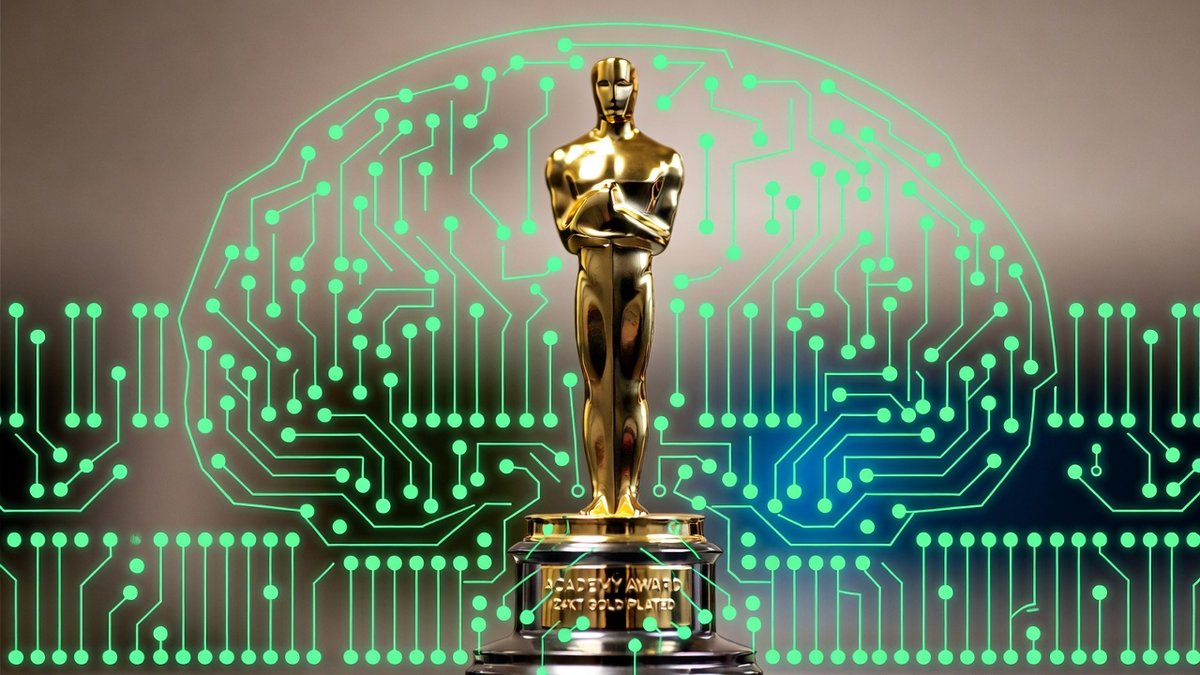
AI-Generated Actors and Scripts Are Now Ineligible for Oscars
Throughout its nearly century-long history, the Academy of Motion Picture Arts and Sciences has confronted and adapted to every major technological disruption that has reshaped filmmaking — from the arrival of sound, through the transition to colour, through the digital revolution that transformed production, distribution, and exhibition over the past three decades. Each time, the Academy has navigated the tension between embracing innovation and preserving the human artistry that gives cinema its meaning and its cultural weight.
The decision to declare AI-generated actors and scripts ineligible for Oscar consideration is the Academy's most consequential intervention in that ongoing negotiation since the digital era began. It is a line drawn in the sand — a statement that, whatever role artificial intelligence may play in the future of filmmaking, the Academy's highest honours will remain the preserve of human creative achievement.
The decision has been met with relief by writers and actors who have spent the past three years fighting to protect their work from AI displacement. It has been met with frustration by some technologists and filmmakers who believe the eligibility rules are fighting a tide that cannot be held back. And it has opened a debate about the nature of creativity, the definition of authorship, and the future of an art form that is changing faster than the institutions that celebrate it can comfortably manage.
At digital8hub.com, we break down exactly what the Academy has decided, why it matters, and what it means for the future of Hollywood and the films we love.
What the Academy Has Actually Ruled
The Academy's new eligibility guidelines represent a significant and carefully worded intervention in the AI debate. The core provisions cover two primary categories:
AI-Generated Actors
Films that feature performances generated by artificial intelligence — whether fully synthetic characters presented as human actors, or digital recreations of real actors produced without their involvement and consent — are ineligible for awards in acting categories and, under the broader eligibility framework, for Best Picture consideration.
The ruling draws a meaningful distinction between AI as a tool in the hands of human creative decision-making — which remains permitted — and AI as a replacement for human performance. Visual effects that enhance or modify a human performance remain eligible. AI systems that generate a performance without a human actor at its creative centre do not.
AI-Generated Scripts
Films whose screenplays have been generated by artificial intelligence — without meaningful human authorship in the writing process — are ineligible for awards in writing categories and, again, for Best Picture consideration. The ruling recognises that AI may assist human writers in various ways, but draws the line at scripts where the AI has functioned as the primary author rather than as a tool in service of human creative vision.
The Academy has established a process for evaluating eligibility on a case-by-case basis, with a newly constituted AI and Technology Review Panel responsible for assessing films where the degree of AI involvement is disputed or unclear. This panel will have the authority to request documentation of the creative process, interview filmmakers, and make binding eligibility determinations.
Why This Decision Was Inevitable
The Academy's AI eligibility ruling did not emerge from nowhere. It is the product of years of escalating tension within the film industry over artificial intelligence's role in creative production — tension that reached its most visible expression in the 2023 Hollywood strikes.
The Strike Legacy
The 118-day SAG-AFTRA strike of 2023 — one of the longest and most significant labour actions in Hollywood history — placed AI at the centre of negotiations between actors and studios in a way that transformed the industry's understanding of the technology's implications. The core concerns that drove actors to the picket line — the use of digital likenesses without consent, the potential for AI to replace background actors and eventually principal cast, the absence of residual protections for AI-generated performances — are precisely the concerns that the Academy's ruling addresses.
The 2023 WGA strike raised parallel concerns for writers — the fear that studios might use AI-generated scripts to reduce their dependence on human writing talent, cutting costs while undermining the economic foundation of the screenwriting profession.
Both strikes resulted in contract provisions that addressed AI use in the immediate term. The Academy's eligibility ruling extends the principle those contracts established into the most visible and symbolic arena in the film industry.
The Technology Reality
The timing of the ruling also reflects the reality of where AI technology has arrived in 2026. Fully AI-generated actors — capable of delivering performances across a full feature film at a level of visual fidelity that challenges detection — are no longer a speculative future concern. They exist. They have been deployed in experimental productions. And several films featuring significant AI-generated performance content were submitted for awards consideration in the most recent eligibility cycle, forcing the Academy to confront the question it had been deferring.
Similarly, AI screenplay generation tools have advanced to the point where scripts produced primarily by AI are structurally competent — capable of generating narratives, dialogue, and character arcs that meet the baseline requirements for a producible film. The quality debate is secondary to the authorship question: if an AI wrote the script, who receives the Oscar?
The Human Creativity Question: What the Oscars Are Actually Defending
The philosophical heart of the Academy's decision is a question about what the Oscars exist to celebrate — and that question has an answer that the Academy has now made explicit.
The Academy Awards exist to celebrate human creative achievement in filmmaking. They exist to honour the director who shaped a vision, the writer who found the words, the actor who inhabited a character, the cinematographer who found the light. They exist to recognise the particular quality of art that emerges from human experience, human emotion, and human craft — the quality that makes cinema capable of generating empathy, provoking thought, and illuminating what it means to be alive.
AI, however sophisticated, does not experience the world. It does not grieve, love, struggle, or triumph. It generates outputs that can resemble the products of human experience — sometimes with remarkable fidelity — but it does not share in the experience that gives those outputs their meaning. An AI cannot write from the knowledge of loss. It cannot perform from the memory of fear. It cannot direct from a vision shaped by a lifetime of seeing.
This is not a technological limitation that will be overcome by the next model release. It is a categorical distinction between human and artificial intelligence that the Academy's ruling implicitly but clearly recognises.
The Practical Challenges: Enforcement and the Grey Zone
The Academy's ruling is philosophically clear but practically complex — and the complexity begins immediately with the question of enforcement.
The Detection Problem
Identifying AI-generated content in a completed film is technically challenging. The most sophisticated AI performance and scriptwriting tools do not produce outputs with obvious artificial tells — their outputs are designed to be indistinguishable from human-created work. The Academy's case-by-case review process will need to develop robust methodologies for identifying AI involvement that go beyond visual inspection of the finished product.
The Hybrid Question
The most contentious territory lies not at the extremes — fully human or fully AI — but in the rapidly expanding middle ground where AI tools assist human creators in ways that range from the trivially mechanical to the substantially generative. A screenwriter who uses an AI tool to generate plot options and then selects and develops one of them — are they the author of the resulting script? A director who uses AI to generate visual concepts that are then executed by human artists — has the film been directed by a human?
The Academy's guidelines attempt to address this by focusing on whether human creative decision-making is at the centre of the work — but the line between AI as tool and AI as author is not always clear, and different people will draw it in different places.
The International Dimension
Hollywood does not exist in isolation, and the Academy's eligibility rules apply only to its own awards. International film industries — particularly those in China, South Korea, and parts of Europe — may take different approaches to AI in filmmaking, potentially producing internationally celebrated works that would be ineligible under Academy rules. The global conversation about AI and creative authorship is only beginning, and the Academy's decision is one voice in it, not the final word.
What This Means for the Future of Hollywood
The Academy's AI ruling will not stop the integration of artificial intelligence into filmmaking. The economic pressures that make AI an attractive tool for studios — cost reduction, speed of production, the ability to generate visual content without the logistical complexity of physical production — are too powerful to be reversed by eligibility rules.
What the ruling does is establish a clear and enforceable standard for what Hollywood's most prestigious institution considers worthy of its highest honours. It creates an incentive structure that rewards human creative achievement and withholds prestige from productions that have substituted AI for human artistry.
In an industry where Oscar eligibility matters enormously — for prestige, for distribution, for the long-term cultural standing of a film — that incentive structure is not trivial. Studios and filmmakers pursuing awards consideration will need to demonstrate that their work meets the Academy's human authorship standard. And that demonstration will shape how AI tools are used in production in ways that eligibility rules for secondary awards categories never could.
The Academy has drawn its line. Now the industry — and the technology — will respond.
For the latest in entertainment news, technology policy, and the stories shaping Hollywood in 2026, follow digital8hub.com — where we cover the digital world without flinching from its hardest questions.
Comments (0)
Please log in to comment
No comments yet. Be the first!