Education & Career
Job Market Jitters: Why US Unemployment Hit a Four-Year High Slug: us-job-market-unemployment-rate-4-6-percent-layoffs-november-2025
The Headline Shockwave: 4.6% Unemployment
The release of the latest jobs report delivered a strong signal that the post-pandemic labor market boom is definitively over. While the economy added 64,000 jobs in November (slightly above some forecasts), this number represents a clear deceleration from the pace seen earlier in the year.
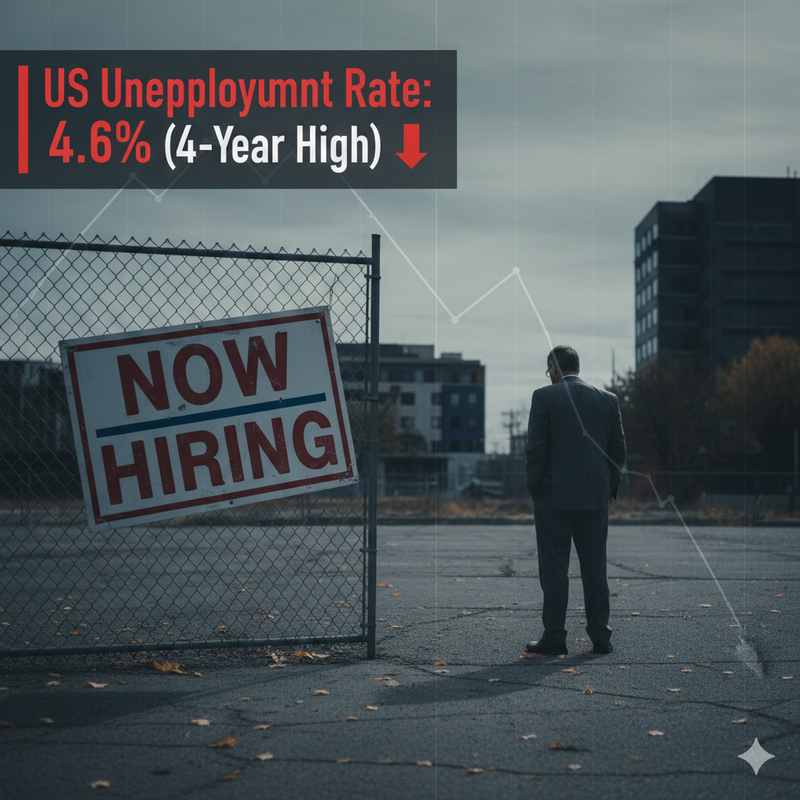
The most attention-grabbing figure, however, was the unemployment rate, which climbed to 4.6%—its highest level in four years. This jump suggests that the labor market is losing steam faster than expected, placing renewed pressure on policymakers.
The Key Troubling Trends
The headline number only tells part of the story. A deeper look at the data reveals a complex set of trends contributing to the slowdown:
1. The Deceleration of Job Growth
Weak Payrolls: At +64,000 in November, the pace of job creation is well below the estimated rate needed to keep up with population growth (often cited around 112,000 jobs). Furthermore, October saw a sharp loss of 105,000 jobs, largely driven by a contraction in federal government employment due to earlier actions.
Downward Revisions: The Bureau of Labor Statistics (BLS) also revised down job totals for August and September by a combined 33,000, confirming that growth was weaker in the prior months than initially reported.
Sectoral Weakness: While Health Care (+46,000) and Construction (+28,000) showed resilience, other major sectors like Transportation and Warehousing (-18,000) are experiencing job losses, and employment in Manufacturing continued a downward trend.
2. The Surge in Layoffs and Job Cuts (The Corporate Reality)
The jobs report coincides with other alarming corporate data. Reports indicate that the number of announced job cuts for the year has already surpassed 1.17 million, marking a significant increase from the previous year.
AI and Automation: Experts point to the increased adoption of AI and automation as a factor, particularly hitting the tech sector, which has seen thousands of layoffs despite strong stock performances in related fields. Companies are aiming to "do more with less," prioritizing cost-cutting over expansion.
Consumer Spending Slowdown: Rising costs and persistent interest rates are taking a toll on consumer confidence and spending, forcing businesses to scale back and restructure.
3. Rising Long-Term Unemployment
For those already out of work, the path back is getting harder. The proportion of unemployed people experiencing long-term unemployment (jobless for 27 weeks or more) is creeping up and now accounts for nearly a quarter of all unemployed individuals. This is a critical indicator of economic fragility, as long-term unemployment can lead to skill erosion and persistent economic hardship.
SEO Keywords: US Job Market Slowdown, Unemployment Rate 4.6%, BLS Jobs Report November 2025, Corporate Layoffs 2025, Federal Reserve Interest Rates, Labor Market Trends, US Economy Recession Risk, Long-Term Unemployment.
The Economic Fallout and Policy Pressure
These troubling trends create a difficult environment for the Federal Reserve. Their primary goal is to cool inflation without causing a severe recession—a soft landing. However, the rapidly cooling labor market presents a dilemma:
Rate Cut Pressure: The softening of the labor market and slowing wage growth (now around 3.5% year-over-year) intensifies pressure on the Fed to cut interest rates to prevent a full-blown economic downturn.
The Part-Time Problem (U-6 Rate): The broader measure of underemployment, known as the U-6 unemployment rate, also moved higher, largely driven by a jump in the number of people working part-time for economic reasons—meaning they want full-time work but can only find part-time. This hidden weakness suggests the true labor market pain is even greater than the headline 4.6% indicates.
Navigating the Low-Hire Economy
For individuals, the shift to a "low-hire" economy means a few key changes:
Job Security is Key: Those currently employed are showing less willingness to quit, as the low hiring rate makes job switching riskier. The quit rate has returned to pre-pandemic levels.
Slower Wage Growth: While wages are still growing slightly faster than prices for some workers, the pace has slowed, limiting gains in buying power.
The Resilient Fields: The best hiring prospects remain in sectors like Health Care and certain areas of Construction (nonresidential specialty trade contractors).
The fog of delayed data, federal government losses, and a slowdown in immigration makes the full picture murky, but the trajectory is clear: the American job market has fundamentally shifted into a period of prolonged weakness.
Comments (0)
Please log in to comment
No comments yet. Be the first!