Technology
Valve's Steam Machine Just Went "Coming Soon" — Here's Everything You Need to Know Before It Drops
The wait is almost over. Valve updated the Steam Machine, Steam Frame VR headset, and Steam Controller to "Coming Soon" status on SteamDB just hours ago — a backend change that signals the company is days, not weeks, away from revealing final pricing and a launch date for the most anticipated gaming hardware of 2026. Announced in November 2025, delayed in February 2026 due to the industry-wide RAM and storage shortage crisis, and now inching toward its final reveal — the Steam Machine is coming. Here is everything you need to know before it drops.
What Is the Steam Machine — And Why Does It Matter This Time?
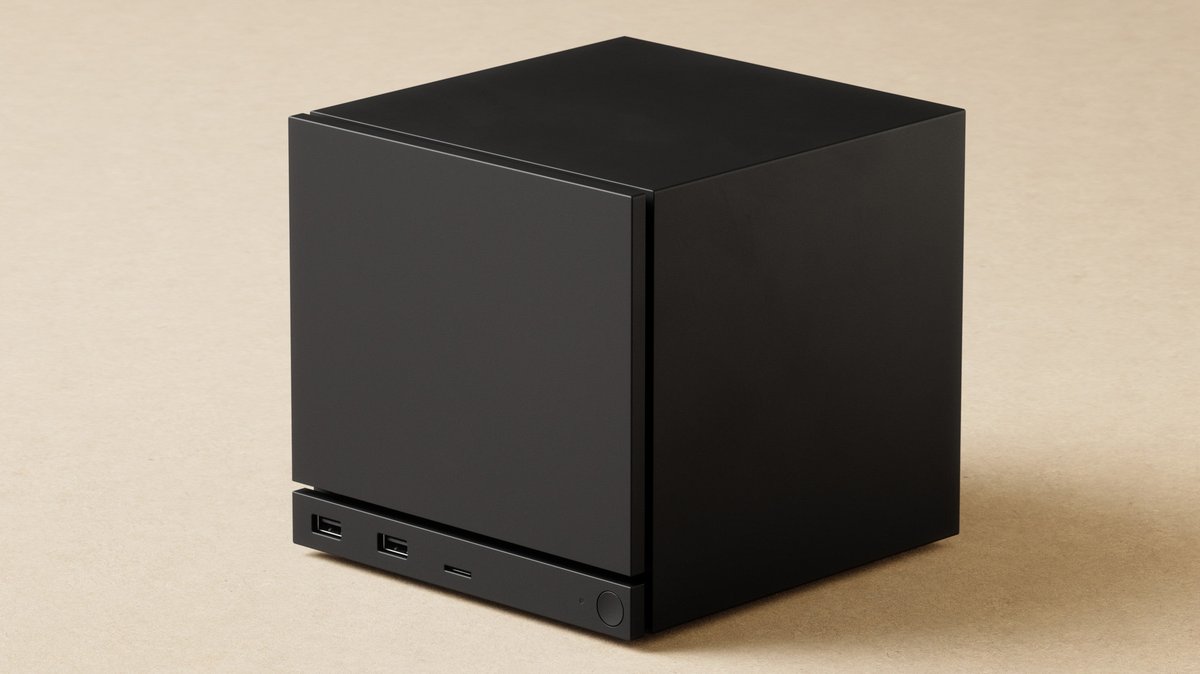
The Steam Machine is Valve's second attempt at bringing PC gaming to the living room — a compact, cube-shaped mini PC running SteamOS, Valve's Linux-based gaming operating system, designed to sit under your TV and play the entirety of your Steam library from the couch. The first Steam Machines, launched in 2015, failed — killed by a lack of games compatible with Linux and an incoherent hardware strategy that saw dozens of third-party manufacturers produce wildly different machines at wildly different price points. This time is different in one critical respect: Proton. Valve's Proton compatibility layer — the same technology that powers the Steam Deck — allows Linux-based systems to run the vast majority of Windows PC games natively, without any additional configuration. The game library problem that killed the first Steam Machine no longer exists. The entire Steam catalogue — over 50,000 games — is now the Steam Machine's launch library on day one.
The Specs: Six Times More Powerful Than the Steam Deck
Valve has been unusually transparent about the Steam Machine's hardware. At its core sits a semi-custom AMD chip combining a Zen 4 6-core, 12-thread CPU clocking up to 4.8GHz — comparable in performance to a Ryzen 5 7600X — with an RDNA 3 GPU featuring 28 compute units running at a sustained 2.45GHz clock speed and 8GB of GDDR6 memory — roughly equivalent to a Radeon RX 7600 or RTX 4060. The base configuration ships with 16GB of DDR5 RAM. Storage options are 512GB and 2TB onboard NVMe SSD, both expandable via internal NVMe slots and MicroSD cards. Valve describes the Steam Machine as six times more powerful than the Steam Deck — capable of 4K 60fps gaming with AMD's FSR upscaling technology handling the heavy lifting at native 4K in the most demanding titles.
The machine itself is a near-perfect cube — measuring 156 x 152 x 162 millimetres — built around a 120mm cooling fan with a removable faceplate and customisable LED light strip at the front. It is a genuinely handsome piece of hardware that looks at home in a living room AV cabinet alongside a PlayStation or Xbox — a significant aesthetic upgrade from the utilitarian Steam Deck and from the chaotic variety of first-generation Steam Machine designs.
The New Steam Controller: Drift-Resistant, 35-Hour Battery
The Steam Machine launches alongside a completely redesigned Steam Controller — the spiritual successor to Valve's original 2015 controller, rebuilt from scratch using everything the company learned from the Steam Deck. It features magnetic analogue sticks — designed specifically to eliminate the drift issues that have plagued every major controller on the market — dual trackpads for mouse-like precision input, gyro controls, haptic feedback, and a battery life of up to 35 hours. An integrated 2.4GHz receiver allows pairing with up to four controllers simultaneously without an external USB dongle. It also works with PC, Mac, and Steam Deck — making it one of the most versatile controllers ever made.
The Price Problem: RAM Shortage Complicates Everything
The Steam Machine's biggest unresolved question remains its price — and it is a complicated one. Valve designer Pierre-Loup Griffais has described the pricing as comparable to a PC with similar specs and positioned closer to the entry level of the PC space — language that implies a price point above the $499 PS5 and likely above the $599 Xbox Series X. A Czech retailer listing in early 2026 showed placeholder prices of approximately $950 for the 512GB model and $1,070 for the 2TB model — though Valve has stressed these are not confirmed figures. Most analysts expect the final price to land between $699 and $999 depending on configuration, with Valve potentially absorbing some cost to remain competitive. The ongoing RAM and storage shortage — described by Valve as a "RAMpocalypse" — has complicated every pricing calculation the company has tried to make since November.
Games: The Deck Verification System Expands
Every game currently verified for the Steam Deck is automatically verified for the Steam Machine — meaning the compatibility database Valve has spent years building transfers directly to the new hardware. Games are sorted into four categories: Verified, Playable, Unplayable, and Unknown. The Steam Machine also benefits from community databases like ProtonDB that provide more granular compatibility information beyond Valve's official ratings. Between the official verification programme and the community ecosystem, buyers will have the clearest possible picture of what works before they spend a penny.
The "Coming Soon" status update on SteamDB is the clearest signal yet that the Steam Machine's launch announcement is imminent. For the latest gaming and tech coverage, follow digital8hub.com.
Comments (0)
Please log in to comment
No comments yet. Be the first!