Technology
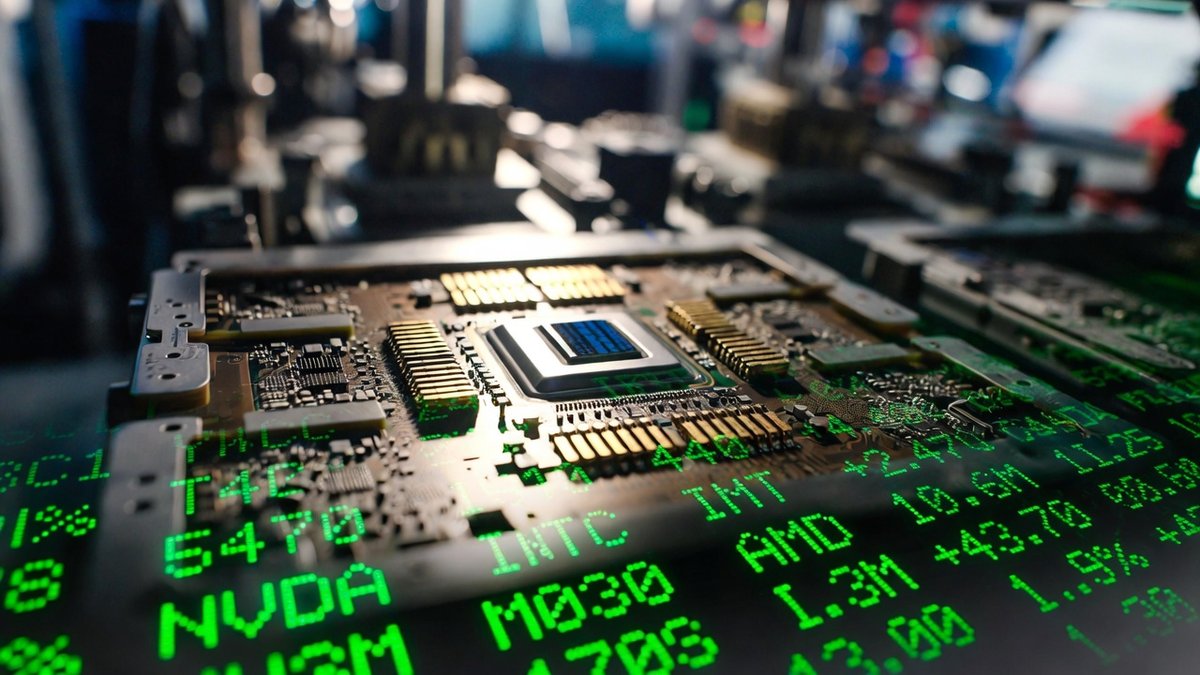
US Chipmakers Hit Record Highs as Intel Turbocharges the AI Rally
Silicon Is Having Its Moment — and Intel Is Leading the Charge
If there is one sector that has defined the financial markets narrative of the past two years, it is semiconductors. The chips that power artificial intelligence — the unglamorous, invisible foundation of every large language model, every autonomous vehicle, every smart device — have become the most strategically important industrial product on the planet. And in 2026, the companies that make them are being valued accordingly.
US chipmakers have hit record highs across the board, with the Philadelphia Semiconductor Index — the benchmark tracker for the sector — posting gains that have left even the most bullish analysts revising their price targets upward. NVIDIA, AMD, Broadcom, Qualcomm — the familiar titans of the AI chip era are all running hot. But the story generating the most heat right now is not one of these household names.
It is Intel.
The company that invented the modern microprocessor, dominated the PC era, lost its way spectacularly in the early 2020s, and has spent the better part of three years attempting one of the most challenging corporate turnarounds in technology history — is back. And at digital8hub.com, we break down exactly what is driving Intel's resurgence, what it means for the broader chip rally, and what investors need to understand about the semiconductor landscape in 2026.
Intel's Comeback: From Crisis to Catalyst
To appreciate what Intel's current performance means, you need to remember how bad things got. Between 2021 and 2024, Intel lost its manufacturing lead to TSMC and Samsung, missed the initial AI chip wave almost entirely, burned through billions in a foundry transition that seemed perpetually behind schedule, and watched its market capitalisation shrink as investors fled to NVIDIA — the company that had, almost accidentally, positioned itself as the backbone of the entire AI computing revolution.
The turnaround under new leadership has been painstaking, expensive, and — until relatively recently — only partially convincing to a sceptical market. Intel's 18A manufacturing process, its next-generation chip architecture, its revitalised foundry services business — all of these represented credible progress, but progress that was always qualified by the question of whether Intel could execute at scale and on schedule.
In 2026, that question appears to be getting answered — positively. Intel's latest quarterly results demonstrated meaningful progress across multiple fronts simultaneously: improving manufacturing yields, growing foundry customer commitments, a data centre chip portfolio that is finally competitive in AI workloads, and a cost structure that reflects the brutal but necessary efficiency improvements imposed during the turnaround period.
The market has responded with enthusiasm. Intel's stock has been one of the strongest performers in the semiconductor sector year-to-date — a remarkable reversal for a company that many had written off as a dinosaur incapable of adapting to the AI era.
What Is Driving the Broader Chip Rally?
Intel's resurgence is the most dramatic individual story in the current semiconductor rally, but it exists within a broader set of powerful tailwinds that are lifting the entire sector:
AI Infrastructure Spending Remains Insatiable
The hyperscalers — Microsoft, Google, Amazon, Meta — are spending at a pace that would have seemed extraordinary even two years ago. Microsoft's $80 billion AI infrastructure commitment, Meta's $60-65 billion capex plan, Google's similarly eye-watering AI investment programme — all of this spending flows directly into semiconductor demand. Data centres need chips. More data centres need more chips. The demand curve shows no sign of flattening.
Sovereign AI Investment
Beyond the hyperscalers, governments around the world are now investing directly in AI infrastructure as a matter of national strategic priority. The United States, the European Union, Japan, South Korea, India, and the Gulf states are all building or funding domestic AI compute capacity — and all of that capacity requires chips. This sovereign AI demand represents a structural addition to the market that was not present even 18 months ago.
Automotive and Edge AI
The proliferation of AI beyond data centres — into vehicles, industrial equipment, consumer devices, and infrastructure — is creating demand for a broader range of semiconductor products than the pure data centre GPU story suggests. Qualcomm, Texas Instruments, and NXP Semiconductors are all benefiting from automotive and edge AI tailwinds that complement the data centre demand driving NVIDIA and Intel.
Supply Chain Normalisation
The semiconductor supply chain disruptions of 2021-2023 have largely resolved, and the industry has invested heavily in new capacity through programmes like the US CHIPS Act and equivalent European and Asian initiatives. This investment is beginning to yield results — new fabs coming online, yields improving, supply constraints easing — which supports the kind of sustained volume growth that justifies record valuations.
NVIDIA: Still the King, But Watching Its Flanks
No discussion of the semiconductor rally is complete without acknowledging NVIDIA — the company whose H100 and H200 GPUs became the defining products of the AI era and whose market capitalisation briefly exceeded $3 trillion, making it one of the most valuable companies in human history.
NVIDIA remains the dominant player in AI training chips, and its CUDA software ecosystem — the platform on which the vast majority of AI development runs — represents a competitive moat that is genuinely difficult to overcome. But the landscape around NVIDIA is shifting in ways that are worth watching.
Custom silicon from the hyperscalers — Google's TPUs, Amazon's Trainium and Inferentia chips, Microsoft's Maia — is gradually reducing those companies' dependence on NVIDIA for certain workloads. AMD's MI300 series has made genuine inroads in the data centre market. And Intel's Gaudi AI accelerators, while still a distant third in market share, are beginning to attract serious customer interest as buyers seek to diversify their supply chains away from single-vendor dependence.
NVIDIA's position is strong. But the era of its near-total dominance in AI chips may be gradually giving way to a more competitive landscape — and that competition, paradoxically, is good for the sector as a whole.
The CHIPS Act: America's Semiconductor Bet Paying Off
The US CHIPS and Science Act — the landmark 2022 legislation that committed over $50 billion in federal subsidies to domestic semiconductor manufacturing — is increasingly visible in the industry's 2026 performance. New Intel fabs in Ohio and Arizona are progressing. TSMC's Arizona facilities are ramping production. Samsung's Texas plant is operational. Micron's memory chip expansion is underway.
The geopolitical logic behind the CHIPS Act — reducing US dependence on Taiwanese semiconductor manufacturing in a world where Taiwan faces genuine strategic risk from China — has not diminished. If anything, the urgency has increased as US-China technology competition has intensified. The domestic manufacturing capacity being built now represents a long-term strategic asset whose value extends far beyond its immediate commercial contribution.
For semiconductor investors, the CHIPS Act represents a structural support for US chipmaker valuations that is largely independent of the cyclical demand dynamics that have historically made semiconductor stocks volatile. Government-backed capacity investment reduces the downside risk that has traditionally made the sector a challenging long-term hold.
What Investors Should Watch
For those considering exposure to the semiconductor sector at current record levels, the key questions are:
Valuation vs. Growth
Semiconductor stocks are not cheap at current prices. The question is whether the AI-driven growth cycle is structural and sustained — in which case current valuations may be justified — or whether there is a near-term demand air pocket that could trigger a correction. Most analysts lean toward the former, but the risk is real.
Intel's Execution
The Intel story is the most binary in the sector. If the turnaround continues to execute — manufacturing yields improving, foundry customers growing, AI chip market share building — the upside from current levels is substantial. If execution stumbles, the downside is equally significant. This is a high-conviction, high-risk position for investors who believe in the turnaround narrative.
China Risk
The escalating US-China technology competition creates ongoing uncertainty for chipmakers with significant China revenue exposure. Any escalation in export restrictions or retaliatory measures from Beijing represents a material risk to sector earnings that current valuations may not fully price in.
Competitive Dynamics
The emergence of custom silicon from hyperscalers, the growing capability of Chinese domestic chip alternatives, and the intensifying competition between NVIDIA, AMD, and Intel in AI accelerators will all shape which companies capture the most value from the structural AI demand tailwind.
The semiconductor sector is at a genuinely historic moment. The chips being designed and manufactured today will power the AI systems that reshape every industry over the next decade. The companies that get this right will generate extraordinary value. The ones that get it wrong will struggle to recover.
For the latest market analysis, technology investment insights, and breaking financial news, follow digital8hub.com — where smart money meets the digital future.
Comments (0)
Please log in to comment
No comments yet. Be the first!