Technology
The World's Flattest Foldable Is Here: Oppo Find N6 Review
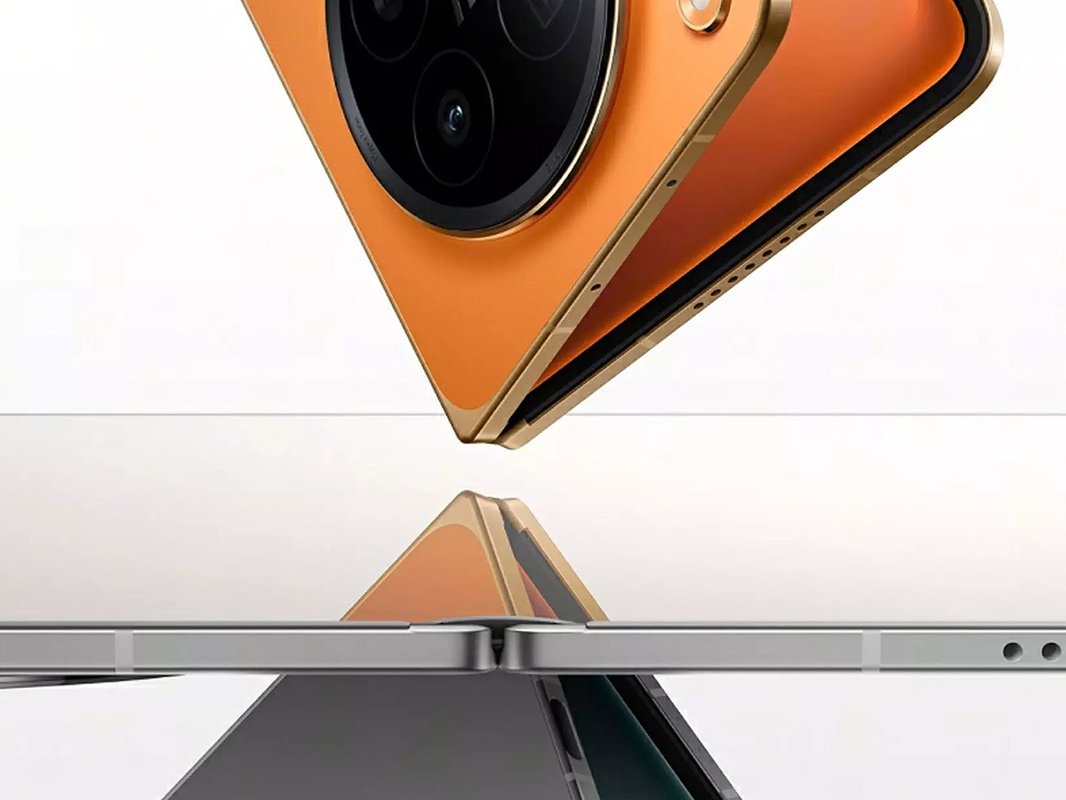
Every generation of foldable smartphones has arrived with a promise: this time, we solved the crease. Every time, the crease remained. Oppo's Find N series has been among the most serious attempts to close that gap — and with the Find N6, launched today at a global event at Oppo's Binhai Bay Campus in Shenzhen, the company is making its most credible crease-free claim yet. At 4.21mm when unfolded — thinner than Apple's M4 iPad Pro — the Find N6 is the slimmest book-style foldable ever built. It weighs 225 grams. It carries a triple IP rating covering IP56, IP58, and IP59 — the last of which means it can withstand high-pressure, high-temperature water jets, a protection level normally found only in industrial equipment. And it is powered by Qualcomm's Snapdragon 8 Elite Gen 5 with up to 16GB of LPDDR5X RAM and 1TB of UFS 4.1 storage. This is not a compromise device. It is a statement that the foldable form factor has finally arrived as a genuine flagship alternative — not just for enthusiasts, but for anyone who wants the most capable smartphone currently available.
The Zero-Feel Crease: What It Actually Is & How It Works
The Find N6's headline engineering achievement is the Zero-Feel Crease — and it is important to understand precisely what Oppo means by that term, because it does not mean the crease has been physically eliminated. What Oppo has achieved is near-invisibility: a crease that is imperceptible under normal lighting from most viewing angles, and nearly impossible to feel during regular use. This was accomplished through three overlapping innovations. The first is 3D Liquid Printing — a manufacturing process that precisely fills the gap between the hinge and the display with a liquid material that sets into a perfectly flat surface, eliminating the ridge that creates the visible crease in conventional foldables. The second is Auto-Smoothing Flex Glass — a display cover material that actively returns to a flat profile after folding, preventing the gradual crease development that affects most foldables over time. The third is a titanium alloy hinge with memory properties — certified to remain flat after 600,000 folds, which at 100 folds per day represents more than 16 years of use. The inner display — an 8.12-inch Samsung E7 AMOLED panel with 2K+ resolution, LTPO 3.0 adaptive refresh from 1Hz to 120Hz, 2,500-nit peak brightness, and 10-bit colour depth — is as good a foldable inner screen as exists today. The outer cover display — a 6.62-inch BOE Q10 panel with 3,600-nit peak brightness and 1.5K+ resolution — is bright enough to be perfectly readable in direct equatorial sunlight. Both are TÜV Rheinland certified for eye protection. Both support Dolby Vision, HDR10+, and HDR Vivid.
The Camera: 200MP Hasselblad Cosmos Ring, Triple OIS & a Dedicated Colour Lens
Foldable phones have historically offered compromised camera systems — their thin chassis limiting the sensor size and optical engineering that flagship camera phones require. The Find N6 attacks that compromise directly with a Hasselblad-engineered quad-camera system built around what Oppo calls the Cosmos Ring — a symmetrical camera module whose headline is a 200MP wide-angle main sensor with dual-axis OIS and an f/1.8 aperture. Supporting it are a 50MP ultra-wide with a 120° field of view, a 50MP telephoto with 3x optical zoom and dual-axis OIS, and a Danxia colour calibration lens — a dedicated sensor for colour accuracy that Oppo has made a signature element of its top-tier camera systems. Hasselblad's contribution includes 16-bit RAW processing, professional colour calibration, and a new generative AI Bokeh engine that the company claims delivers hair-strand accuracy in depth and separation for portrait shots. The 200MP sensor uses 4-in-1 pixel binning for low-light photography — producing 50MP effective images with significantly improved light gathering. As digital8hub.com has reported this week, Nvidia's DLSS 5 is introducing generative AI into the real-time rendering pipeline of video games — a parallel development to Oppo's generative AI Bokeh engine that underlines how thoroughly AI has now penetrated every layer of image production, from gaming to mobile photography.
Performance, Battery & Software: Snapdragon 8 Elite Gen 5, 6,000mAh & ColorOS 16
The Snapdragon 8 Elite Gen 5 — Qualcomm's latest flagship processor — powers the Find N6 with a performance headroom that no current task can challenge. Oppo's Tidal Engine optimisation system manages CPU and GPU allocation to reduce power consumption during sustained workloads, addressing the thermal management challenge that has historically limited foldable performance. The 6,000mAh battery — substantially larger than most foldables, including Samsung's Galaxy Z Fold 7 — delivers all-day battery life under heavy use, with 80W wired fast charging and wireless charging support. ColorOS 16, based on Android 16, introduces multi-window mode for up to four simultaneous apps — a productivity feature whose utility is dramatically enhanced on the Find N6's 8.12-inch inner display. The optional Oppo AI Pen supports stylus input with handwriting recognition, note-taking, and annotation. Oppo guarantees five years of Android OS updates and six years of security patches — a software commitment that matches or exceeds every Android competitor in the foldable market. The satellite communication version — limited to the top-tier 16GB/1TB configuration — adds connectivity for emergencies beyond cellular coverage. Global availability begins March 20. Oppo has confirmed no European launch — a market gap that remains one of the more puzzling strategic decisions in the premium Android space. Pricing starts at $1,400 for 12GB/256GB, rising to $1,680 for the satellite-capable 16GB/1TB model. For the latest technology reviews and smartphone coverage, follow digital8hub.com.
The Verdict: 9/10
The Oppo Find N6 is the best foldable smartphone ever made. The Zero-Feel Crease is the most significant engineering advance in the foldable category since Samsung pioneered the form factor. The Hasselblad camera system closes the gap with dedicated camera flagships. The battery life is class-leading. The build quality, with its triple IP rating and titanium hinge, is the most robust in the segment. The only limitations are its restricted global availability — no Europe launch — and a starting price of $1,400 that remains a significant premium over conventional flagships. If you can buy one and afford one, there is no better foldable on the market.
Comments (0)
Please log in to comment
No comments yet. Be the first!