Technology
Spotify's Daniel Ek Backs Helsing's $1.2 Billion Raise at $18 Billion Valuation
When Spotify founder Daniel Ek made his first major investment in Helsing in 2022, the move raised eyebrows. A music streaming billionaire backing a defense technology startup — it seemed, on the surface, like an unusual pairing. But Ek was not making a random bet. He was making a calculated strategic investment in what he believed would become one of the most important technology companies in Europe — a company that would apply artificial intelligence to the challenge of national defense in ways that existing defense contractors could not.
Four years later, the bet is looking prescient. Helsing — the Munich-headquartered defense AI company whose systems are already deployed with multiple NATO partner nations — is raising $1.2 billion at a valuation of $18 billion, in a funding round that cements its position as Europe's most valuable defense technology startup and one of the most significant AI companies on the continent.
The raise arrives at a moment of maximum urgency for European defense — a continent that has been forced by the Russia-Ukraine war, the Iran crisis, and the fracturing of transatlantic security relationships to confront the reality that it cannot depend on the United States for its security indefinitely. Europe needs defense technology. It needs AI capability. And it needs companies like Helsing to build both at speed.
At digital8hub.com, we break down what Helsing does, what the $1.2 billion raise funds, and why this is one of the most significant European technology funding events of 2026.
What Helsing Actually Does
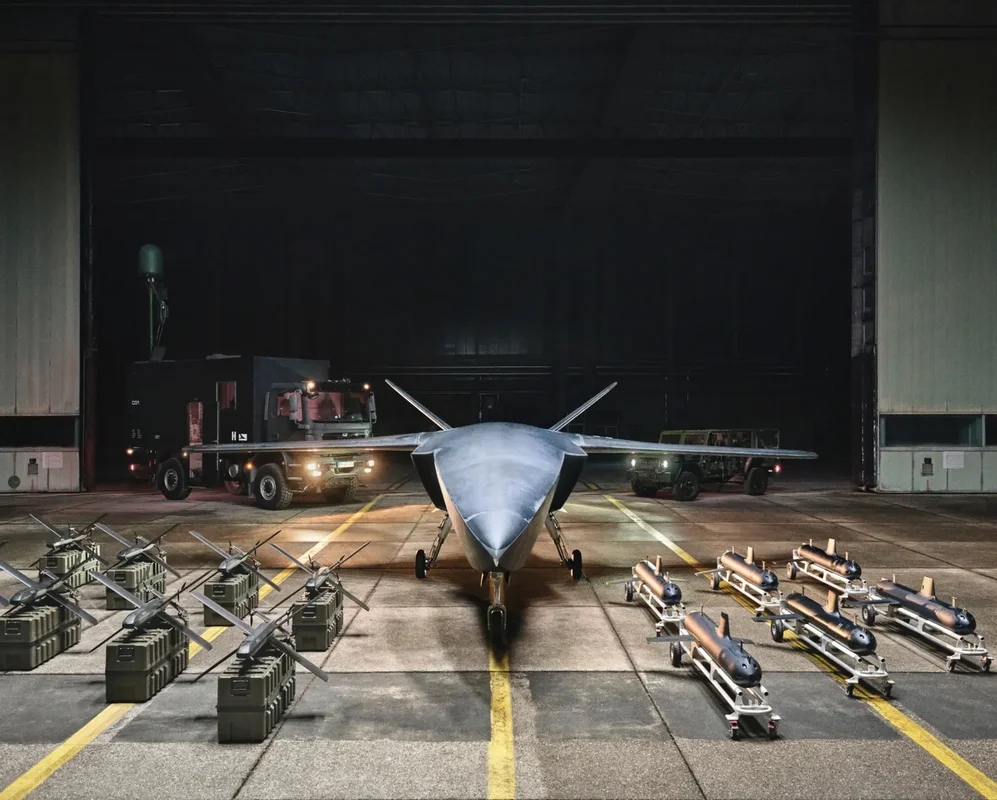
Helsing is not a traditional defense contractor. It does not build tanks, ships, or aircraft. It builds the artificial intelligence systems that make those platforms smarter, more capable, and more effective — and it does so with a software-first approach that is fundamentally different from the hardware-centric model that has defined the defense industry for a century.
The company's core capability is in sensor fusion and AI-powered situational awareness — systems that take data from multiple sources (radar, satellite imagery, drone feeds, signals intelligence, ground sensors) and fuse them in real time into an actionable operational picture that human commanders can act on faster and more accurately than any previous system has allowed.
In practical terms, Helsing's AI systems can track hundreds of objects simultaneously, identify threats with a speed and accuracy that exceeds human capability, and present commanders with decision-support information that dramatically reduces the cognitive load of operating in complex, contested environments.
The company has also developed AI systems for electronic warfare — using machine learning to identify, classify, and respond to electronic threats in the electromagnetic spectrum at speeds that no human operator could match. In a conflict environment where electronic warfare is as important as kinetic weapons, this capability represents genuine military advantage.
Most significantly, Helsing's systems are designed to be platform-agnostic — they can be integrated with existing weapons platforms and sensor systems rather than requiring the purchase of new hardware. This dramatically reduces the barrier to adoption for defense ministries working with existing fleets and constrained procurement budgets.
The $1.2 Billion Round: What It Funds
The scale of the funding round — $1.2 billion at an $18 billion valuation — reflects both the ambition of Helsing's roadmap and the urgency of the moment for European defense technology.
The funding is expected to be deployed across several strategic priorities:
Scaling deployments across NATO partners
Helsing's systems are already operational with a number of European NATO members, but the company's ambition is to become the default AI layer across the alliance's collective defense architecture. Scaling to that level requires significant investment in deployment infrastructure, integration engineering, and the kind of sustained customer relationship management that enterprise defense contracts demand.
Expanding the product portfolio
Beyond its current sensor fusion and electronic warfare capabilities, Helsing is investing in new AI systems for autonomous platforms, logistics optimisation, and the kind of decision-support tools that can operate at the strategic as well as the tactical level. Each of these represents a significant engineering investment that the new funding enables.
Talent acquisition
The competition for AI talent capable of working on defense applications — in a European labor market that has historically been resistant to the military applications of technology — is intense. Helsing has positioned itself as the company that allows European AI engineers to contribute to their continent's security without the ethical compromises associated with working for traditional defense contractors. The funding allows the company to pay competitively for that talent.
Geographic expansion
While Helsing is headquartered in Munich, its ambitions extend across the NATO alliance and potentially beyond — including partnerships with non-European NATO members and potentially commercial applications of its core AI capabilities in adjacent sectors.
Daniel Ek: The Tech Billionaire Who Chose Defense
Daniel Ek's involvement with Helsing is one of the more philosophically interesting stories in European technology. The founder of Spotify — a company whose entire existence is dedicated to making music accessible, connecting artists with fans, and enriching human culture — has become one of Europe's most prominent advocates for defense technology investment.
Ek's public statements on the subject have been consistent and thoughtful. He has argued that the security of the liberal democratic order that enables companies like Spotify to exist is not guaranteed — that it depends on a Europe willing and able to defend itself — and that technology entrepreneurs have both an opportunity and a responsibility to contribute to that defense capability.
His investment in Helsing was accompanied by a public letter that explained his reasoning in terms that went beyond financial return: he described it as a form of civic responsibility, an acknowledgment that the values he cares about — freedom, openness, creativity — require security conditions that do not maintain themselves.
That framing has attracted both admiration and criticism. Some in the European tech community have embraced the argument; others have questioned whether technology companies should be engaging with military applications at all — a debate that echoes the Project Maven controversy at Google and the broader industry conversation about AI and warfare.
What is not in question is the financial impact of Ek's backing. His involvement — both as an investor and as a public advocate — has been instrumental in Helsing's ability to attract the caliber of talent, the subsequent institutional investors, and the political support from European defense ministries that has driven its extraordinary growth.
The European Defense AI Landscape: Why Helsing's Timing Is Perfect
Helsing's $1.2 billion raise arrives at a moment of unprecedented urgency for European defense investment — and that urgency is the most important tailwind behind the company's extraordinary valuation.
The Russia-Ukraine war demonstrated, with brutal clarity, that large-scale conventional warfare remains a real possibility in Europe and that AI-powered systems — for drone operations, electronic warfare, logistics, and battlefield awareness — provide genuine and significant military advantage. Europe's defense establishments absorbed those lessons and began investing accordingly.
The fracturing of the transatlantic relationship under the second Trump administration — exemplified by the Pentagon's withdrawal of troops from Germany and the threats to NATO alliance solidarity — has accelerated European ambitions for strategic defense autonomy. A Europe that cannot rely on American security guarantees needs its own defense industrial base, including its own defense technology champions.
And the Iran crisis — with its implications for energy security, regional stability, and the broader international order — has made the case for robust defense investment even more urgent for governments across the continent.
Helsing sits at the intersection of all three of these dynamics. It is a European company building European capability with European talent, funded by European and allied capital, serving the defense needs of European democracies. In the current geopolitical environment, that positioning is as valuable as the technology itself.
The Broader Defense AI Investment Wave
Helsing's raise does not exist in isolation. It is the most prominent European example of a global surge in defense AI investment that is reshaping the relationship between the technology industry and the military-industrial complex.
In the United States, companies like Anduril, Shield AI, and Palantir have attracted billions in investment and won significant government contracts by applying commercial AI development approaches to defense problems. The success of these companies — and the genuine capability advantages their systems have demonstrated — has provided the proof of concept that companies like Helsing can point to when seeking European investment and government support.
The global defense AI investment wave reflects a convergence of two previously separate trends: the maturation of commercial AI technology to the point where it is genuinely useful in defense contexts, and the recognition by governments worldwide that AI-powered military capability represents a strategic imperative rather than a future possibility.
Helsing is Europe's most prominent and most valuable participant in that wave. The $1.2 billion raise at $18 billion ensures it has the resources to remain at the frontier of that competition for the foreseeable future.
For the latest analysis on defense technology, AI investment, and the geopolitical stories shaping the digital economy, follow digital8hub.com — where the digital future is always in focus.
Comments (0)
Please log in to comment
No comments yet. Be the first!