Technology
Qualcomm's Mid-Tier Gamble: Why the Snapdragon 8 Gen 5 Drops the Elite Badge
Qualcomm's Mid-Tier Gamble: Why the Snapdragon 8 Gen 5 Drops the Elite Badge
The Flagship Killer That's Not Quite a Flagship
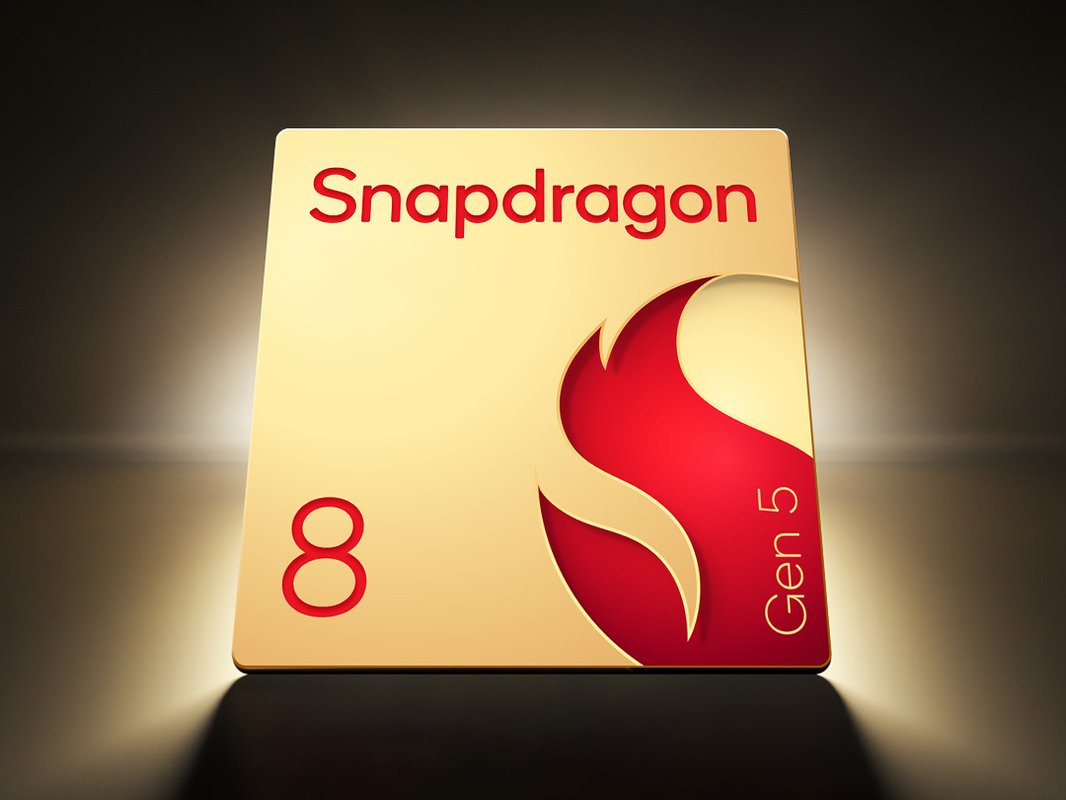
In a move that's equal parts strategic and confusing, Qualcomm just unveiled the Snapdragon 8 Gen 5—a powerful chipset that shares much of its DNA with the flagship Snapdragon 8 Elite Gen 5 but conspicuously drops the "Elite" moniker. Announced on November 26, 2025, this new processor sits in an increasingly crowded middle ground: too advanced to be mid-range, but deliberately held back from true flagship status.
For tech enthusiasts who've grown accustomed to Qualcomm's naming conventions causing headaches, this latest addition adds another layer of complexity. Just months after the Snapdragon 8 Elite Gen 5 made waves as the world's fastest mobile chip, Qualcomm is betting that consumers want flagship-level features without flagship-level prices. But does stripping away the "Elite" badge really make premium performance more accessible, or is this simply cost-cutting disguised as democratization?
What Makes the Snapdragon 8 Gen 5 Different from Its Elite Sibling?
At first glance, the Snapdragon 8 Gen 5 appears remarkably similar to its more prestigious counterpart. Both chips utilize TSMC's cutting-edge three nanometer manufacturing process and feature Qualcomm's custom third-generation Oryon CPU architecture with a similar core configuration: two prime cores and six performance cores.
However, the devil is in the details—specifically, the clock speeds. The Snapdragon 8 Gen 5 features performance cores running at three point eight gigahertz and efficiency cores at three point three two gigahertz, compared to the Elite model which pushes its prime cores up to four point six gigahertz. This represents a meaningful performance differential, though perhaps not as dramatic as the naming distinction might suggest.
Beyond raw processing power, the Snapdragon 8 Gen 5 makes several other compromises. It lacks support for UFS four point one storage, settling for the previous generation instead. The Snapdragon X80 modem is slightly slower than what you'd find in Elite-powered devices. Most notably for graphics enthusiasts, while the chip includes the Adreno 840 GPU with Qualcomm's innovative sliced architecture, it omits the Adreno High-Performance Memory feature that gives the Elite model an additional edge in demanding gaming scenarios.
The Performance Numbers: Is This Really a Downgrade?
Qualcomm's marketing strategy for the Snapdragon 8 Gen 5 takes an interesting approach: rather than comparing it directly to the Elite model, the company benchmarks it against the two-year-old Snapdragon 8 Gen 3. Qualcomm reports thirty-six percent improvement in CPU performance and eleven percent improvement in GPU performance compared to the Snapdragon 8 Gen 3, along with thirteen percent better overall power efficiency.
These are respectable gains, but the comparison itself reveals Qualcomm's positioning strategy. By avoiding direct Elite comparisons, the company sidesteps potentially unfavorable performance gaps while still demonstrating substantial improvements over chips currently powering millions of devices.
For AI workloads, increasingly important in modern smartphones, the Hexagon NPU delivers a forty-six percent performance boost compared to the Gen 3. While this doesn't match the Elite model's AI capabilities, it represents a significant step forward for devices in this price segment.
Interestingly, some industry observers suggest the lower clock speeds might actually be advantageous for thermal management. The Snapdragon 8 Elite Gen 5 has faced criticism for running hot under sustained loads, and the Gen 5's more conservative frequency targets could deliver a more thermally stable experience, particularly in thinner smartphone designs with limited cooling solutions.
The Always-Listening AI Controversy: A Feature or a Privacy Concern?
Perhaps the most intriguing—and potentially controversial—addition to the Snapdragon 8 Gen 5 is its enhanced Sensing Hub. This dedicated AI processor continuously monitors multiple inputs to create what Qualcomm calls "contextually aware" experiences.
The Qualcomm Sensing Hub continuously captures personal context to support agentic AI experiences that are proactive and adaptive, combining motion detection with microphone inputs to anticipate when users intend to interact with their AI assistants. In practical terms, this means your phone could wake up Gemini or other assistants simply by detecting that you've picked up your device and appear ready to speak.
While Qualcomm frames this as enabling more natural, responsive AI interactions, the privacy implications are significant. Modern smartphones already listen continuously for wake phrases like "Hey Google," but the Sensing Hub takes this concept further by analyzing behavioral patterns, environmental audio, and physical movements to predict user intent.
For some users, this represents an exciting evolution toward truly intuitive AI assistants that understand context without explicit commands. For others, it's another step toward devices that monitor our every move. The feature will require OEM implementation and user opt-in, but its presence in the hardware means it could become increasingly ubiquitous in mid-tier and flagship devices alike.
The Flagship Killer Strategy: Democratizing Premium Features
Qualcomm's motivation for creating the non-Elite Snapdragon 8 Gen 5 becomes clear when examining current smartphone market dynamics. Flagship devices powered by the Elite chipset command premium prices, often exceeding one thousand dollars. This creates a substantial market segment of consumers who want advanced features but can't justify or afford true flagship pricing.
Chris Patrick, Qualcomm's senior vice president and general manager of mobile handsets, articulated this positioning explicitly, stating the chip is designed to meet surging demand for powerful premium smartphones while making flagship-level performance accessible to more consumers worldwide.
This "flagship killer" approach isn't new—companies like OnePlus built their entire brand on this premise—but Qualcomm is now enabling it at the silicon level. By using similar architecture and manufacturing processes while making targeted compromises on clock speeds and auxiliary features, Qualcomm can offer OEMs a path to deliver genuinely premium experiences at more accessible price points.
Which Phones Will Get the Snapdragon 8 Gen 5?
The first device confirmed to feature the Snapdragon 8 Gen 5 is the OnePlus 15R, launching on December 17, 2025. This makes perfect sense given OnePlus's heritage as a flagship killer brand—the company practically invented the category of phones that deliver flagship experiences at mid-tier prices.
Beyond OnePlus, Qualcomm has confirmed partnerships with several major manufacturers including iQOO, Vivo, and Motorola. These brands are expected to launch Snapdragon 8 Gen 5-powered devices throughout the first quarter of 2026, with announcements likely at major industry events like CES and Mobile World Congress.
The Chinese market will likely see the earliest and widest adoption, as brands like Vivo and iQOO compete fiercely in the premium mid-tier segment. For Western markets, expect Motorola to be a key player, potentially positioning Snapdragon 8 Gen 5 devices as premium alternatives to their existing Edge lineup.
The Gaming and Graphics Experience
For mobile gamers, the Snapdragon 8 Gen 5 presents an interesting proposition. The Adreno 840 GPU with sliced architecture enables clock speeds up to three point eight gigahertz and supports gaming at up to 165 frames per second. This matches many Elite-level capabilities, at least on paper.
The inclusion of Frame Motion Engine three point zero means the chip can generate interpolated frames for smoother gameplay, while support for hardware-accelerated ray tracing brings console-quality lighting effects to mobile gaming. These are genuinely flagship features that were unavailable in devices at this price point just a generation ago.
However, the absence of Adreno High-Performance Memory means sustained gaming performance may not match Elite-powered devices, particularly in thermally constrained scenarios. For casual gamers and those playing at standard refresh rates, these differences likely won't matter. For competitive mobile esports players or those pushing games to maximum settings, the Elite model remains the better choice.
Power Efficiency and Battery Life Implications
One area where the Snapdragon 8 Gen 5 might actually outperform expectations relative to the Elite model is battery efficiency. The thirteen percent overall power savings compared to the Gen 3 is impressive, but the real story may be how the lower clock speeds translate to real-world endurance.
The three nanometer manufacturing process provides inherent efficiency advantages, but running cores at lower frequencies compounds these benefits. In everyday use cases—web browsing, social media, video streaming—the performance difference between Gen 5 and Elite chips will be imperceptible, while the reduced power consumption could translate to meaningfully longer battery life.
The Snapdragon 8 Gen 5 delivers seventy-six percent better web browsing responsiveness compared to the Gen 3, suggesting that for typical smartphone tasks, this chip provides more than adequate performance while potentially delivering superior battery life compared to its more power-hungry Elite sibling.
The Broader Implications for Smartphone Market Segmentation
Qualcomm's decision to create a distinct non-Elite tier reveals fascinating insights about the smartphone market's evolution. Rather than simply continuing the Gen 3/Gen 4 progression while introducing Elite as a separate ultra-premium tier, Qualcomm has restructured its entire naming scheme.
This creates a clearer hierarchy: Snapdragon 7 series for mid-range, Snapdragon 8 Gen 5 for premium mid-tier, and Snapdragon 8 Elite Gen 5 for absolute flagship. This segmentation gives OEMs more flexibility in product positioning and allows for more granular pricing strategies.
For consumers, this segmentation could be beneficial if it results in genuinely differentiated products at distinct price points. The risk, however, is that the market becomes overly fragmented, making it harder for average buyers to understand what they're actually getting when purchasing a new smartphone.
Camera Capabilities and Computational Photography
While Qualcomm's announcement focused heavily on CPU, GPU, and AI performance, the Snapdragon 8 Gen 5 also includes a capable image signal processor that enables advanced computational photography features. Support for high-resolution sensors, improved HDR processing, and AI-enhanced image optimization mean that cameras on Gen 5 devices should deliver results that rival more expensive flagships in many scenarios.
The AI Engine's improvements are particularly relevant for photography, as modern smartphone cameras rely heavily on computational processing to achieve their results. Features like night mode, portrait effects, and real-time object tracking all depend on the AI processing capabilities that the Gen 5 provides.
While professional photographers and enthusiasts might notice differences in processing speed or RAW capture performance compared to Elite devices, the vast majority of users will find the Gen 5's camera capabilities more than sufficient for social media, video calls, and capturing everyday moments.
Connectivity: Future-Proofing Without Breaking the Bank
Despite its mid-tier positioning, the Snapdragon 8 Gen 5 doesn't compromise on connectivity standards. WiFi 7 support ensures compatibility with the latest networking infrastructure, while Bluetooth 6 provides improved wireless audio quality and efficiency. Ultra-wideband support enables precise spatial awareness for features like digital car keys and improved Find My device functionality.
The Snapdragon X80 modem, while not the absolute fastest in Qualcomm's lineup, still delivers 5G connectivity with all the sub-six gigahertz and millimeter wave bands that matter. For most users in most locations, the difference between the X80 and higher-tier modems will be negligible.
This connectivity parity with flagship devices means that Gen 5 phones won't feel outdated as networking infrastructure evolves over their typical two-to-three-year lifecycle. It's a smart future-proofing strategy that ensures these devices remain relevant and capable long after purchase.
The Verdict: Strategic Positioning or Confusing Branding?
The Snapdragon 8 Gen 5 represents Qualcomm's attempt to capture a growing market segment that wants premium features without ultra-premium prices. By sharing architectural DNA with the Elite model while making strategic compromises on clock speeds and certain auxiliary features, Qualcomm has created a chip that should enable genuinely compelling devices at more accessible price points.
Whether this strategy succeeds depends largely on execution by OEM partners and actual pricing of Gen 5-powered devices. If phones with this chip land in the six hundred to eight hundred dollar range while delivering performance within striking distance of thousand-dollar flagships, consumers win. If they end up priced too close to Elite devices, the value proposition becomes murkier.
For Qualcomm, the Gen 5 serves another important purpose: maximizing manufacturing utilization and market coverage. By offering chips at multiple performance tiers using similar architectures, the company can better leverage its R&D investments while giving OEM partners more flexibility in product planning.
The dropping of the "Elite" badge isn't just marketing—it's a clear signal about product positioning and target market. Whether consumers embrace this middle path or continue gravitating toward either true flagships or more affordable mid-range options will become clear in the coming months as Gen 5 devices hit the market.
Conclusion: The Democratization of Flagship Performance Continues
The Snapdragon 8 Gen 5 exemplifies a broader trend in the smartphone industry: the gradual erosion of clear distinctions between mid-range and flagship devices. Features that were exclusive to ultra-premium phones just a few years ago—advanced AI processing, high-refresh gaming, sophisticated computational photography—are now available in devices that cost considerably less.
For consumers, this is fundamentally positive. The days when budget constraints meant accepting a dramatically inferior smartphone experience are fading. The Snapdragon 8 Gen 5 won't match the Elite model in benchmarks, but for real-world usage patterns of most users, it will deliver a premium experience that justifies the "flagship killer" label.
As the first Gen 5-powered devices launch in December and into early 2026, the true test will be whether OEMs can package this capable silicon into devices that feel genuinely premium while maintaining compelling price points. If they succeed, Qualcomm's decision to create this intermediate tier will look prescient. If Gen 5 devices end up feeling like compromised flagships rather than elevated mid-rangers, the strategy may need refinement.
One thing is certain: the smartphone market just got more interesting, and consumers have more choices than ever at the premium end of the spectrum. Whether that's clarifying or confusing depends largely on your perspective—and how much you enjoy parsing Qualcomm's increasingly complex product naming schemes.
Comments (0)
Please log in to comment
No comments yet. Be the first!