Technology
No Driver, No Problem: Nvidia & Uber Just Set the Date for the World's Largest Robotaxi Network
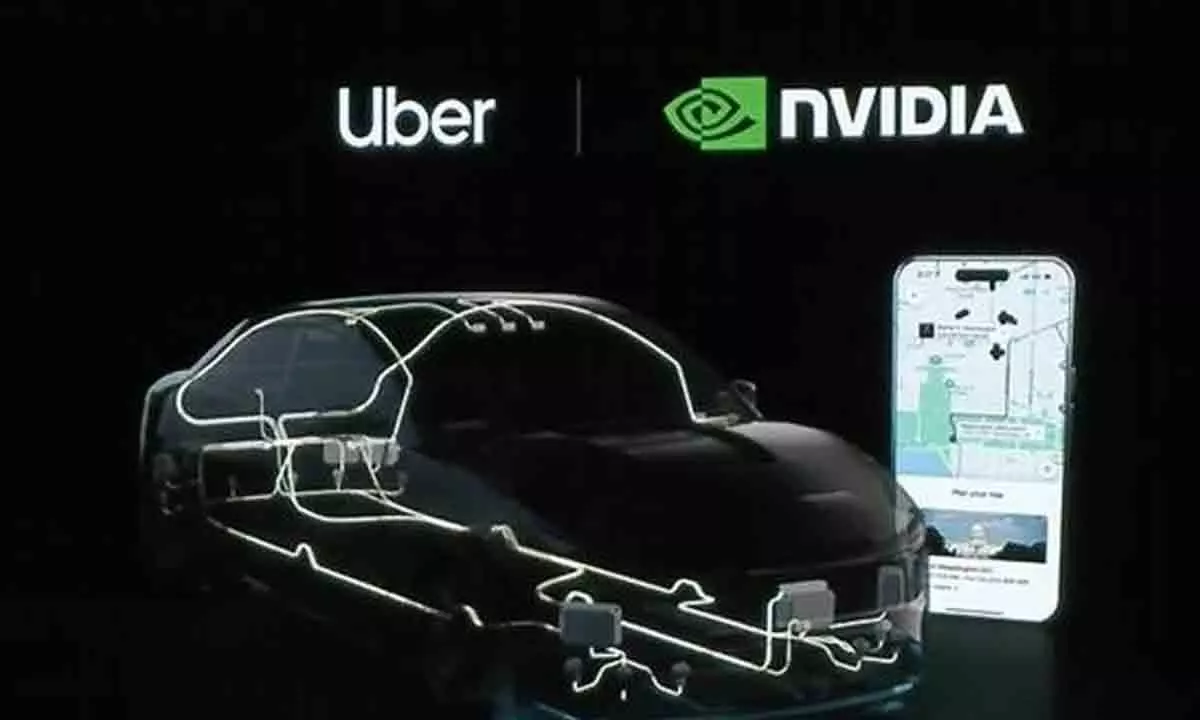
The robotaxi future has a date. At GTC 2026 in San Jose on Monday March 16, Nvidia and Uber announced the most specific, most ambitious, and most credible autonomous vehicle deployment timeline in the history of the industry: Level 4 autonomous robotaxis — vehicles that drive themselves with no human behind the wheel in any operational capacity — will begin rolling in Los Angeles and San Francisco in the first half of 2027, expanding to 28 cities across four continents by 2028, with a target fleet of 100,000 vehicles. Jensen Huang, founder and CEO of Nvidia, set the philosophical tone: "Robotaxis mark the beginning of a global transformation in mobility — making transportation safer, cleaner, and more efficient. Together with Uber, we're creating a framework for the entire industry to deploy autonomous fleets at scale, powered by Nvidia AI infrastructure. What was once science fiction is fast becoming an everyday reality." Dara Khosrowshahi, CEO of Uber, was equally direct: "Nvidia is the backbone of the AI era, and is now fully harnessing that innovation to unleash L4 autonomy at enormous scale, while making it easier for Nvidia-empowered AVs to be deployed on Uber's network."
The Technology: DRIVE AGX Hyperion 10, Alpamayo & the Cosmos Data Factory
At the heart of the Uber-Nvidia partnership is a hardware and software stack that represents Nvidia's most comprehensive autonomous vehicle platform to date. The DRIVE AGX Hyperion 10 — unveiled at GTC 2026 as the successor to the Hyperion 8 platform — is a reference production architecture built around two DRIVE AGX Thor system-on-chips, each based on Nvidia's Blackwell architecture and delivering more than 2,000 FP4 teraflops of real-time compute. The platform is modular — allowing different automakers to customise sensor suites and software configurations — and is designed to be made Level 4-ready through over-the-air software updates, meaning vehicles can be upgraded as the AI models improve without requiring hardware replacement. The AI model running on Hyperion 10 for the Uber deployment is called Alpamayo — a next-generation reasoning-based autonomous driving system that uses chain-of-thought logic to navigate what autonomous vehicle engineers call long-tail scenarios: the unpredictable, low-frequency edge cases that have historically defeated rule-based self-driving systems. Construction zones where lane markings disappear. Intersections where pedestrians behave erratically. Emergency vehicles approaching from unexpected directions. Alpamayo is designed to reason through these situations rather than fail on them — the critical capability that distinguishes a Level 4 system from every earlier generation of autonomous driving technology. Nvidia is simultaneously building a joint AI data factory with Uber — built on the Nvidia Cosmos platform — that will process and curate Uber's vast reservoir of real-world driving data to continuously improve Alpamayo's models. As digital8hub.com reported earlier today, Nvidia's GTC 2026 keynote also unveiled the Vera Rubin GPU architecture, DLSS 5 generative AI graphics, and NemoClaw AI agent infrastructure — making Monday the most announcement-dense day in Nvidia's recent history.
The Partners: Lyft, Bolt, Grab, Stellantis, Mercedes & Lucid
The Uber-Nvidia partnership is not a bilateral arrangement. It is the anchor of a broad industry ecosystem that Monday's GTC 2026 announcement formalized across multiple dimensions. On the ride-hailing side, Nvidia confirmed that Lyft — Uber's primary US rival — is also adopting the DRIVE Hyperion platform to improve its ride-matching, mapping, and efficiency systems, and to lay the foundation for its own future autonomous fleet. Estonia-based Bolt and Singapore's Grab — two of the largest ride-hailing operators in Europe and Southeast Asia respectively — are also integrating Nvidia's autonomous driving systems, confirming the 28-city global ambition is not US-centric. On the manufacturing side, Stellantis, Mercedes-Benz, and Lucid Motors are all confirmed as OEM partners building Hyperion 10-compatible vehicles for the Uber fleet. Stellantis is developing AV-Ready Platforms optimised for Level 4 robotaxi requirements. Mercedes-Benz is integrating Nvidia's full-stack autonomous driving software into its next-generation passenger vehicles. Lucid — which already committed to supplying at least 20,000 Lucid Gravity SUVs to Uber via a separate partnership — will also build Hyperion 10-compatible vehicles for the fleet. Nvidia is simultaneously launching the Halos Certified Program — described as the industry's first system to evaluate and certify physical AI safety for autonomous vehicles and robotics — to provide the independent safety validation framework that regulators and passengers will require before Level 4 services can operate at commercial scale.
What It Means: Waymo Has Competition, Drivers Have a Question to Answer
Until Monday's announcement, the autonomous vehicle landscape was defined by Alphabet's Waymo — the only company operating a true driverless commercial taxi service at meaningful scale, currently running in San Francisco, Los Angeles, Phoenix, Austin, and Atlanta. Waymo's approach is proprietary, vertically integrated, and deliberately cautious in its expansion pace. The Uber-Nvidia model is different in every dimension: open-stack, horizontally scalable, multi-OEM, multi-operator, and designed from the outset to reach 100,000 vehicles — a fleet size roughly 20 times larger than Waymo's current operational scale. The announcement does not eliminate the formidable execution challenges that every autonomous vehicle programme has historically underestimated: regulatory approvals in 28 cities across four continents, insurance frameworks for Level 4 operations, and the manufacturing commitments required from Stellantis and others whose production timelines extend to 2028 and beyond. But the credibility of the partners — Nvidia's AI infrastructure dominance, Uber's global network of 150 million annual users, and the manufacturing capacity of Stellantis and Mercedes-Benz — makes this the most serious competitive challenge to Waymo's first-mover advantage since the autonomous vehicle race began. For the latest coverage of autonomous vehicles, AI, and the future of mobility, follow digital8hub.com.
Comments (0)
Please log in to comment
No comments yet. Be the first!